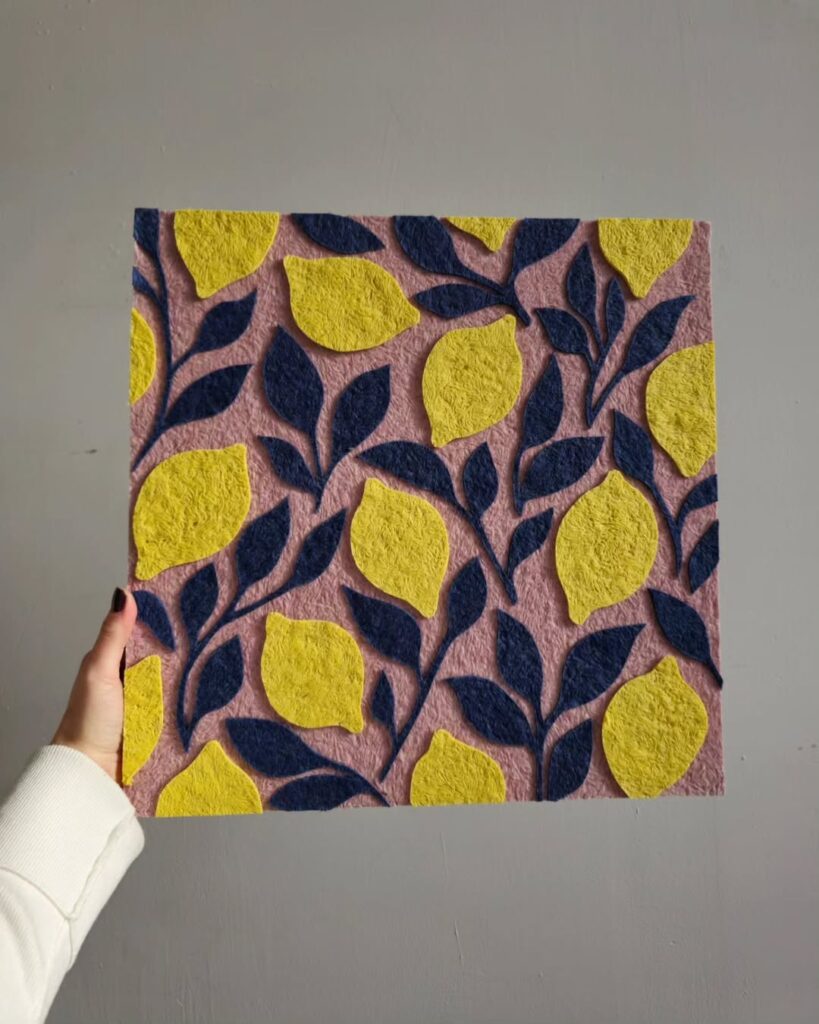
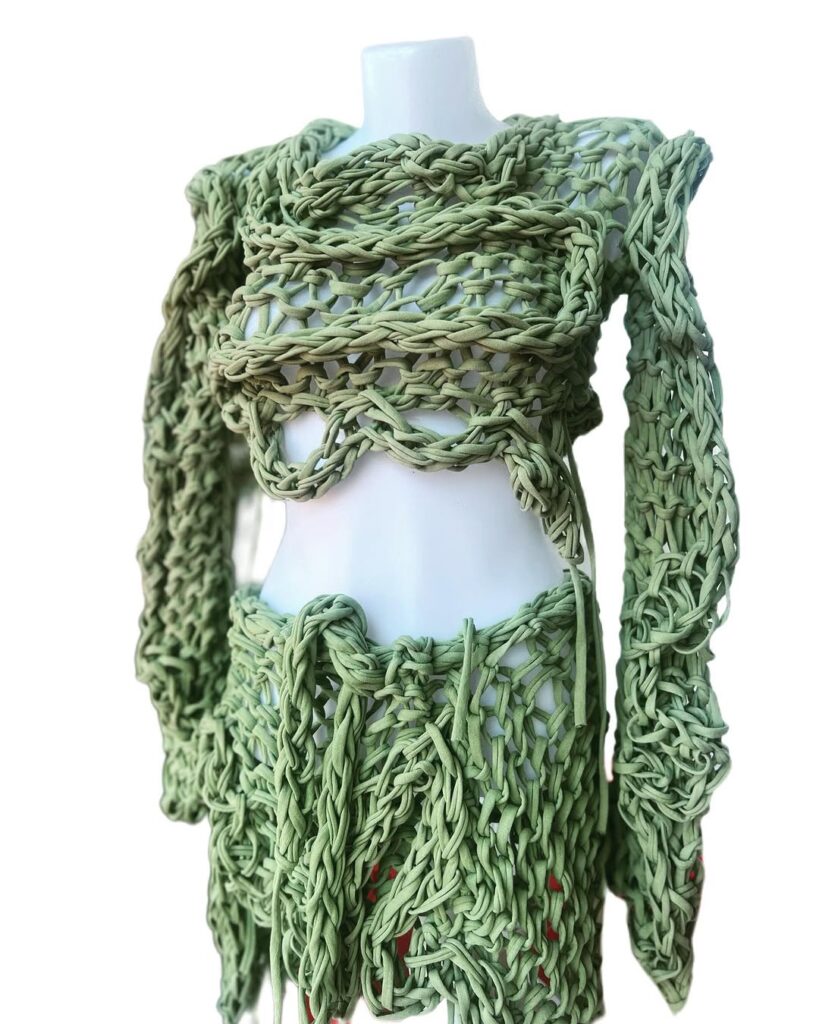
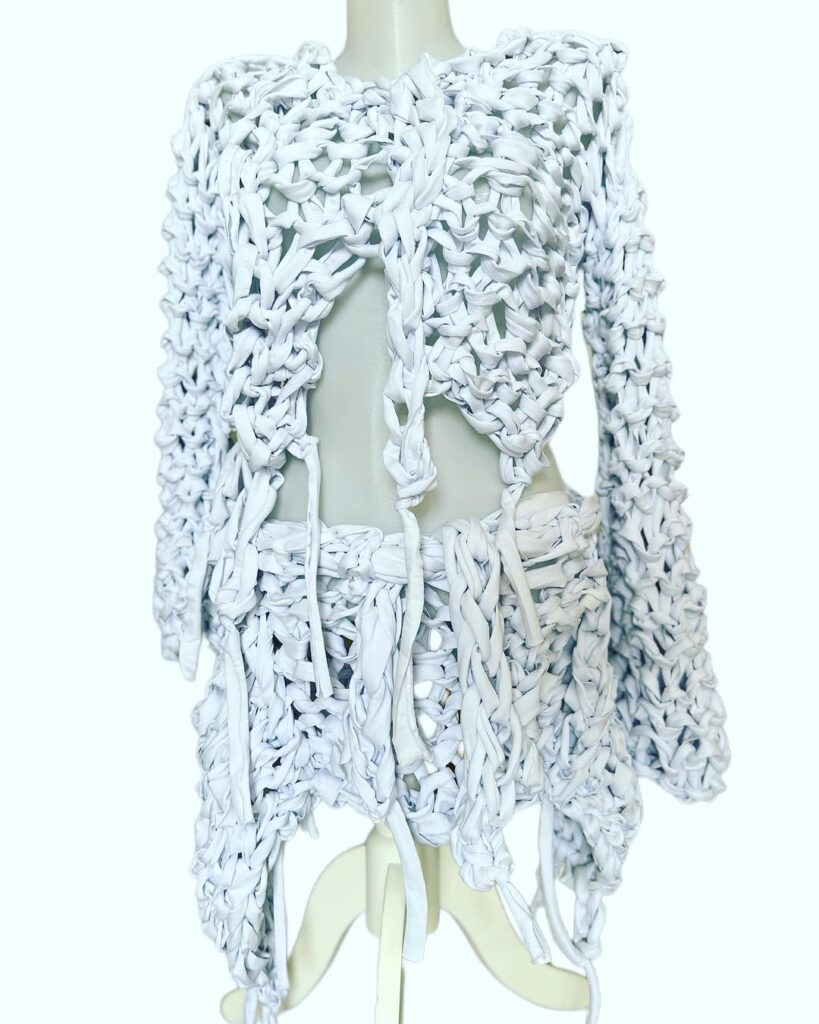
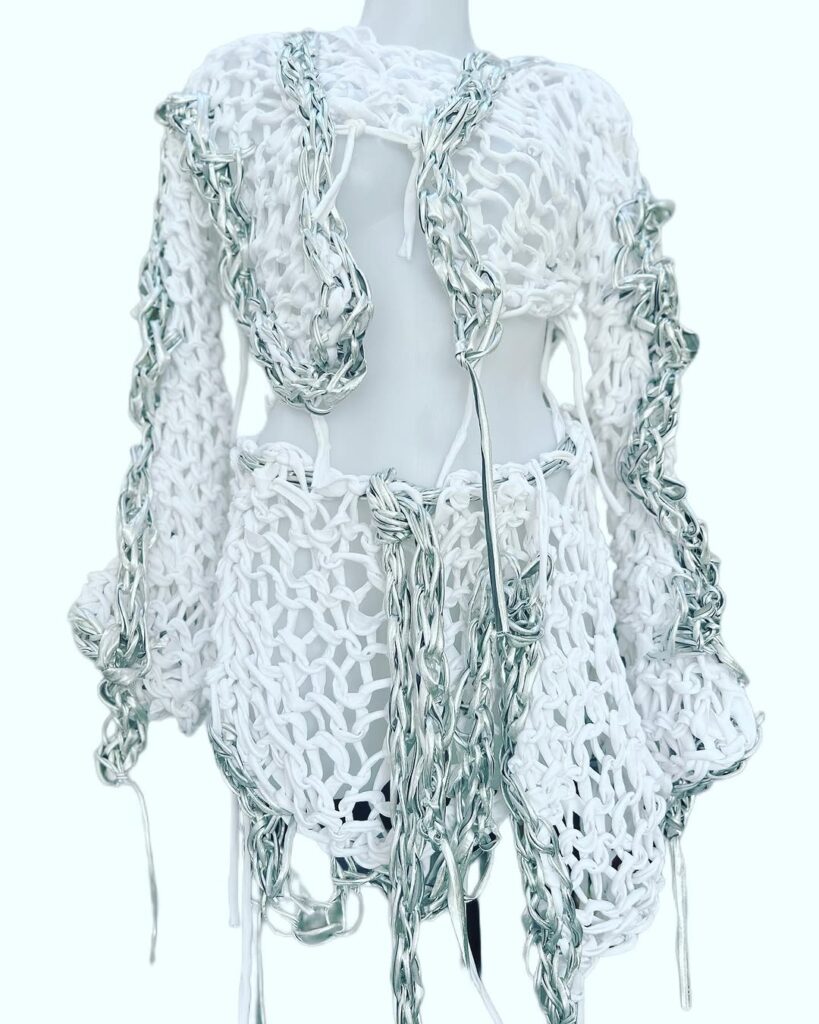
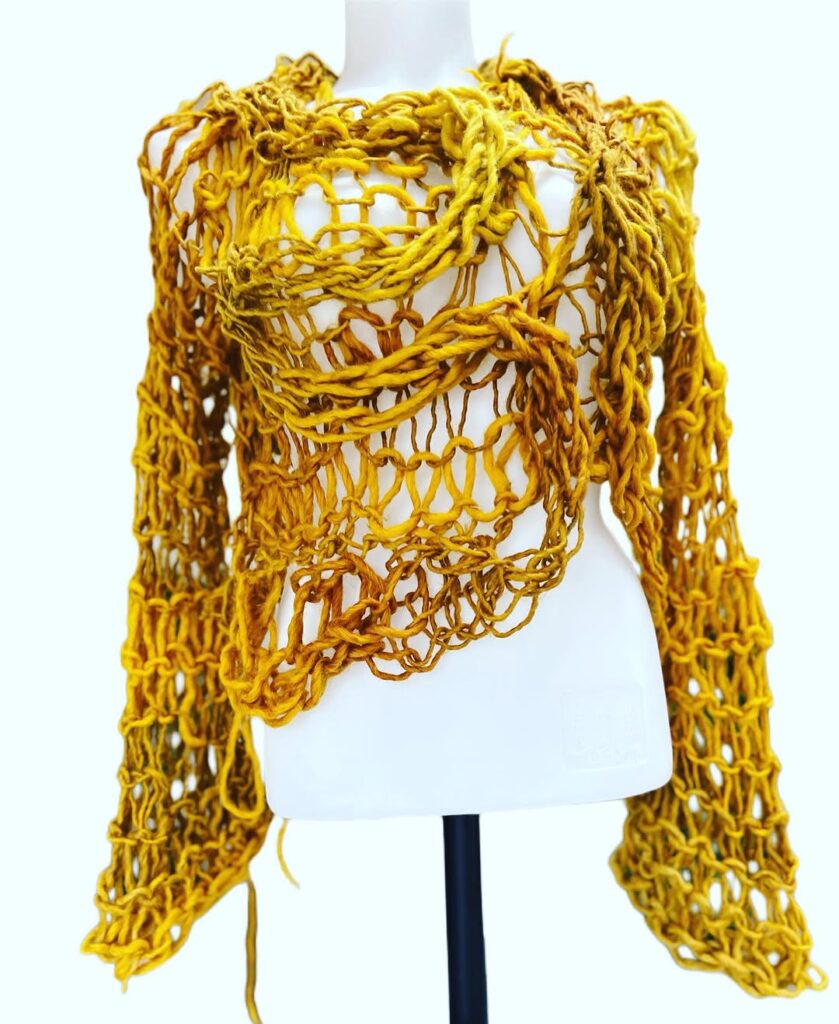
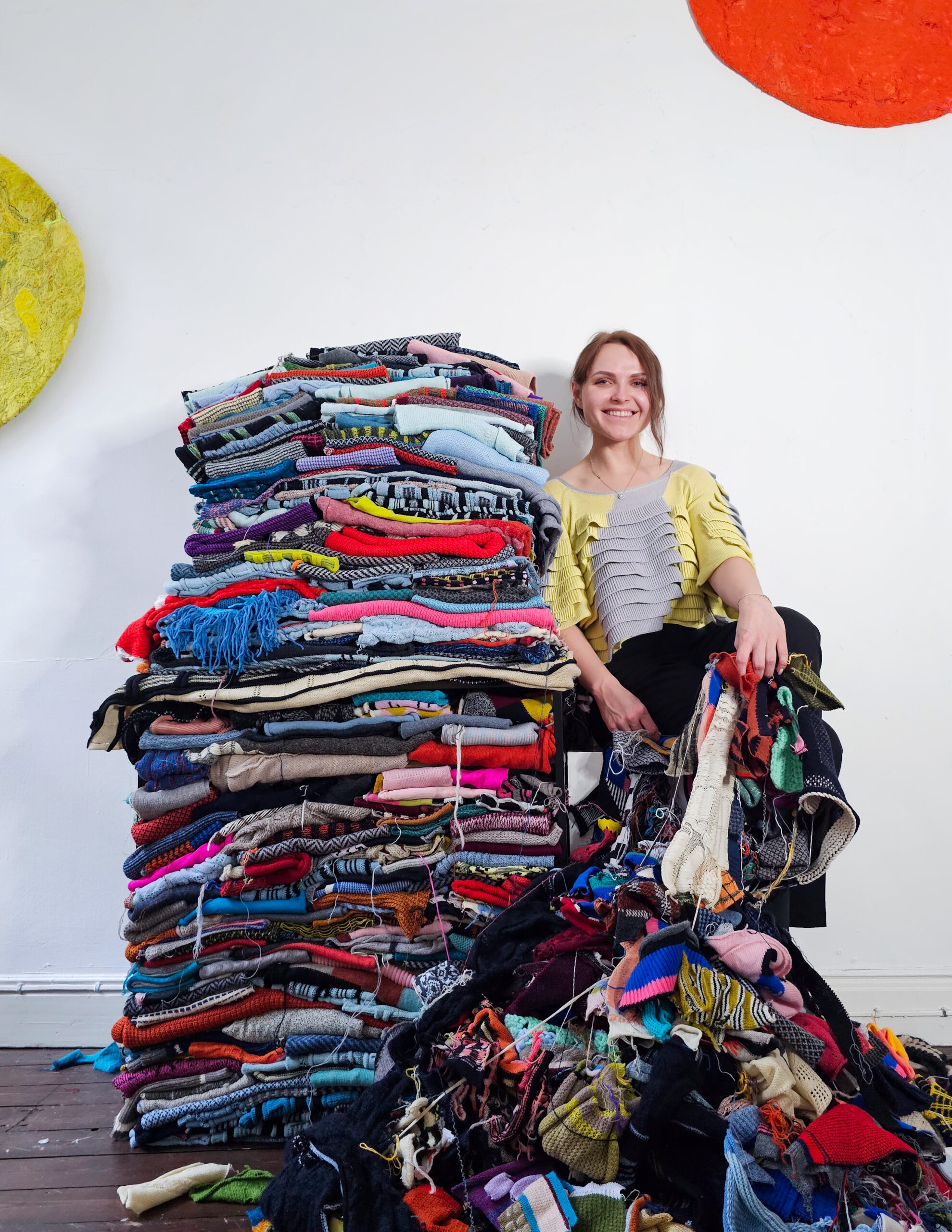
In a world overflowing with textile waste, Sandra Junele is weaving a greener future – one yarn scrap at a time. She creates large wall panel installations and custom-moulded shapes made from shredded recycled yarn waste mixed with handmade plant-based glue.
The Dundee-based, Scotland artist transforms discarded materials into stunning wall art, championing sustainability and supporting eco-conscious creativity. Her brand, Junele is known for its minimalist design, tactile quality and focus on interior applications.
“My journey began in Latvia, where I watched my grandfather transform discarded wood into beautiful furniture. Those moments taught me that waste is not the end of a story, but the beginning of a new one. That lesson has shaped everything I do — from my studies in interior and textile design, to the sustainable practice I’ve built today,” says Sandra.
Made from repurposed materials and biodegradable components, Junele artworks not only enhance the aesthetic appeal of a space but also align with eco-friendly values. They bring a sense of environmental responsibility and sustainability to interior design.
Sandra Junele
“I started collecting this waste and conducted hundreds of experiments to find creative ways to repurpose it. One of my early experiments involved mixing PVA glue with shredded textile waste. This led me to search for natural organic glue replacements that are natural and dissolve upon contact with water, thereby minimising waste after the product’s use.Her pieces are not only beautiful but also endlessly reusable—submerge them in water, and the material can be reshaped again. My artworks can be reused when no longer needed. By placing them in water, the natural glue dissolves, leaving me with the fibres that can be repurposed for new projects. This approach not only reduces waste, but also supports a circular economy, ensuring that the materials continue to have a life beyond their initial use,” she says.
SOURCING MATERIALS
Sandra has an established material sourcing plan. She says, “I have recycling bins placed at manufacturers and universities where people can dispose of their textile waste. Once these bins are full, I collect the waste. Designers also play a crucial role by donating their unwanted materials. One memorable donation came from a knit designer who had been collecting samples of her work for 15 years. This mix of sources ensures a diverse range of materials, each with its own story, contributing to the unique character of my artworks.”
Collaboration with @rebeccasearlstevens
DESIGN PROCESS
By hand, she carefully separates textile waste, shred fibres, and binds them with her own plant-based glue — creating a unique material that is both tactile and sustainable. Remarkably, it can dissolve in water and be reused again, offering endless possibilities.
“The design process for my textile artworks begins with collecting waste materials from local manufacturers, designers, and universities. This waste comes in various forms, such as loose threads, samples, clothes, and yarn cones. The first step is to separate the waste by colour. Once sorted, I shred the waste, using a shredding machine for shorter fibres and by hand with scissors for longer fibres. With the fibres prepared, I then cook my own plant-based glue, making a fresh batch for each project. The shredded fibres are mixed with this glue and either rolled out into sheets or applied to moulds. As the sheets dry, they become hard, similar to cardboard. At this stage, they can be cut, sewn, embroidered, screen-printed, or layered according to the design. Finally, each sheet is mounted on a wooden frame, ready to be displayed as a unique piece of sustainable art,” she says.
One of Sandra’s big dreams is to open her own shop-gallery, a space where every interior element is crafted from sustainable materials and decor made from textile waste. She envisions it as a place that that could showcase her work and serve as a hub for eco-conscious designs and like-minded creatives.
Collaboration with @bekkiflaherty
She plans to collaborate with more designers and artists, both locally and internationally, to bring fresh perspectives and innovative ideas into her work. Her work extends beyond her products. Through educational workshops and outreach programmes, she empowers others to rethink waste, embrace sustainable practices, and contribute to a circular economy. By raising awareness about environmental challenges, she is creating a ripple effect of positive change in her community.
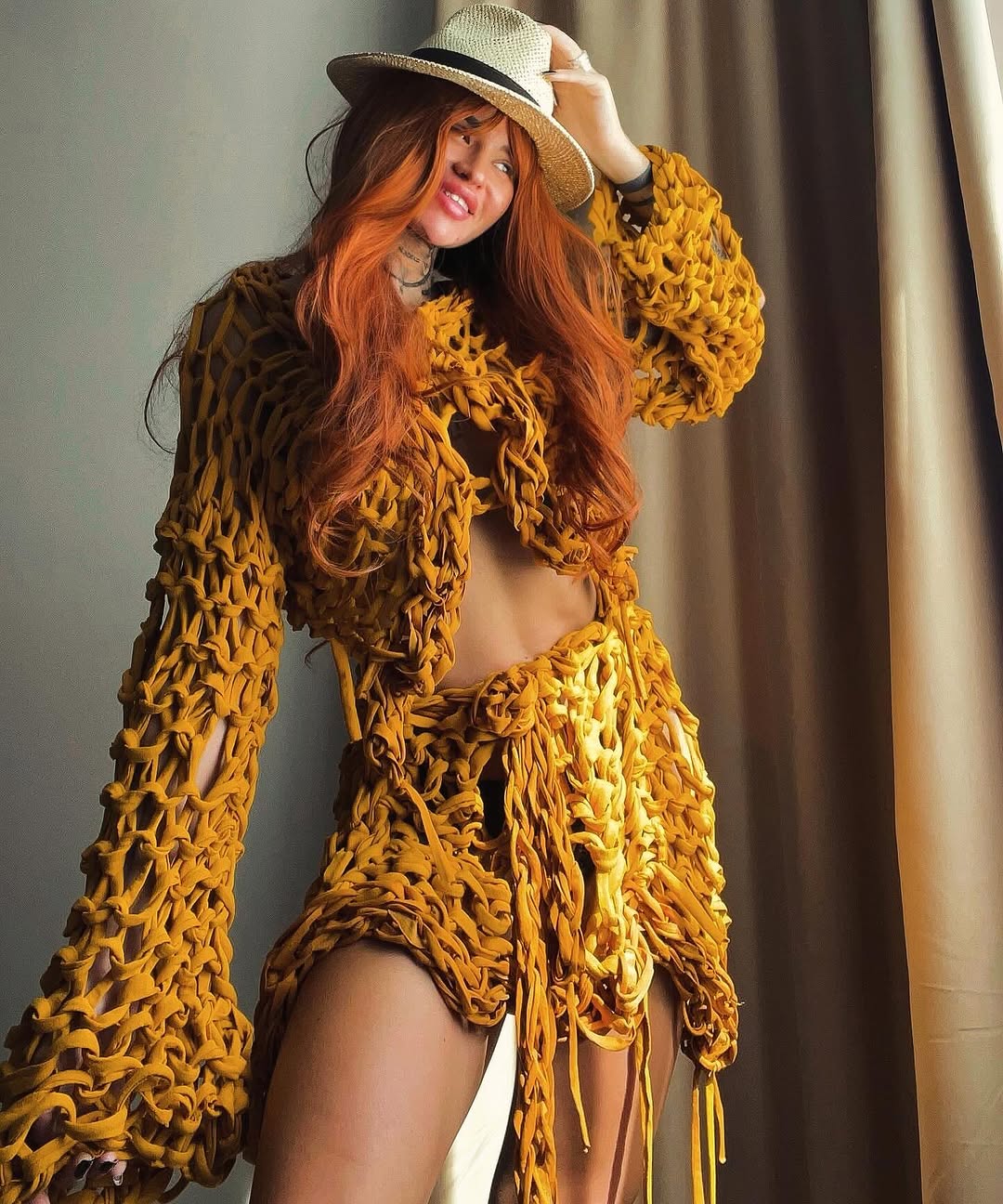
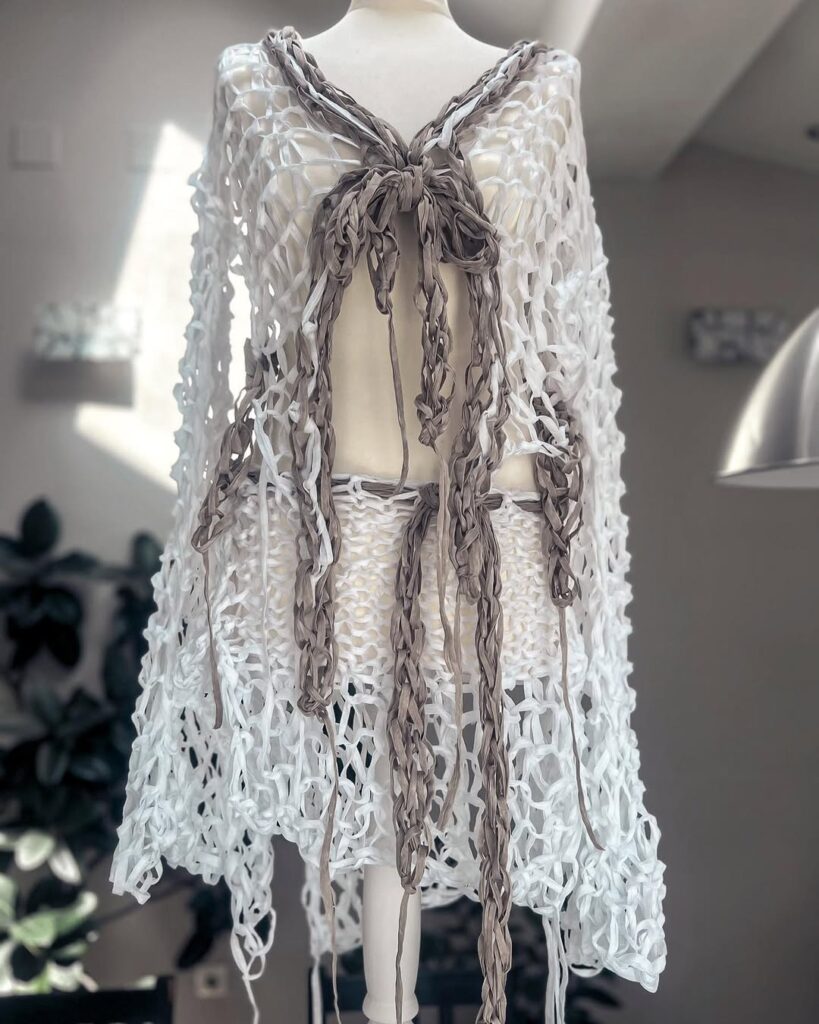
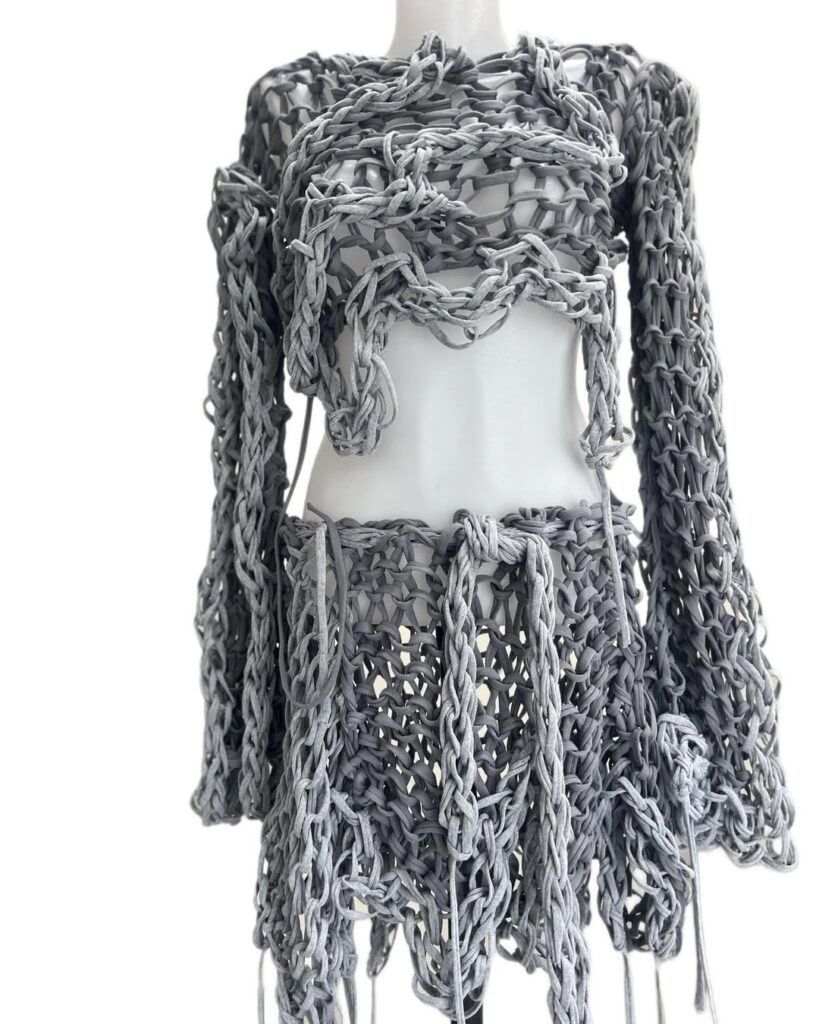
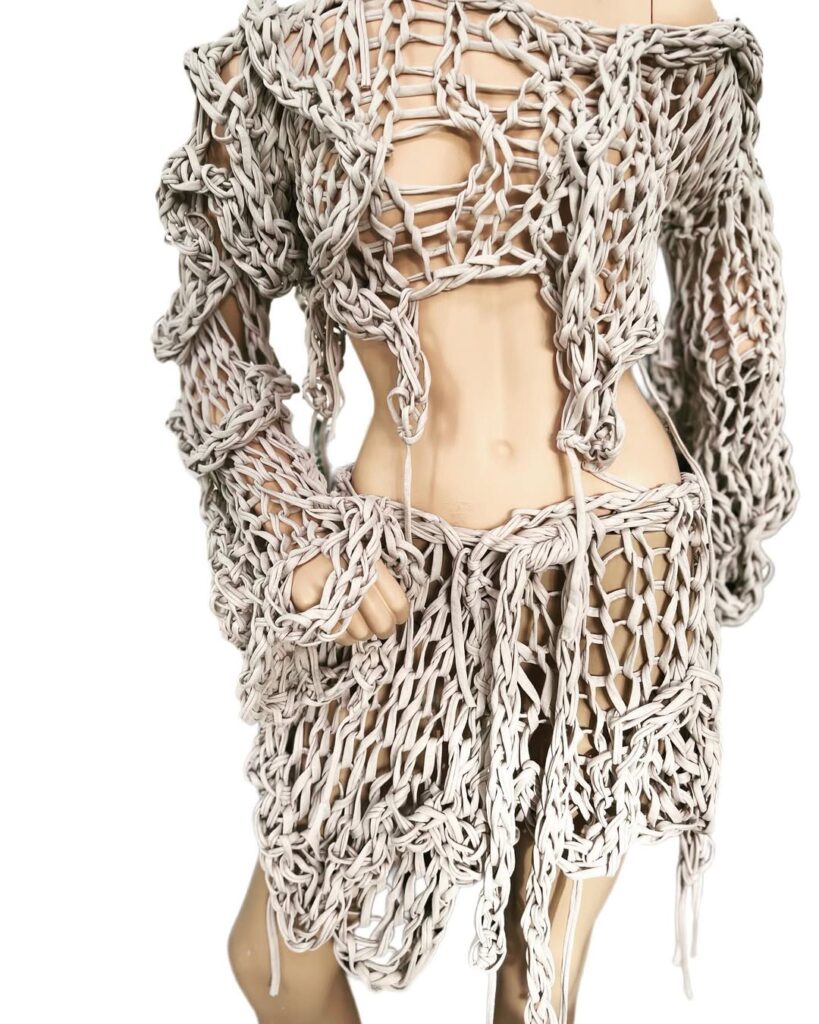
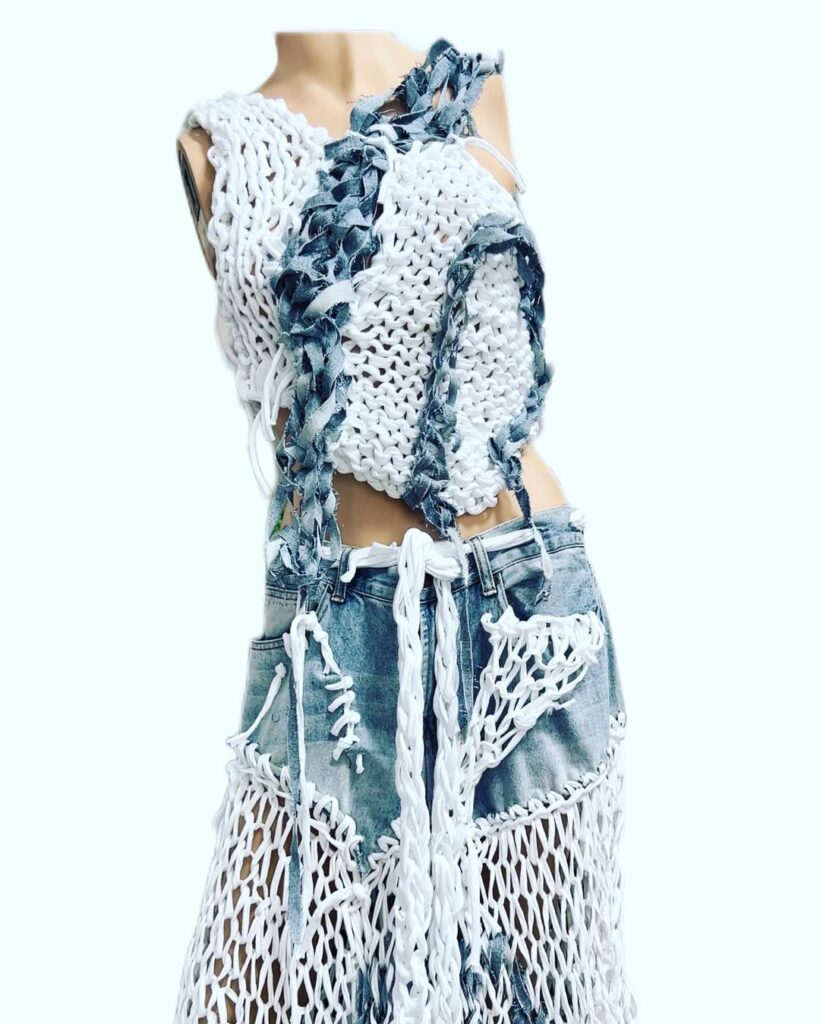
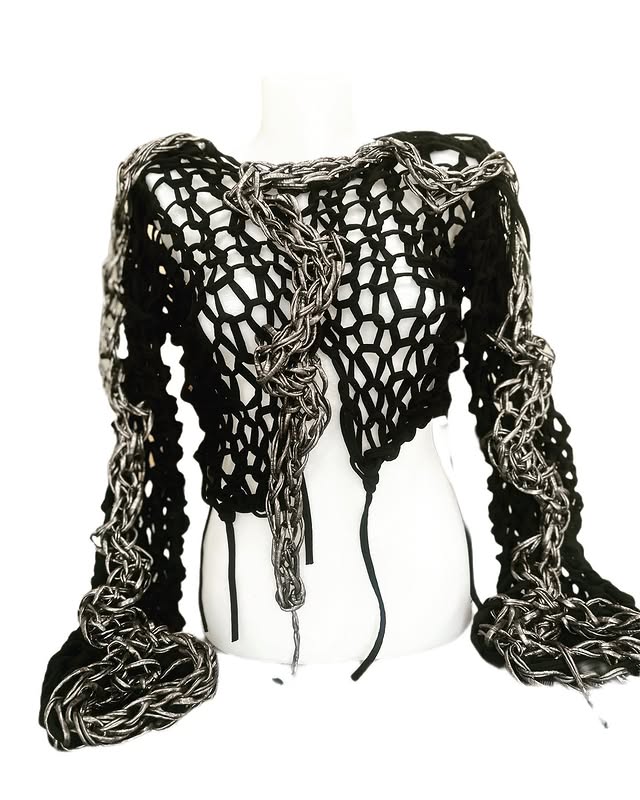
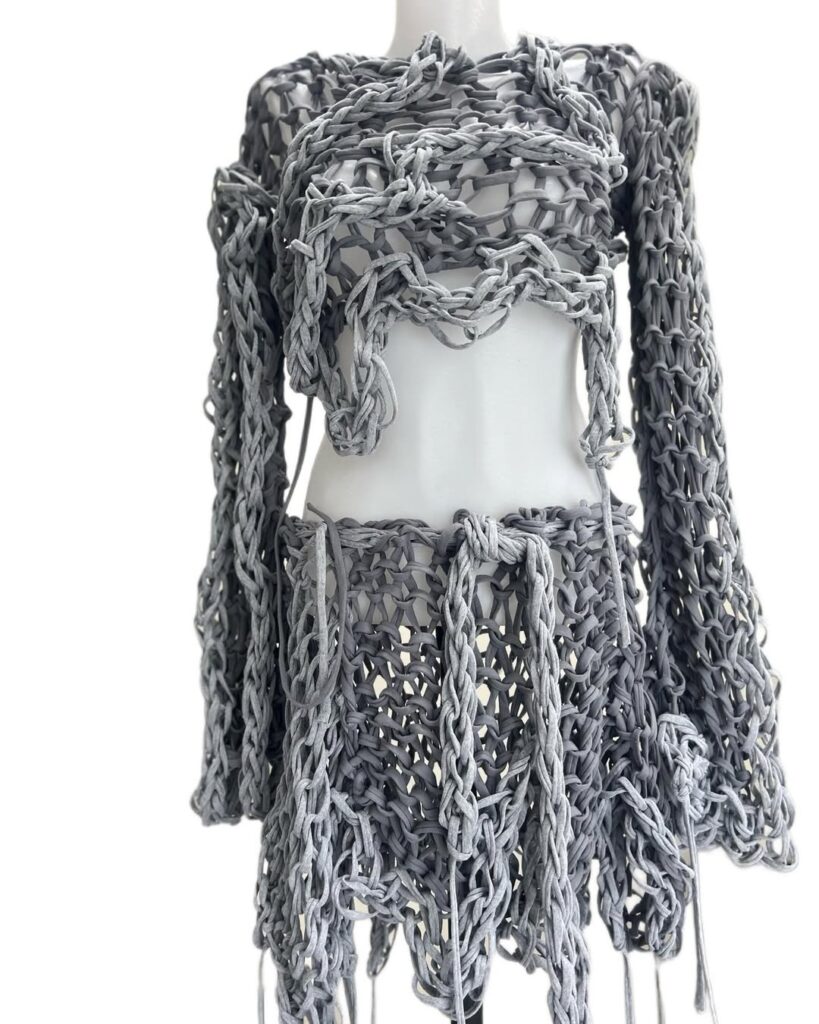
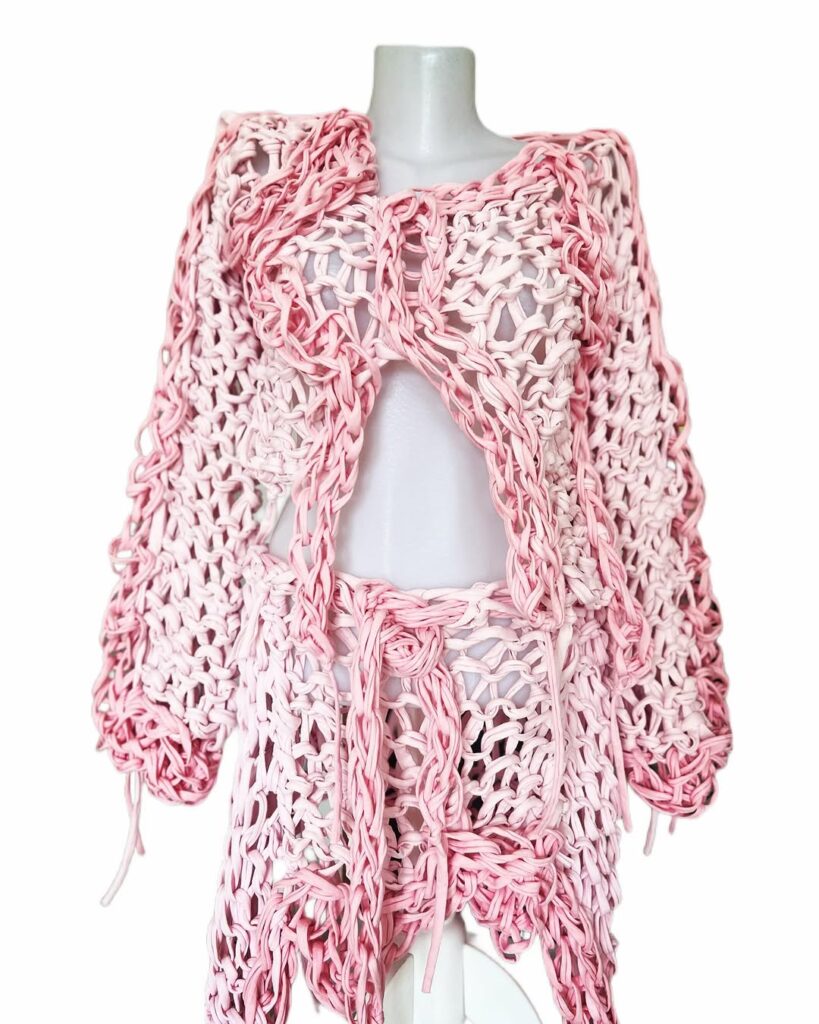
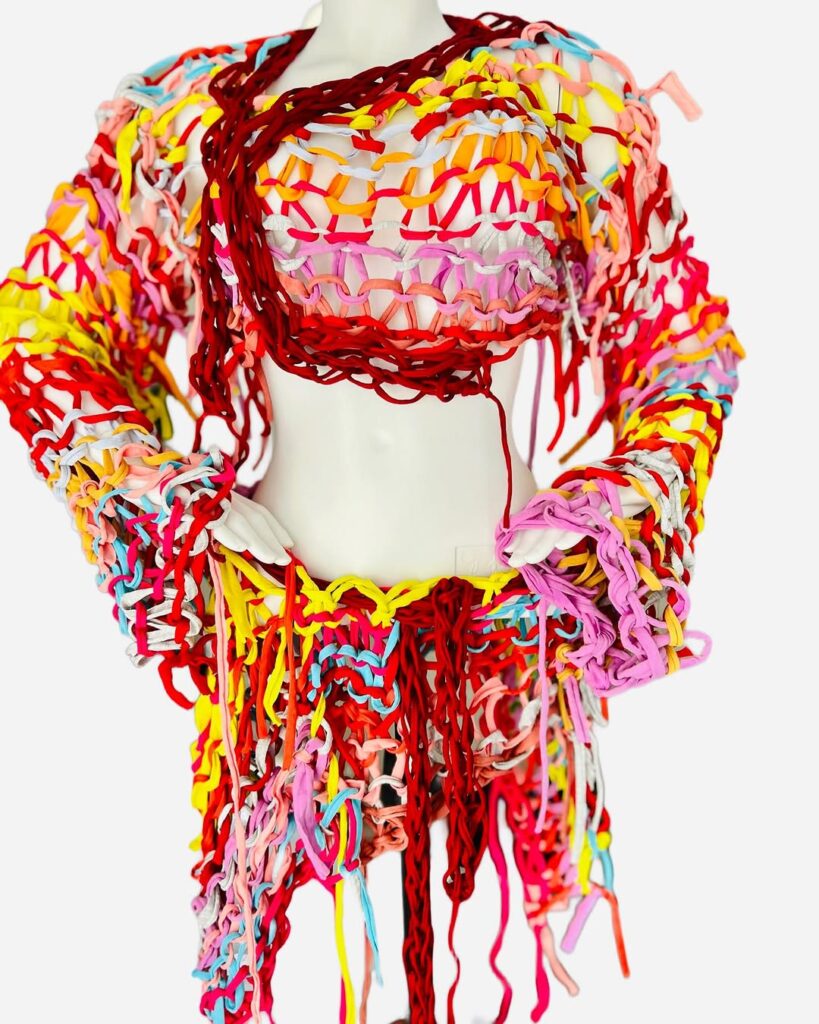
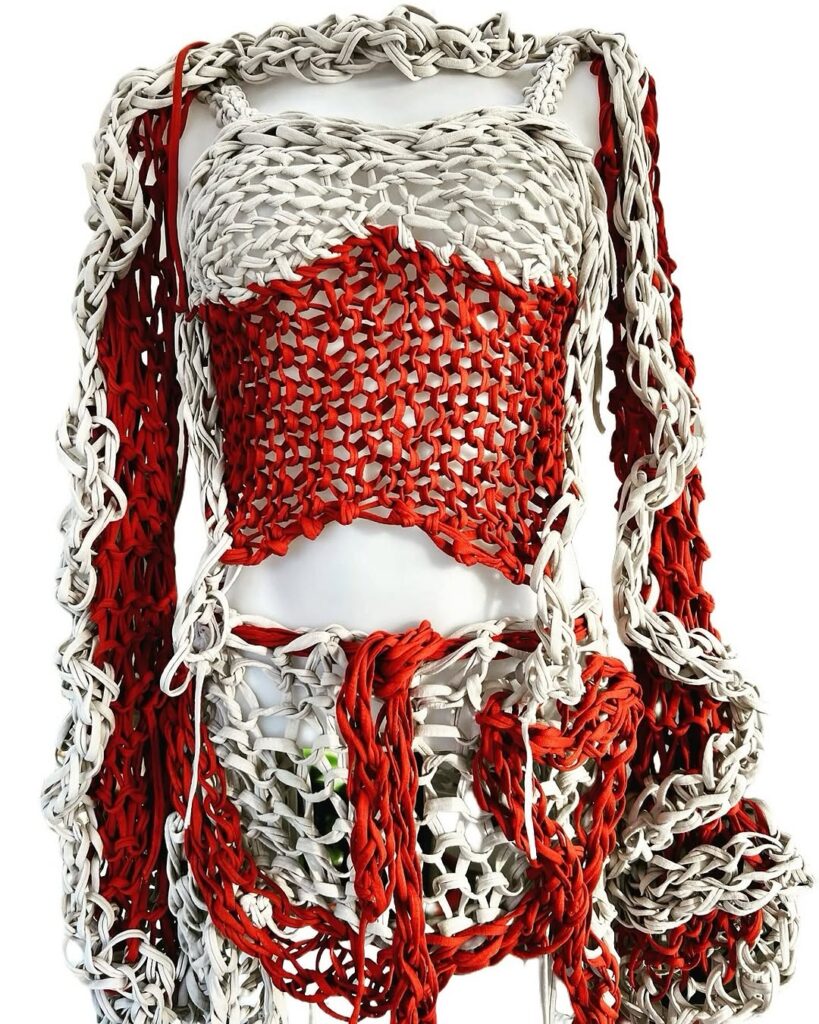
Finger knitting is the overall trend of knitting that is growing in popularity across different age groups, driven by factors like sustainability, mindfulness, and a connection to traditional crafts.
To become a skilled finger-knitter, you need consistent tension, a good sense of hand-eye coordination, and the ability to manage stitches on your fingers. Practicing with different yarn thicknesses and learning to hold stitches securely when taking a break are also important skills for creating a polished finished product.
Ioana Turcu, founder and designer of Toia Tricot has mastered this skill and craft. The designer has a flair for experimenting with knit patterns and crafts unique textures by blending various materials together. She creates custom, handmade pieces without traditional patterns or machines, emphasising a unique and intentional process.
The slow fashion brand, based in Bucharest – Romania, draws inspiration from concepts of freedom, emotion, and sculpture. At the heart of Toia Tricot’s work, lies the ingenious use of recycled yarns, born through a transformative process that reclaims and cleanses discarded items like PET bottles. This approach, fueled by a passion for eco-friendliness, makes a significant environmental impact, one stitch at a time.
“My commitment to sustainability goes beyond rhetoric; it is ingrained in my artistic process. While some may see limitations in higher costs and limited suppliers, I see an opportunity to create small-batch masterpieces that embody my eco-friendly approach. My choice of high-quality recycled yarns not only elevates my work but also sends a powerful message that fashion can be both artistic and ethical,” says Turcu.
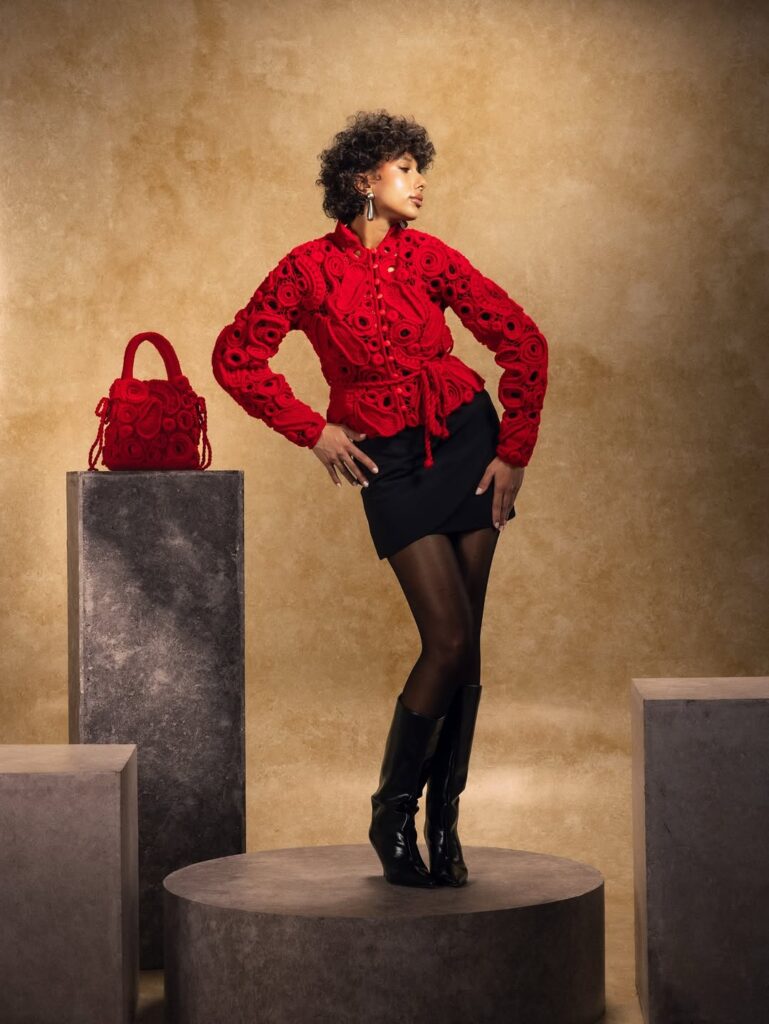
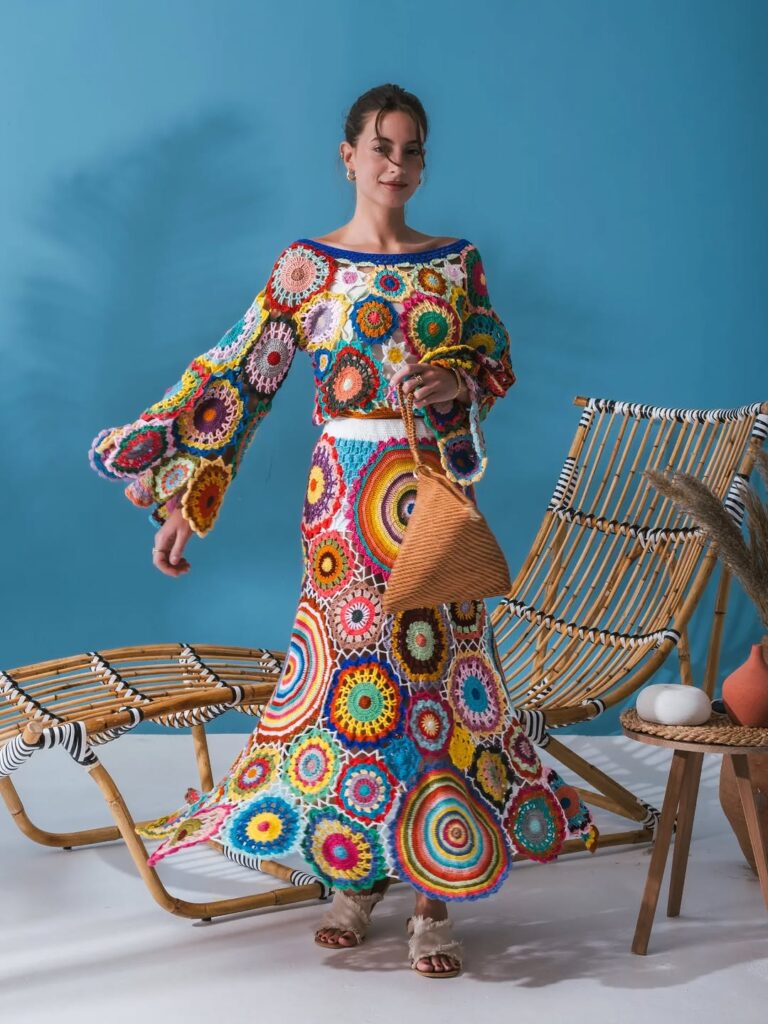
What began as a one-woman project slowly blossomed. As more people fell in love with her work, the team grew, the space expanded, and the dream got bigger. From a small corner at home to a cozy studio, and now a full showroom, Bouthina Handmade has become a global name in the world of handmade elegance.
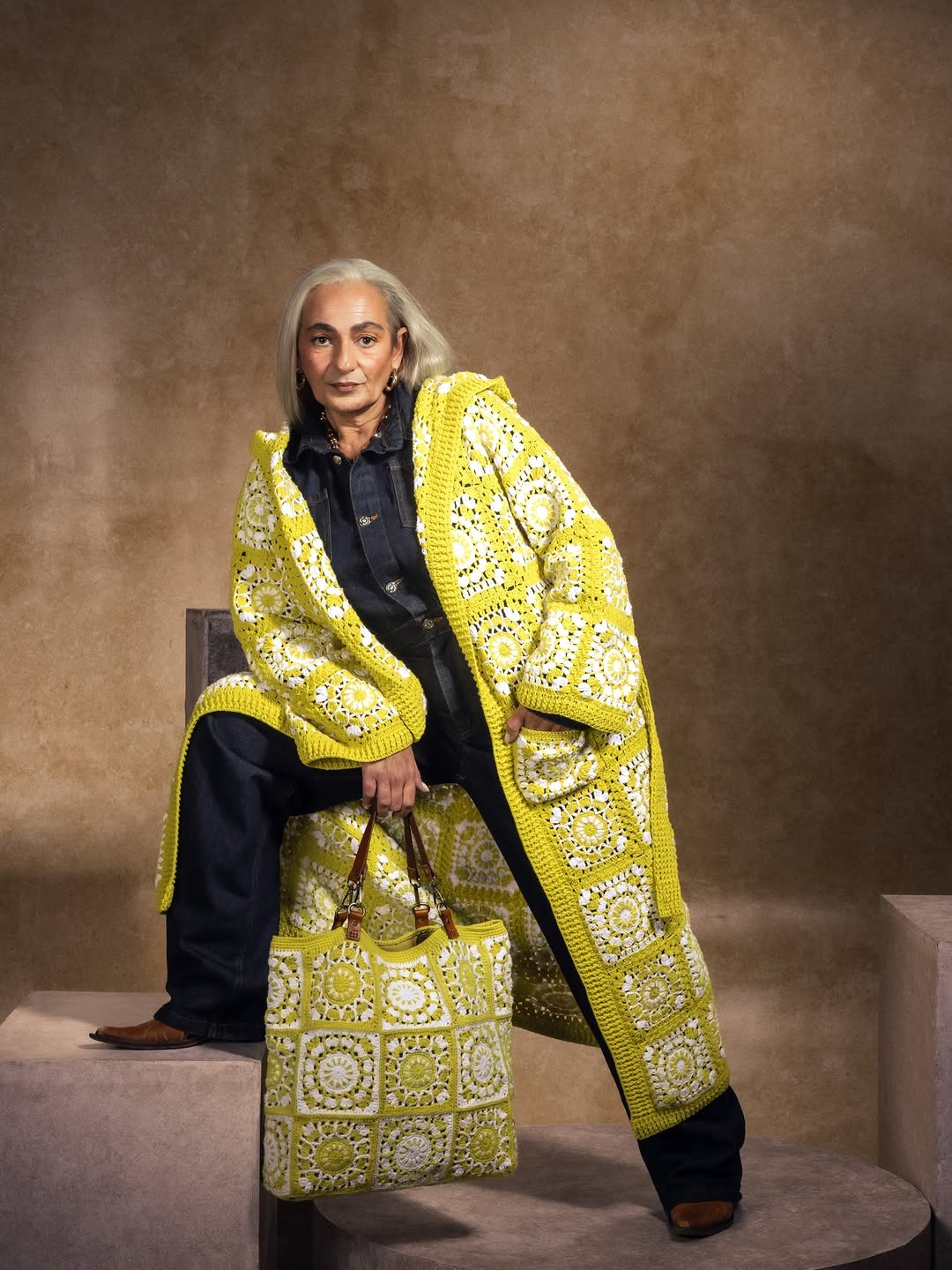
Bouthina Handmade started in 2014 with one woman, Bouthina Ahmed Mahroos, a crochet hook, and a heart full of passion. She began creating elegant, handmade crochet pieces from her home — each one crafted with love, care, and incredible attention to detail.
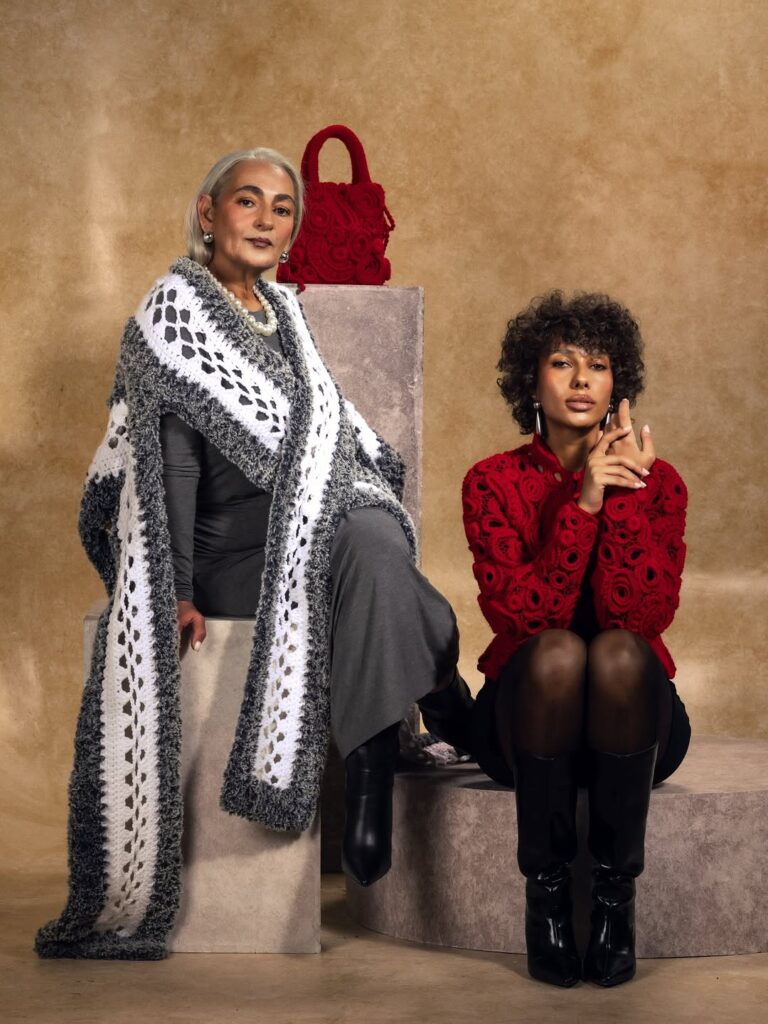
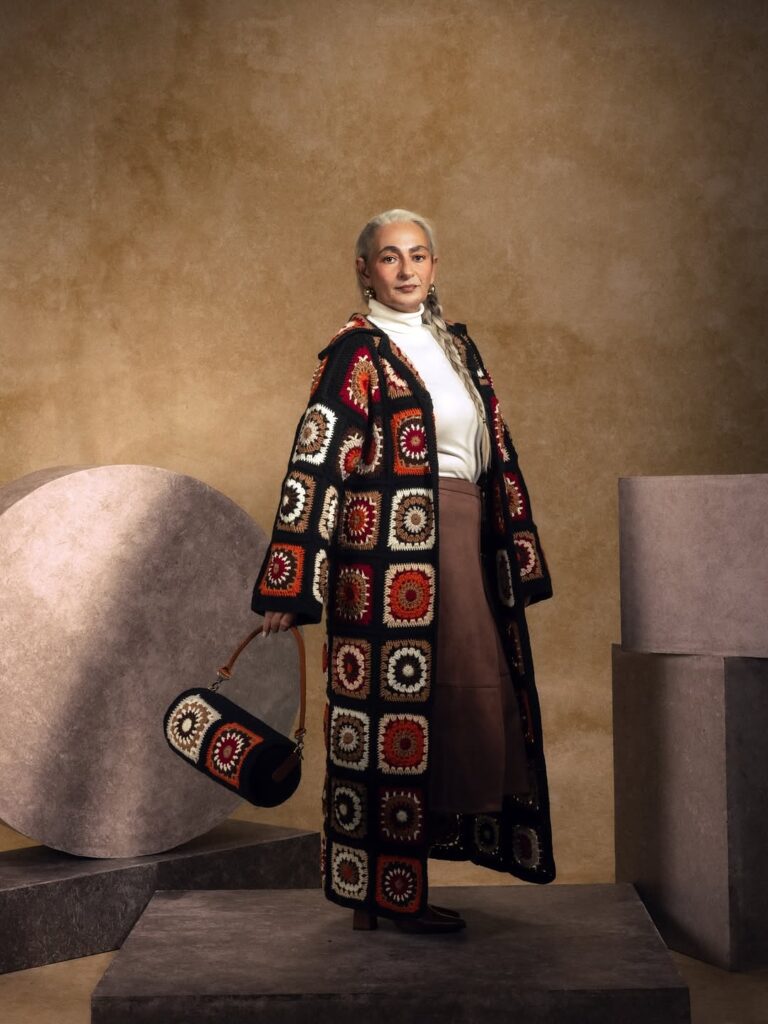
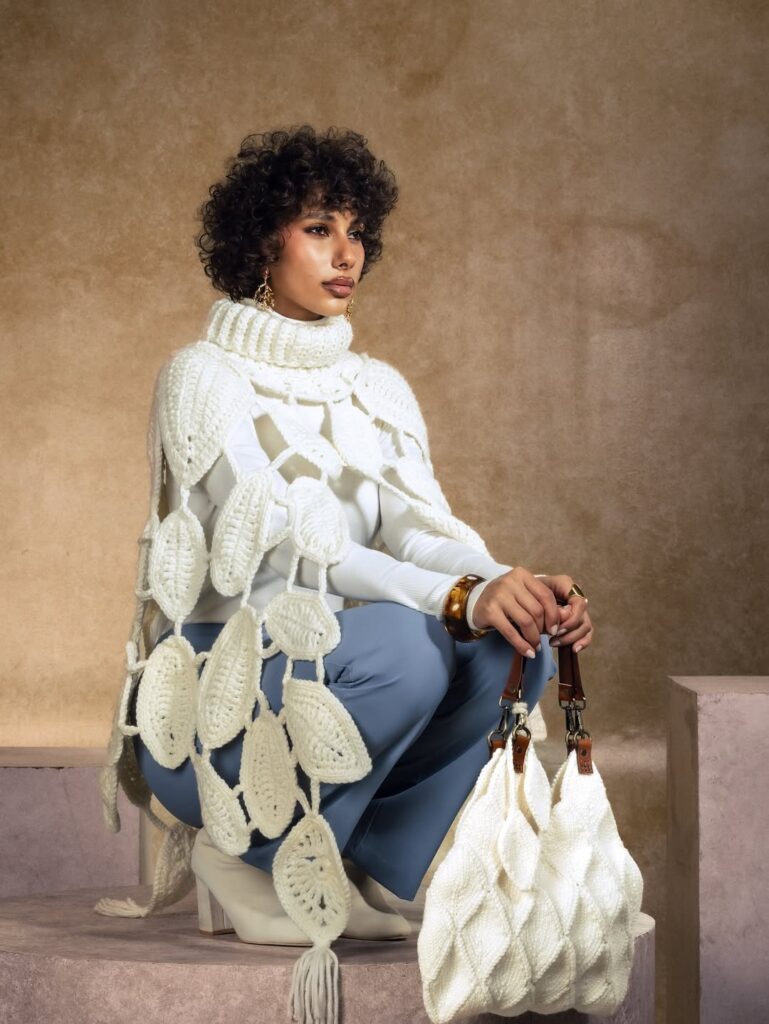
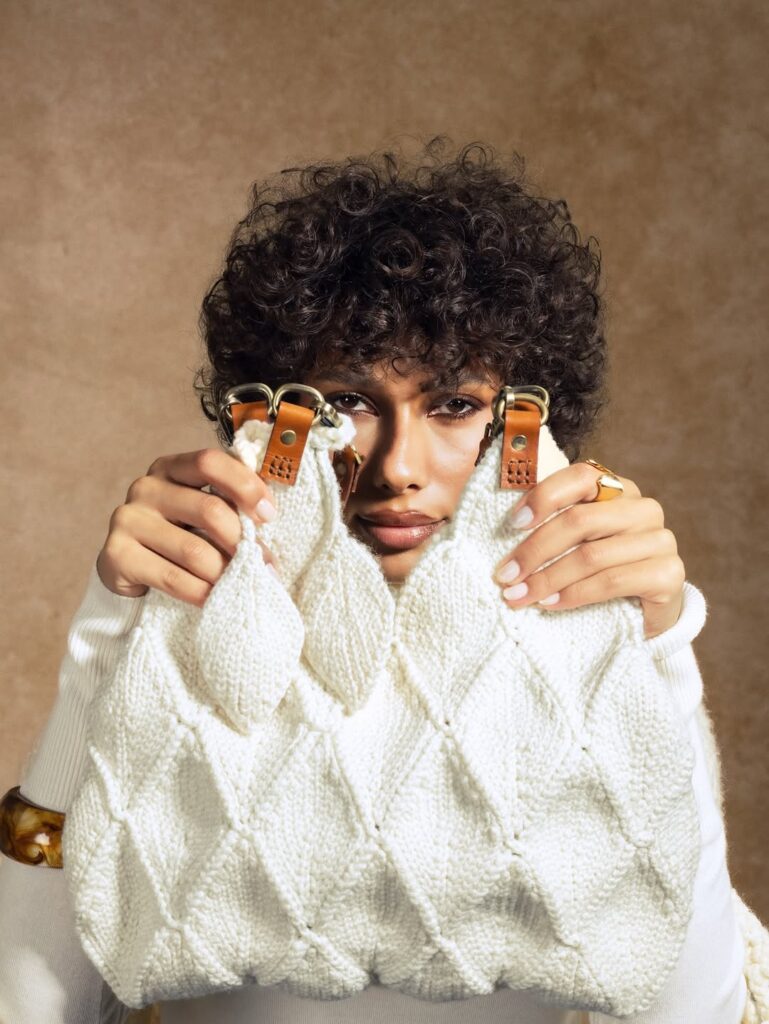
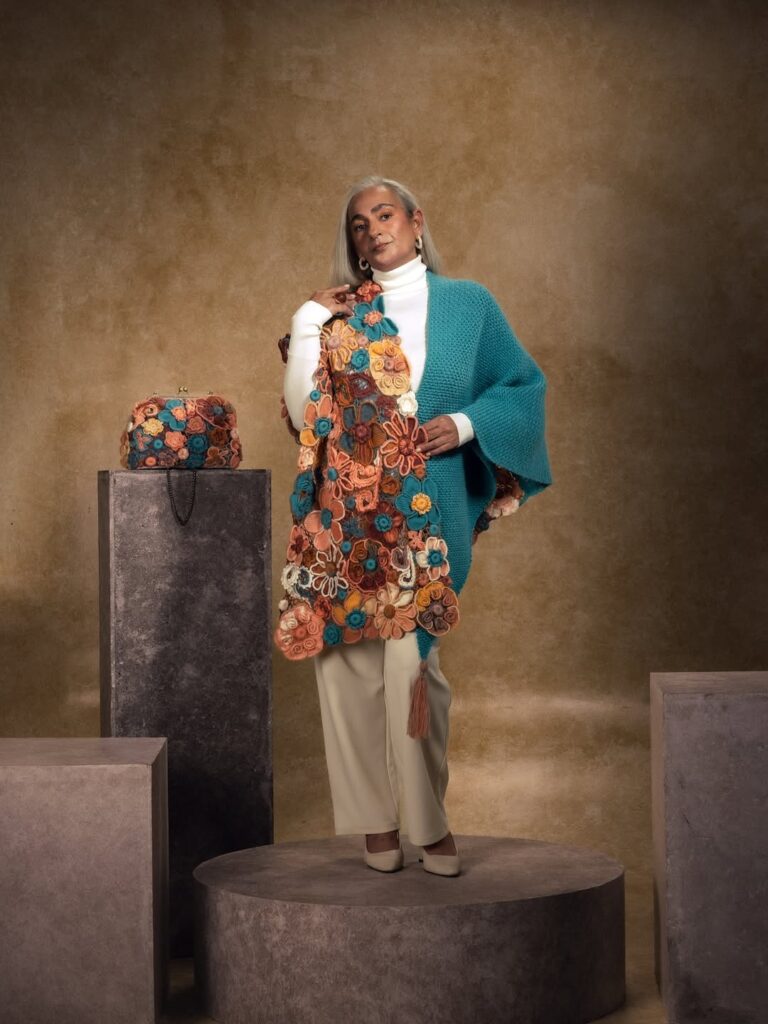
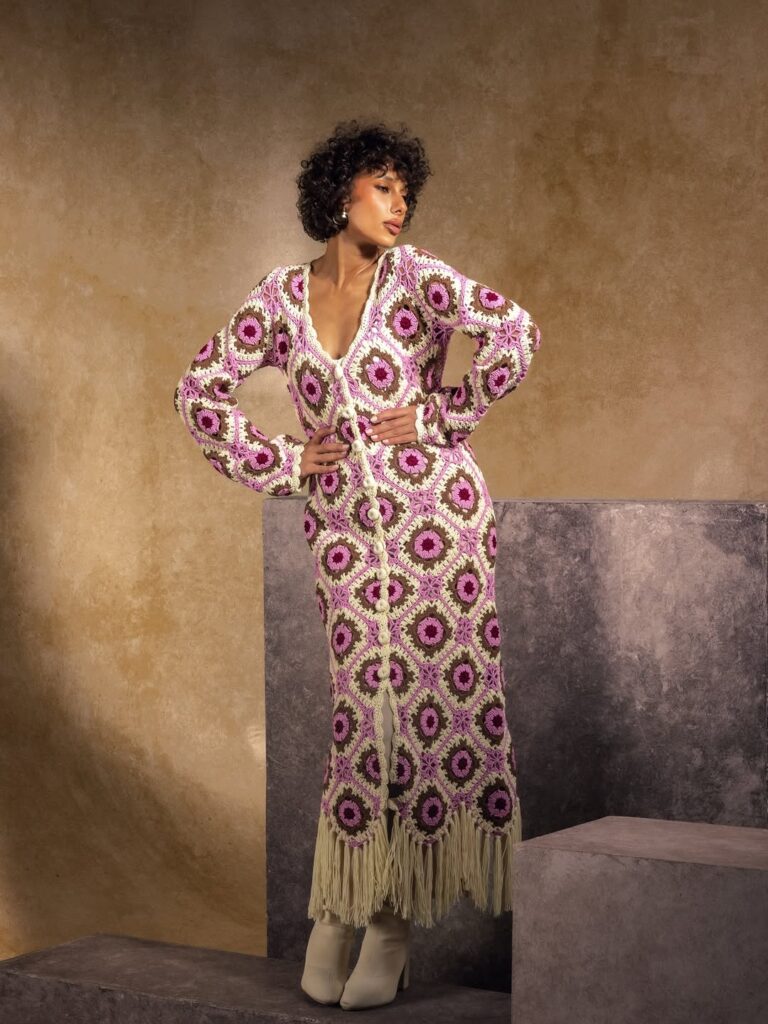
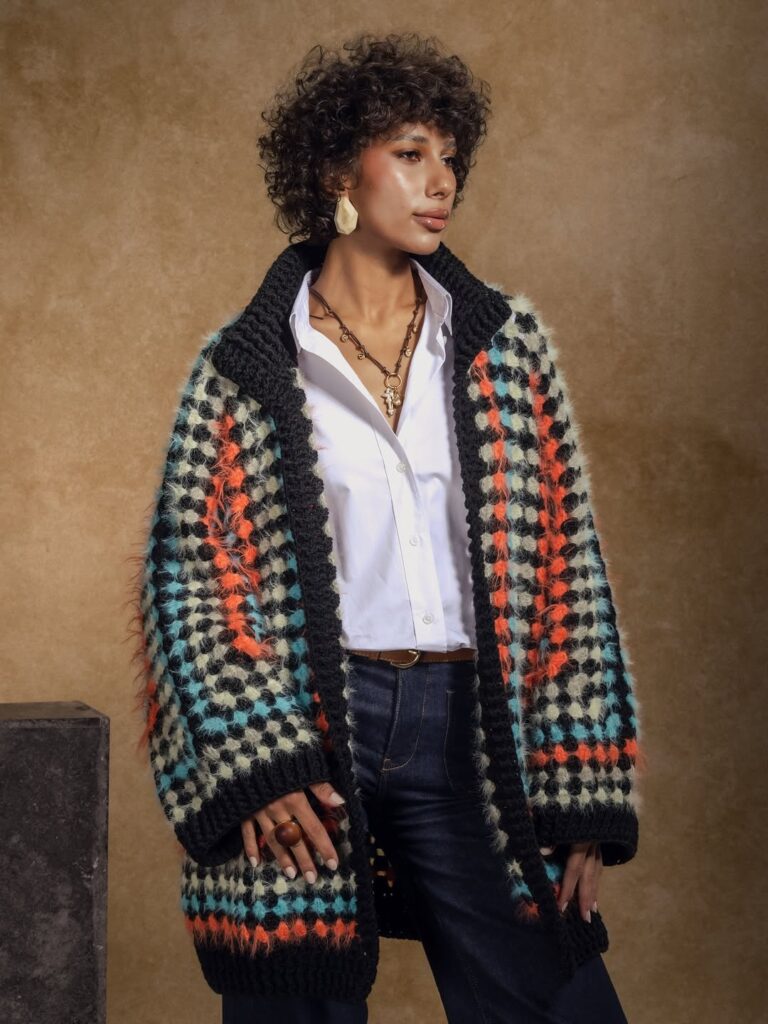
Bouthina Handmade is an Egyptian brand specialising in artisan-crafted, high-quality crochet fashion items, known for unique designs, vibrant colours, and intricate details in pieces like cardigans, bags, and jackets, offering “quiet luxury” and wearable art for effortless, statement style.
The brand’s sustainability is rooted in its approach to production and materials, which contrasts sharply with the environmental impact of industrial garment manufacturing. Each item, such as their crochet bags and cardigans, is crafted by hand with care, emphasising quality and unique details. This process is inherently more labour-intensive and less resource-extractive than mass machine production.
The brand uses high-quality yarns and materials to ensure that products are long-lasting, encouraging consumers to buy fewer items less often.The brand explicitly describes its products as “Eco-friendly and sustainable”. Bouthina Handmade positions itself as an alternative to “fast fashion,” focusing on unique designs and stories behind each stitch, which inherently promotes a more conscious consumption model.
By focusing on artisanal production and timeless style, Bouthina Handmade minimizes environmental impact compared to conventional apparel production methods. Their design aesthetic is characterized by artistic, individual pieces that stand out from mass-produced “fast fashion”.
Many items, such as bags and cardigans, use vibrant colours and intricate details to create a statement piece. Each item showcases the artistry of traditional crochet techniques and attention to detail.They offer a range from spacious, functional everyday bags to elegant dresses, shawls, and winter wear. Some pieces, like plain cardigans, are elevated by unique stitches and quality materials, designed for elegance and timeless style.
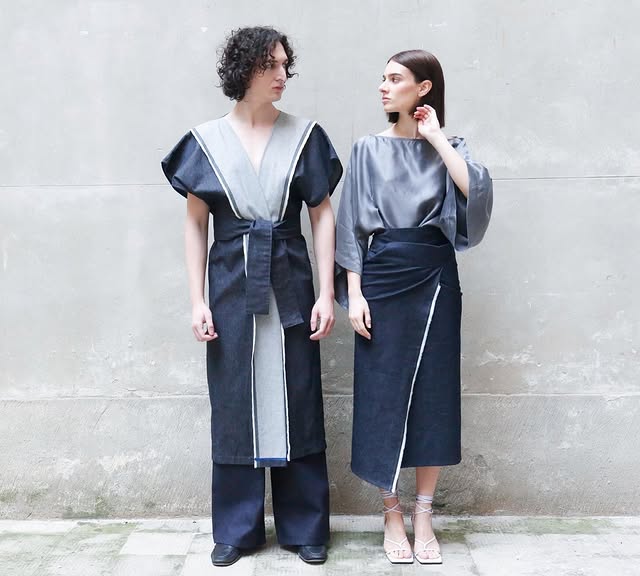
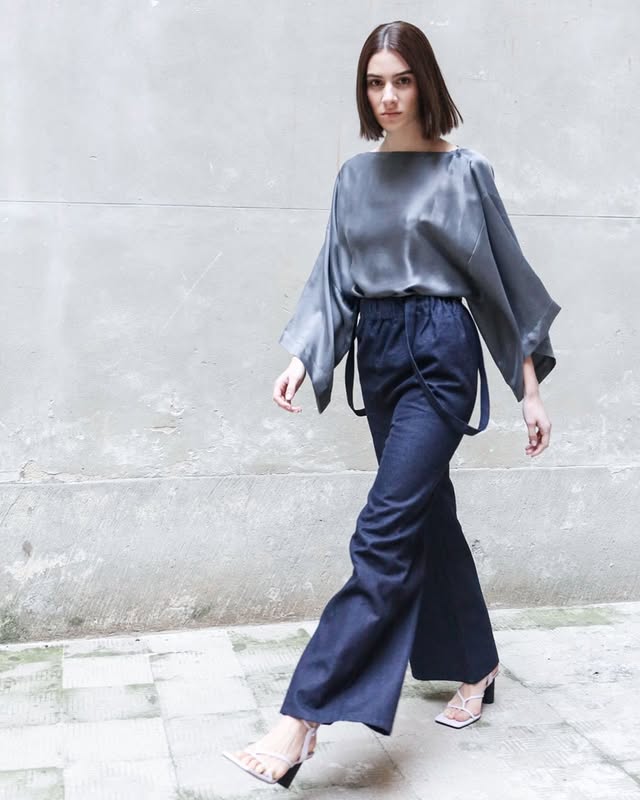
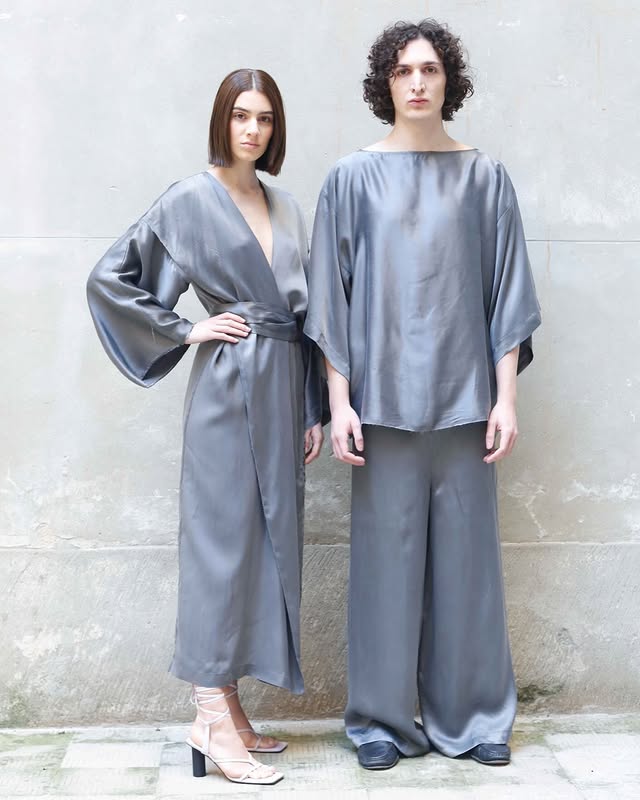
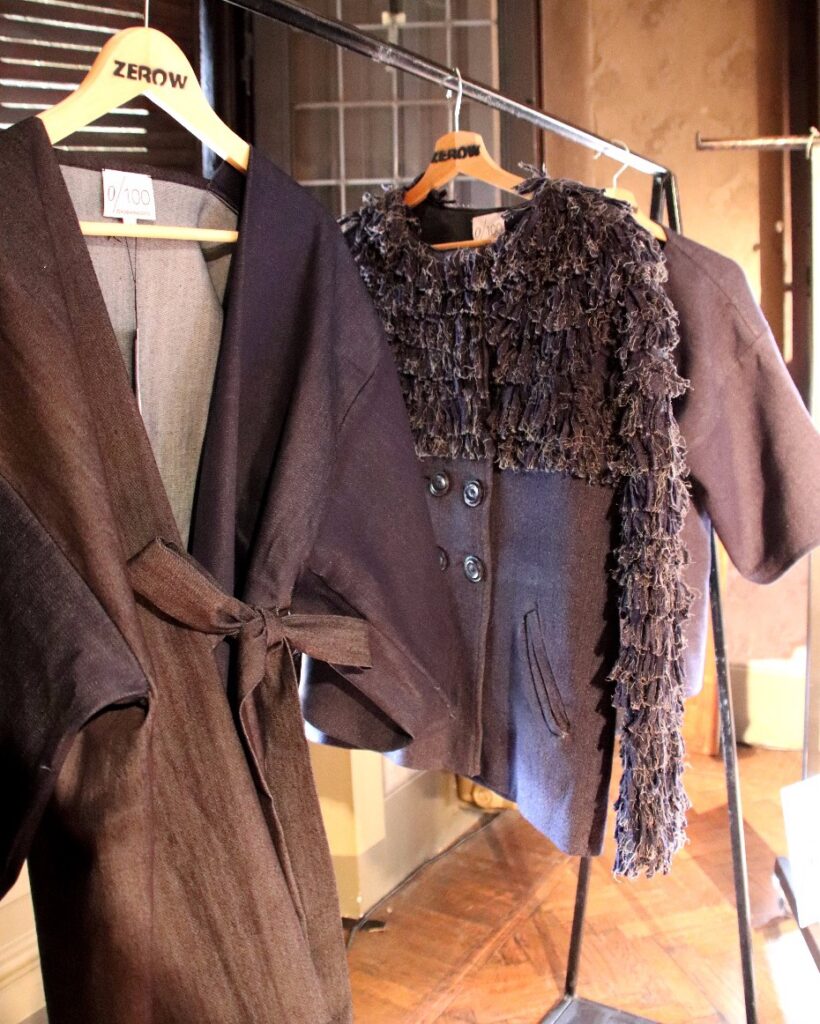
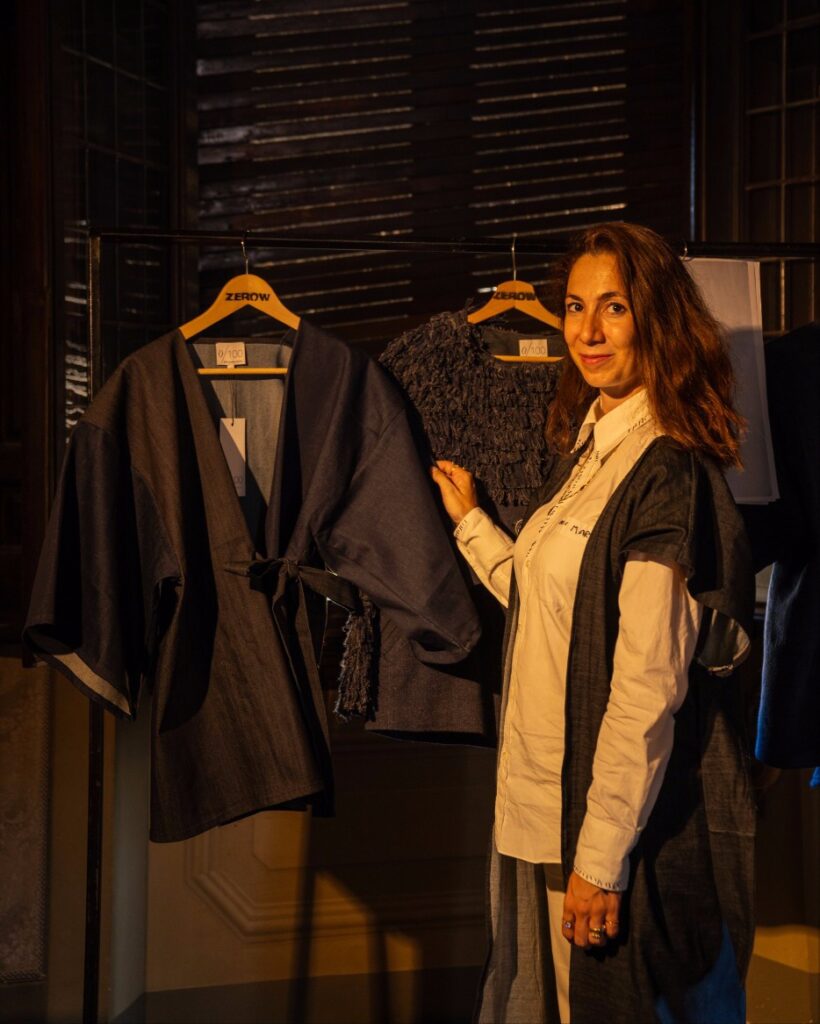
Zerobarracento is an Italian outerwear brand focused on sustainability through a zero-waste design process that maximizes fabric use and creates durable, gender- and age-inclusive garments.
The brand utilises innovative zero-waste pattern making technique where garments are designed to use every part of the fabric, like a puzzle, to eliminate waste at the source.
This technique is a core part of their philosophy, and the brand extends the commitment to a full 360-degree approach by also using monofibre products to make recycling easier and avoiding accessories that are hard to disassemble.
The pattern pieces are strategically designed to fit together perfectly on the fabric, using the entire piece of material. This is an intentional and integrated design process where the dimensions of the garment and the textile must align from the start.
Camilla Carrara, founder and designer of Zerobarracento says this isn’t just a pattern-making method for Zerobarracento; it’s a commitment to a holistic, zero-waste approach that involves the entire production process.
“At ZEROBARRACENTO sustainability has been at the core of the brand since the beginning through our design mission. From that, we continuously expand our attention into a traced supply chain, careful selection of sustainable materials and eco-packaging. As a small brand we hold the highest control over our suppliers. In each collection, the patterns are developed according to a zero – waste pattern making, an innovative design technique that allows to use the fabric in its entirety, with no waste at the design stage of a garment, which is usually around 15%,” she says.
Camilla Carrara
The brand is transparent about its supply chain and uses high-quality materials from carefully selected suppliers. They also use monofibre products and avoid difficult-to-disassemble accessories to ensure the entire garment can be recycled at the end of its life.
According to Carrara, Zerobarracento was created not to revolutionise, but to restructure and re-shape the values of the fashion industry, escaping seasonal trends and restrictions imposed by age and gender.
The brand is a certified project under the European Commission’s WORTH Partnership Project. The brand also promotes its Zero Waste Automated Fashion Manufacturing (Z.W.A.F.M.) project, which aims to bring zero-waste production to an industrial scale.
Zerobarracento has partnered with Xylene to showcase the transformative potential of digital product passports and traceability, achieving unprecedented levels of transparency in its collection.
This ongoing onboarding and data collection process ensures compliance with ethical standards and regulations. It also exemplifies Zerobarracento’s commitment to environmentally responsible practices and fair labour. With digital product passports, customers can make informed choices, supporting a brand dedicated to transparency, sustainability, and ethical production.
She is a genius creative, with an exceptional imaginative ability, a risk-taker, dedicated to her craft, consistently pushing boundaries and producing groundbreaking work that can reinvent existing knowledge and create new standards. She is a self-taught fashion designer who in a short period of time has displayed phenomenal garment creations.
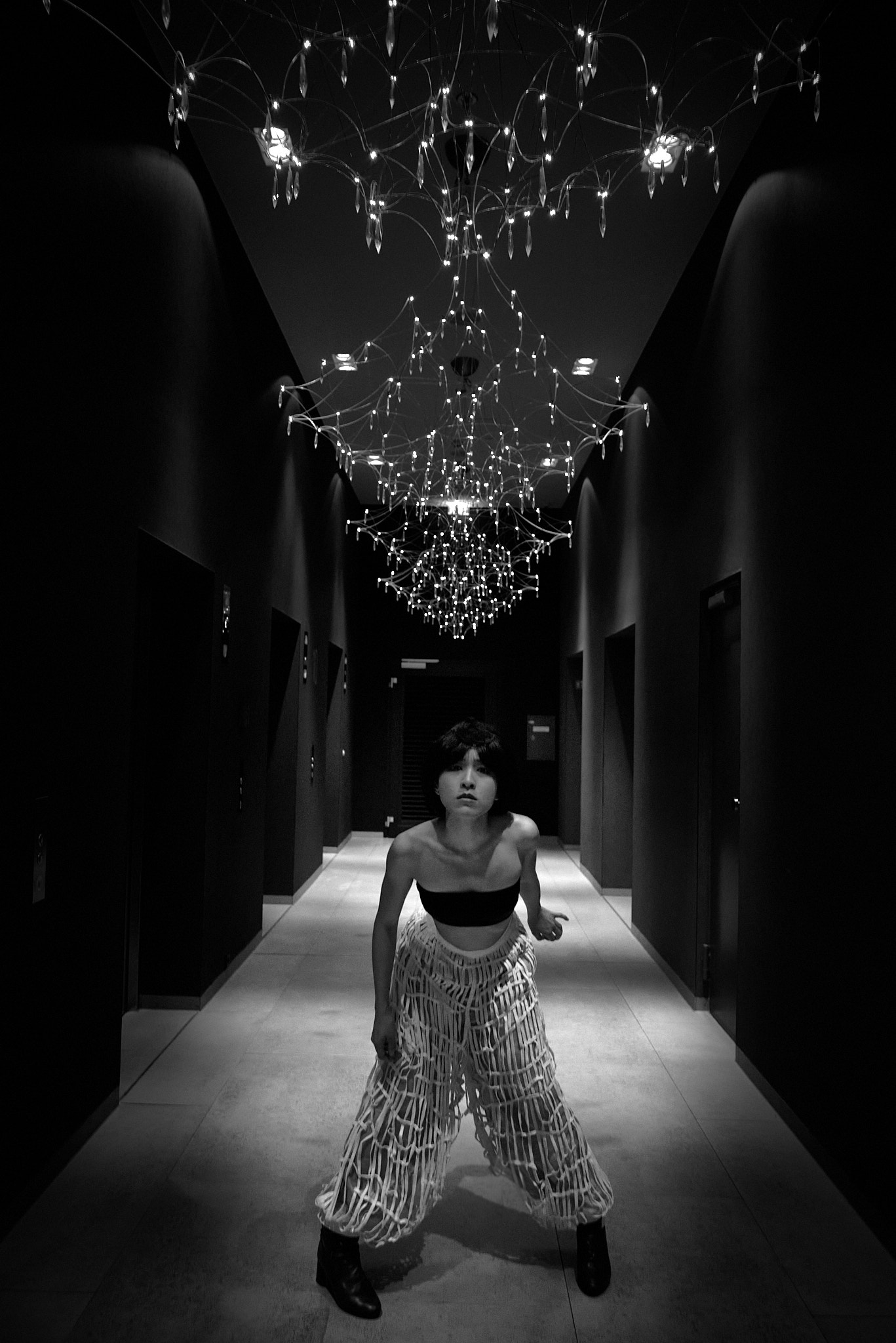
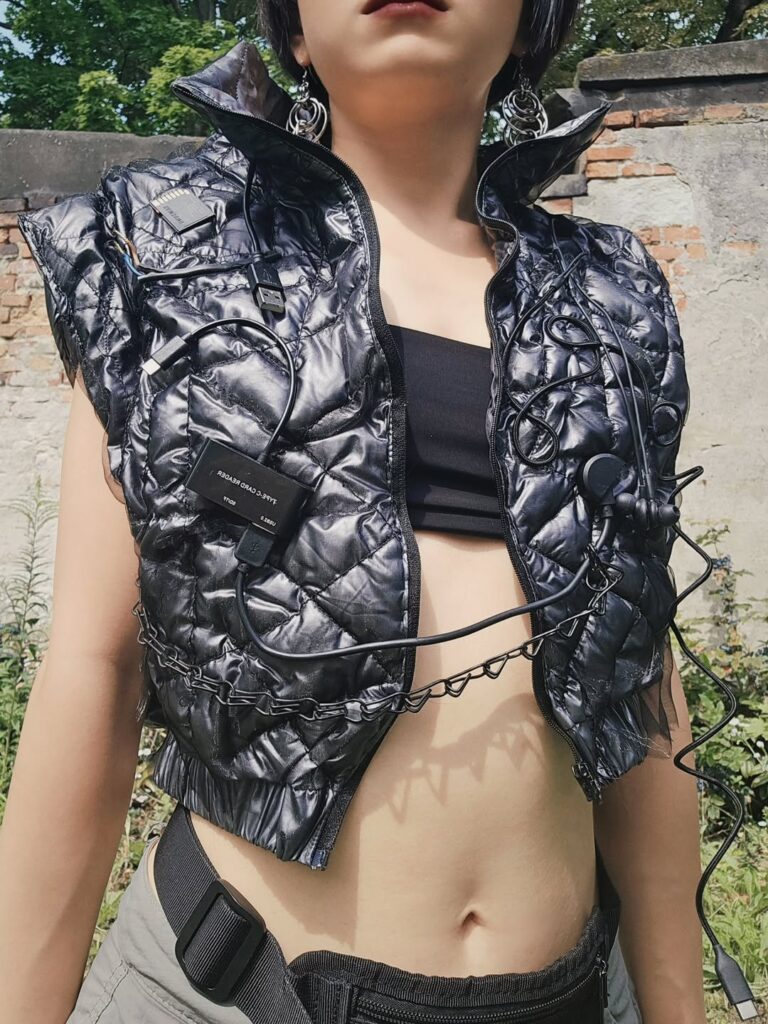
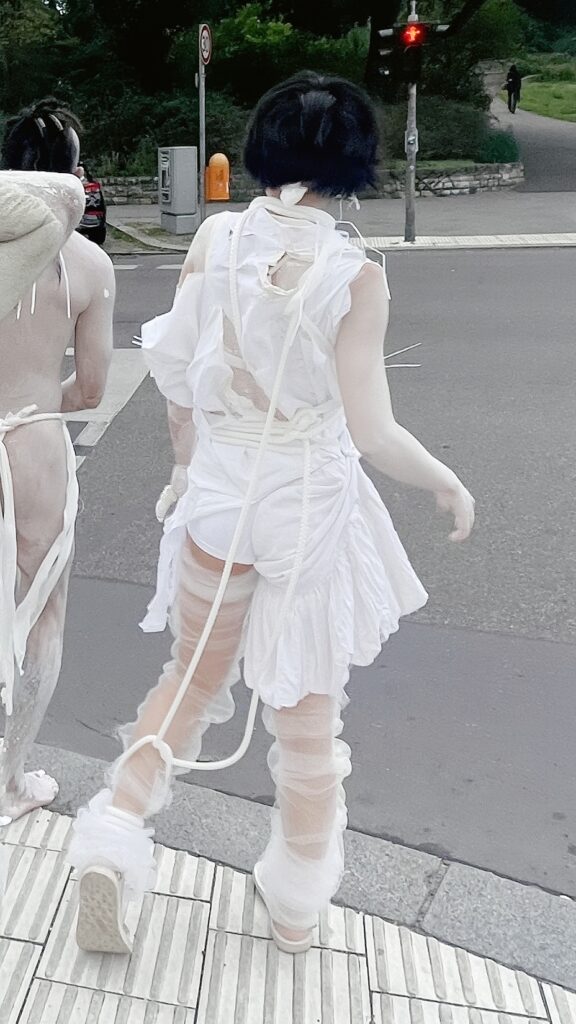
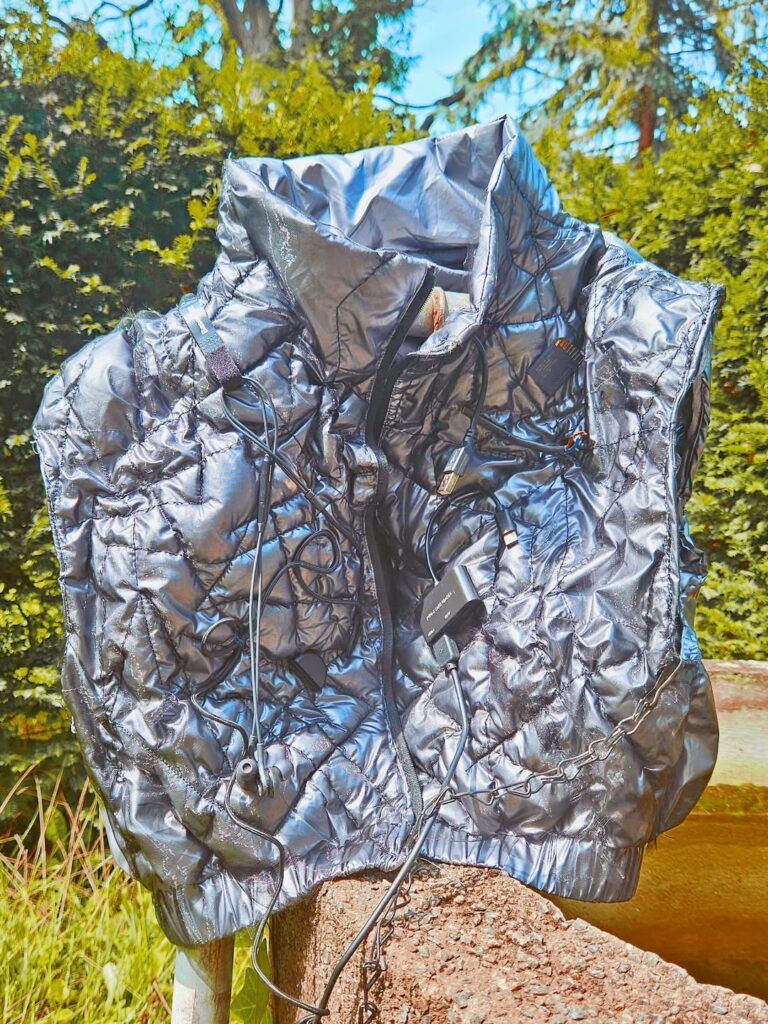
Nakira Pansurini is a designer and founder of Nakira Studio, based in Berlin, Germany. She is an artist who transforms discarded objects and repurposes clothing into wearable art. She is a Butoh-inspired fashion designer, who creates garments that focus on texture, form, movement, and the body’s relationship to gravity and the environment, rather than just surface-level aesthetics or trends.
Through this practice, she turns the mundane into the extraordinary, the discarded into the performative. Her work is not about perfection but about the process, play, and possibility. Each piece she creates emerges unpredictably, alive with movement, turning waste into radical, performative fashion. Nakira creates wearable art from what others throw away, discarded clothes, forgotten fabrics, and mundane objects from everyday life.
“My practice is rooted in Butoh, an experimental Japanese dance form born in the 1960s. Butoh is not about technique or polished form, it is about surrender. The dancer does not control movement but allows themselves to be moved by external forces, the environment, the air, gravity, textures, memories,” says Nakira.
Nakira’s use of improvisation is a significant element in her design process, allowing for spontaneous movement creation and the exploration of experimental design processes, such as the tearing and reassembling of fabrics, where the form is discovered through intuitive action rather than a fixed plan.
Nakira flips garments inside out or upside down. Sleeves become pantlegs, pants become sleeves, socks emerge from sleeves. Nothing is fixed; nothing is wasted. A bathrobe becomes a dress, shower puffs become leggings, yet their essence remains visible.
“I transform discarded clothes and forgotten objects into wearable art. Nothing stays as it was. Sleeves become pant legs, pants become sleeves, and ordinary fabrics are flipped, torn, and reimagined into moving sculptures. My background in dance drives me to create garments that stretch, shift, and deconstruct during performance, making the act of wearing inseparable from the art itself. I thrive on limitations, no budget, no rules, no fixed plans and using constraint as fuel for invention,” she says.
“I grew up in poverty in the suburbs of Bangkok, Thailand. As a child, I searched for discarded things on the street and made use of whatever I found, making them functional at any cost. My free time was spent building imaginary worlds where trash became treasure, each object carrying a story. My toys were made from garbage I reimagined into something meaningful. I have always loved working with my hands,” she says.
“And now, working as a sushi chef as well, I sharpen my hand–eye– brain coordination every day. Cooking for staff at the restaurant also means creating meals from limited ingredients, within tight budgets and time constraints. This philosophy of resourcefulness and invention carries into my sewing and upcycling work. For me, constraints are what make things creative; breakthroughs emerge from chaos and limitation,” she elaborates.
Nakira began sewing in August 2025 with no knowledge, no training, no rules. Her first piece was mesh, considered difficult by professionals. She says not knowing that mesh is difficult to deal with, freed her. Nakira says she discovered that constraints in budget, tools, time, and knowledge are not barriers but sparks for invention.
“Time pressure excites me, forcing me to use all my willpower and imagination to make something work. Recognition of what they once were is part of the art, a reminder that transformation does not erase but reimagines. As a dancer, I need garments that stretch, shift, and deconstruct with movement. Sewing is not just a craft but a performance. I use whatever tools are at hand, sometimes even my teeth, and often begin with no plan, allowing fabric and object to move me,” she explains.
“Sometimes the most alive moments happen when you have no time to overthink. No pattern, no plan, just hands and fabric, trusting the process even when you do not know what the process is. Butoh teaches that nothing stays intact. Outfits shift as the body moves, pieces fall away, and the garment continues deconstructing long after it leaves my hands.”
Nakira’s approach to design is instinctive and experimental, rather than aiming for perfection. She says, “I work with the chaotic energy of the material, accepting accidents and limitations as part of the creative process. What emerges is not a polished garment but a wearable sculpture that carries the memory of its former life, while simultaneously inhabiting a new identity as a raw, performative costume.”
GARMENT CREATION PROCESS
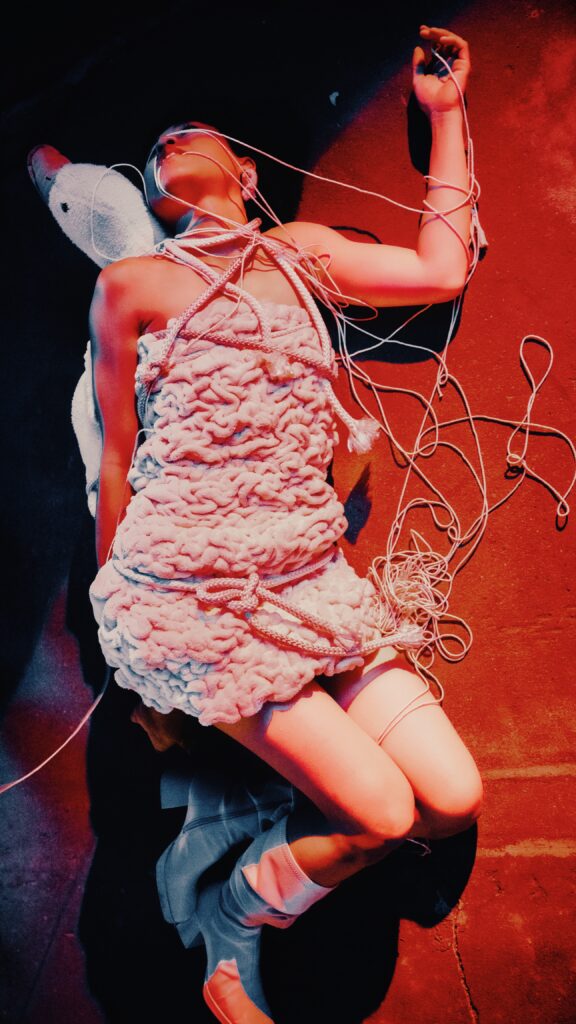
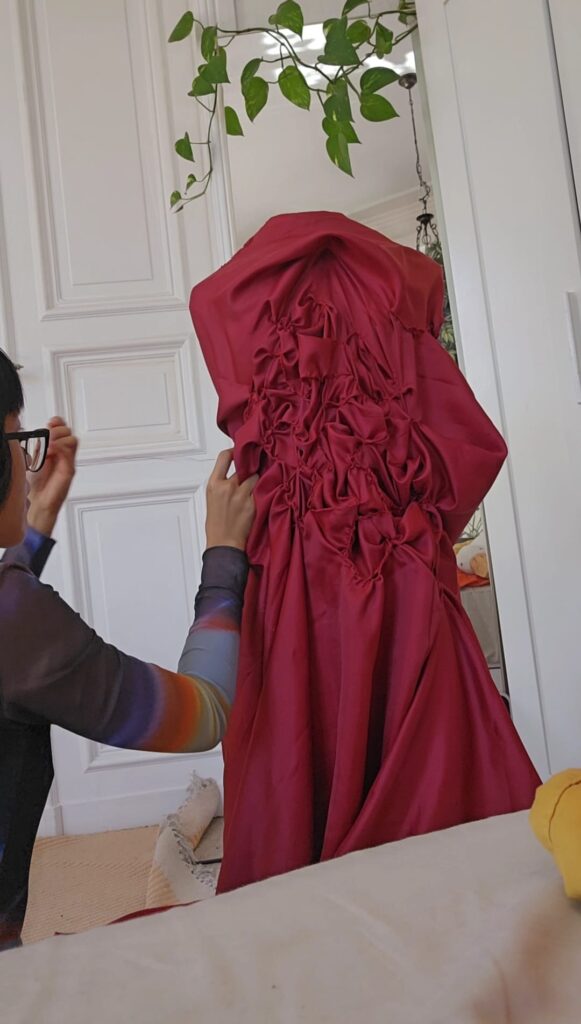
“This piece began as an experiment during the second month of teaching myself how to sew. I wanted to explore fabric manipulation through smocking, a technique that gathers fabric into folds and textures through repeated stitching. My first attempt was on a red dress made for a shibari session, and soon after I turned to my old bathrobe as material for further exploration. Working without a pattern or plan, I allowed the fabric to guide me. Over twenty hours, simple white stitches pulled the bathrobe into dense, puckered folds that resembled organic forms, almost like the surface of a brain. Unlike traditional smocking, which follows a decorative grid, this process was improvised and irregular, producing an unpredictable sculptural effect. For me, this process embodies the balance of control and surprise. Each stitch, a small experiment, each fold a decision made partly by me and partly by the material itself. The final garment is both familiar and estranged, a bathrobe reimagined as performance wear while still carrying the memory of its original form.”
Documented at Mahalla Open, Berlin Art Week, 10 September 2025
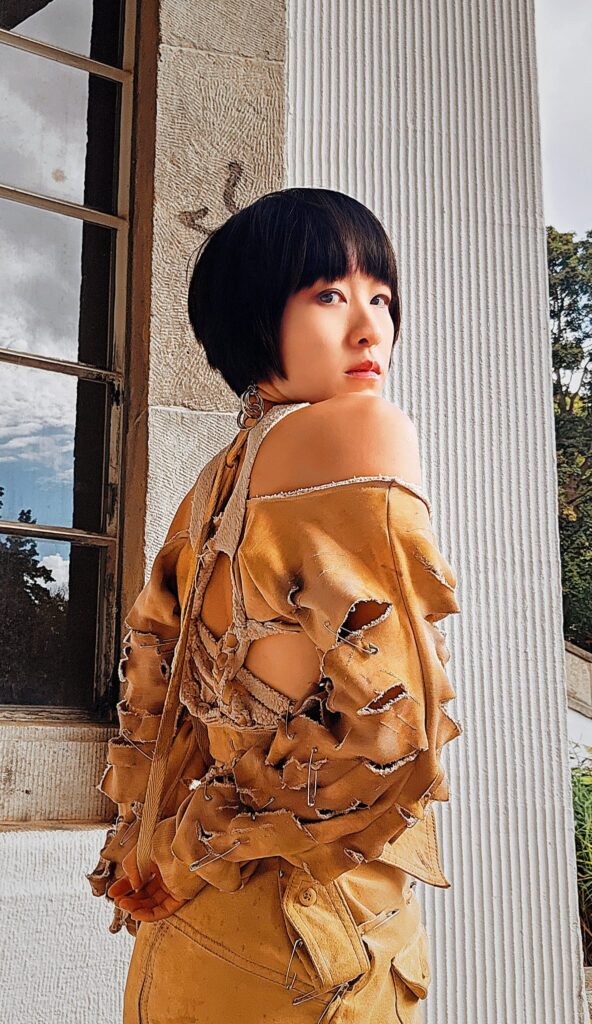
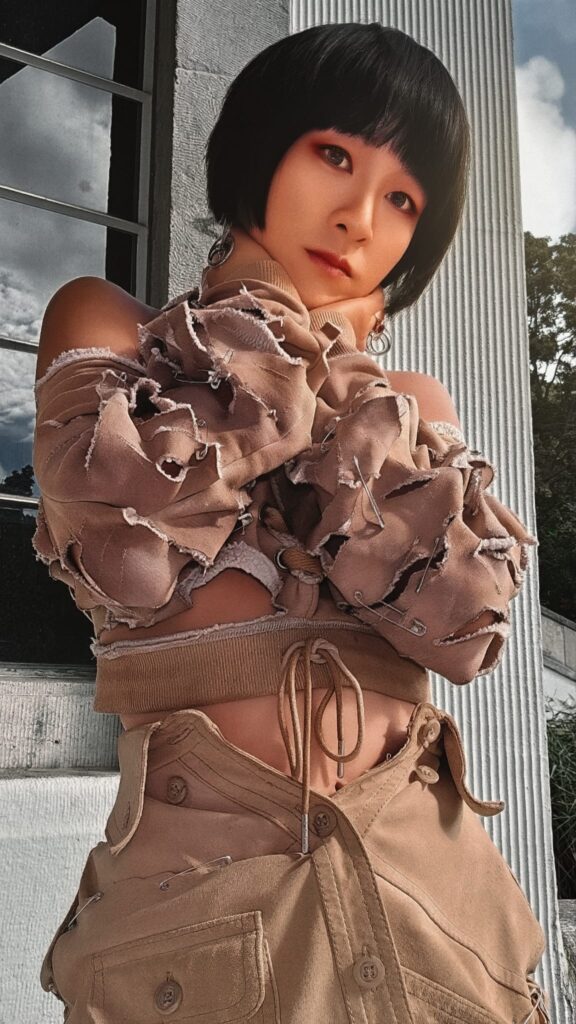
“I found a pair of Uniqlo winter trousers discarded on the street in Berlin and reimagined them as material for a post-apocalyptic style top. The decision to transform street waste into wearable art reflects my ongoing interest in post-consumption fashion and the poetic potential of discarded materials. The process was entirely improvisational, with no pattern or predetermined design. I began cutting directly into the trousers and allowed the fabric to dictate the outcome. The front features irregular cutouts that expose and conceal the body, while the back incorporates a shibari-inspired lacing system. The piece was constructed using whatever tools were immediately at hand, including unconventional methods of fabric manipulation to create texture and tension.
Upside-Down Dress Transformation (August 2025)
“This piece was created on my fifteenth day of teaching myself sewing and upcycling. I found an abandoned dress left in a box on a Berlin street corner and reimagined it by turning the garment completely upside down. The sleeves became pant legs, and the zipper, originally placed at the chest, shifted downward to serve a new function in the transformed piece. This process reflects my approach of working directly with discarded clothing, allowing the material to dictate new possibilities. By flipping and reassigning functions, what was once a discarded mistake becomes a playful, wearable experiment that questions how garments can be reconstructed and reused.”
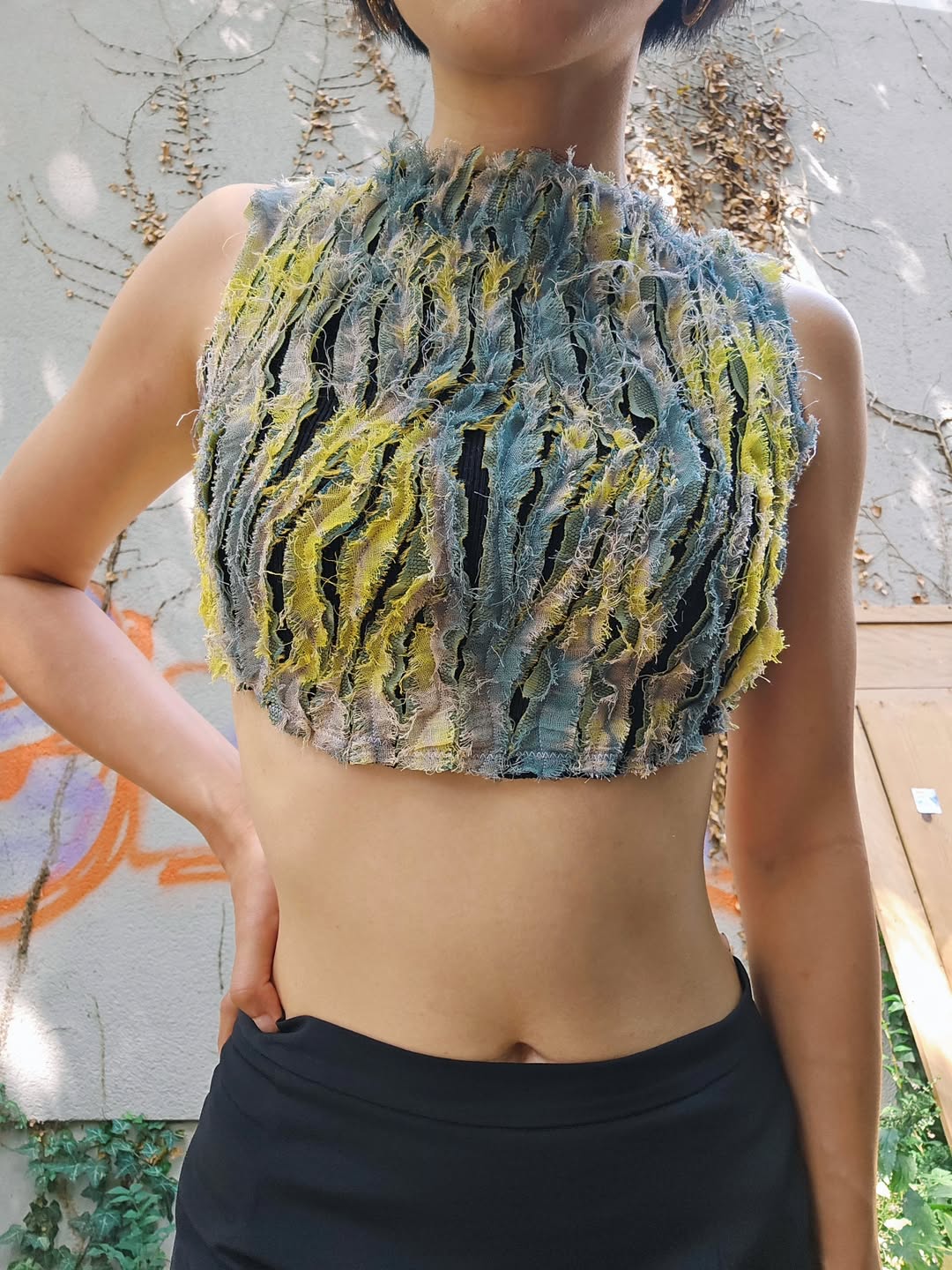
Slashing Technique Top (August 2025)
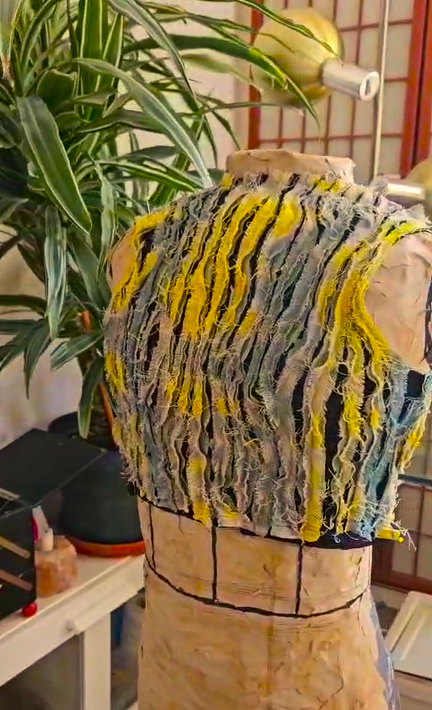
“On my thirteenth day of learning sewing and upcycling, I created this top using the traditional slashing technique, but with unconventional fabric choices. I combined a patterned scarf with mesh and two additional fabrics in a similar colour scheme, creating layered contrasts in tone and texture. The mesh was chosen deliberately to evoke the look and feel of fish skin. Its surface not only adds a scaly, organic appearance but also produces sound when touched or scratched, giving the garment an unexpected auditory dimension. The key breakthrough came from incorporating a stretchy black dress as the base fabric. When slashed, its elasticity revealed black areas beneath the folds, adding depth and movement to the surface. Traditionally, the slashing technique is used only on non-stretch fabrics, but by introducing stretch, the piece shifts and transforms as it is worn, making the texture appear alive. This experiment demonstrated how a historical technique can be reimagined through unusual material choices, turning discarded textiles into a garment that engages not just the eye but also touch, sound, and motion.
Red Improvised Dress (September 2025)
“This piece was created in two hours for a shibari session, with the intention that it would be ripped and deconstructed. I began without a pattern, working only with instinct and urgency. At first, I stitched by hand, using improvised smocking and gathering, and let the availability of thread decide my rhythm. When the thread ran short, I stopped; when more was available, I continued. Impatience eventually shifted the process to the sewing machine, where I sewed one-handed while filming, randomly folding and feeding fabric through. At some point I abandoned stitching altogether and began ripping the fabric directly, letting destruction become part of creation. Inspired by Tatsumi Hijikata’s 1968 costume for Revolt of the Body, the dress was never meant to stay intact. During the session it was torn apart, the fabric fragments unravelling through ropes and tension. At the end, I tied myself with the ripped pieces, binding body and fabric together in an improvised act of continuation. The garment’s value lay not in durability but in impermanence, in its transformation, its undoing, and its release.”
Nakira’s wearable work of art deserves recognition for essentially demonstrating a blend of avant-garde designs, creativity, innovation, and unconventional upcycling processes that create aesthetically appealing garments.
ALL IMAGES SUPPLIED BY NAKIRA STUDIO
COVER AND MAIN PHOTO IMAGE PHOTOGRAPHED BY: Martin Oskar @m3q.photo
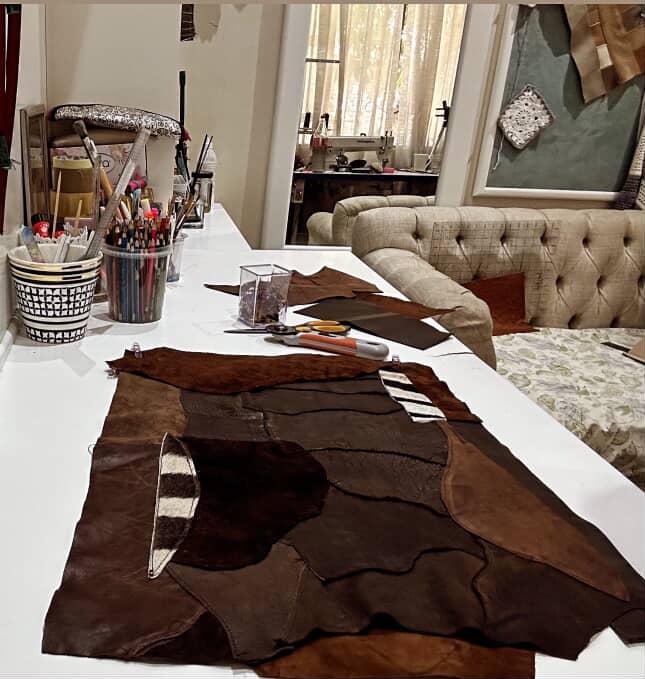
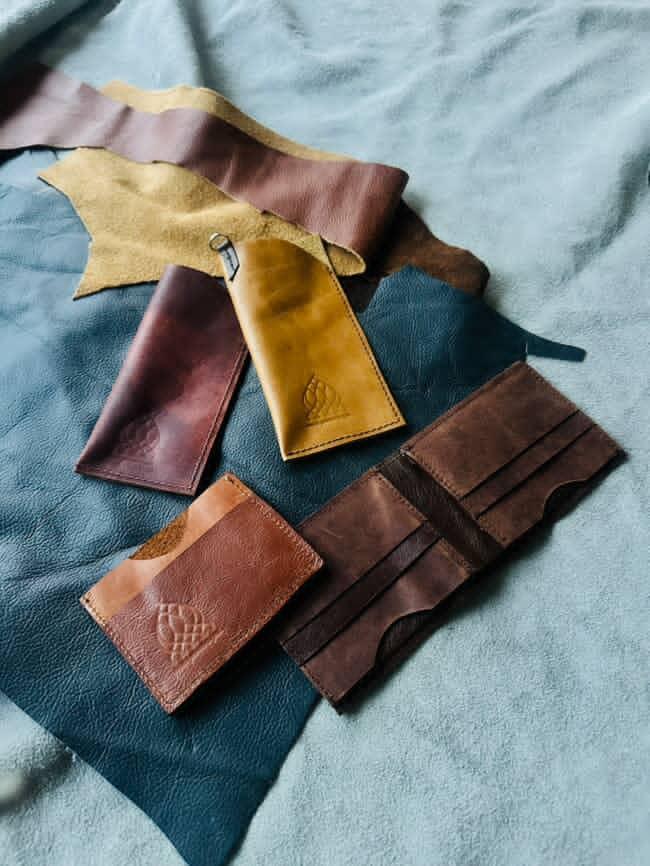
Using leather offcuts to make bags is a growing trend, driven by increased interest in sustainable fashion, upcycling, and unique, handcrafted products. This practice reduces waste and allows for the creation of stunning bags with a distinct character and the appeal of being eco-conscious.
The fashion industry is moving towards more eco-friendly practices, and using leather scraps helps reduce landfill waste. Offcuts allow for the creation of unique, “patchwork” designs that are different from mass-produced bags.
Small businesses like Mayamaya, founded by Maiada Salousa, are using upcycled leather to craft products, which helps support local economies and promote sustainable business models.
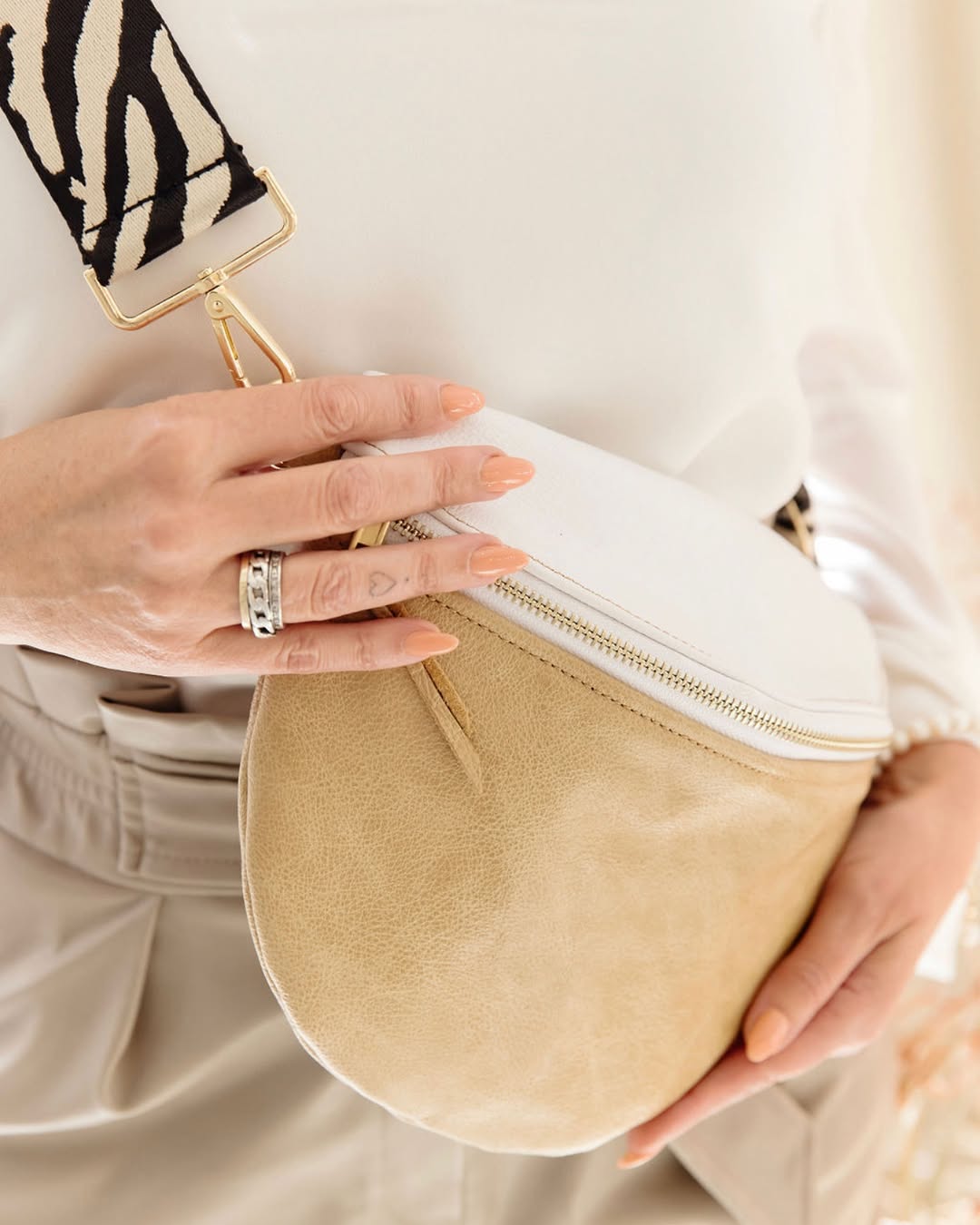
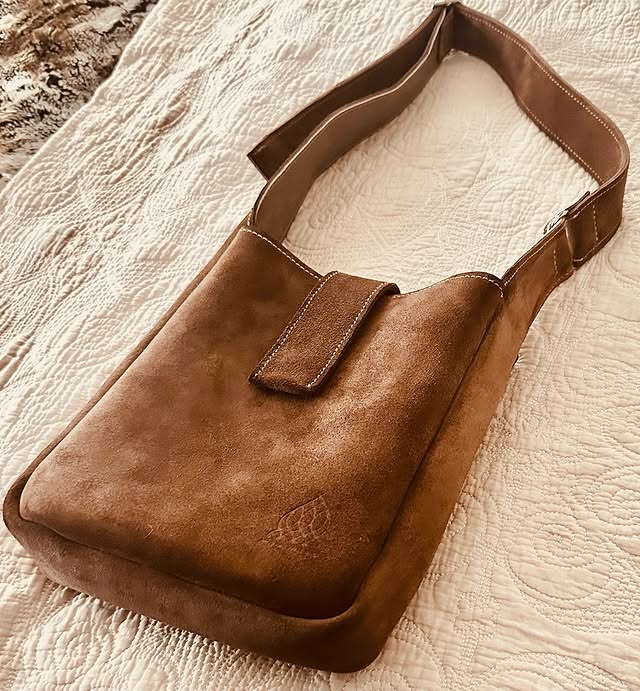
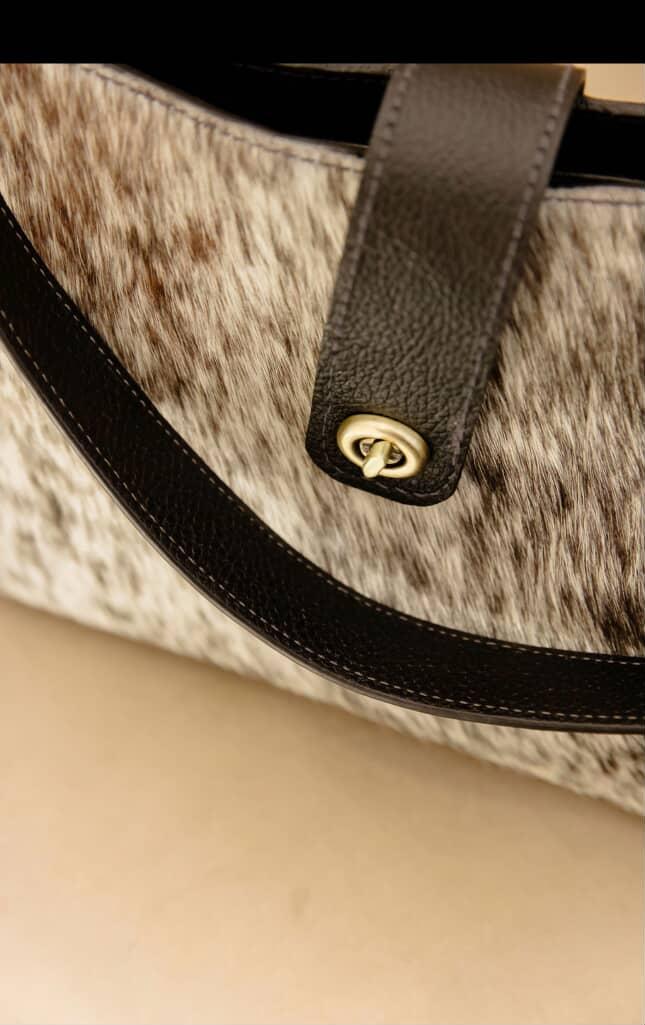
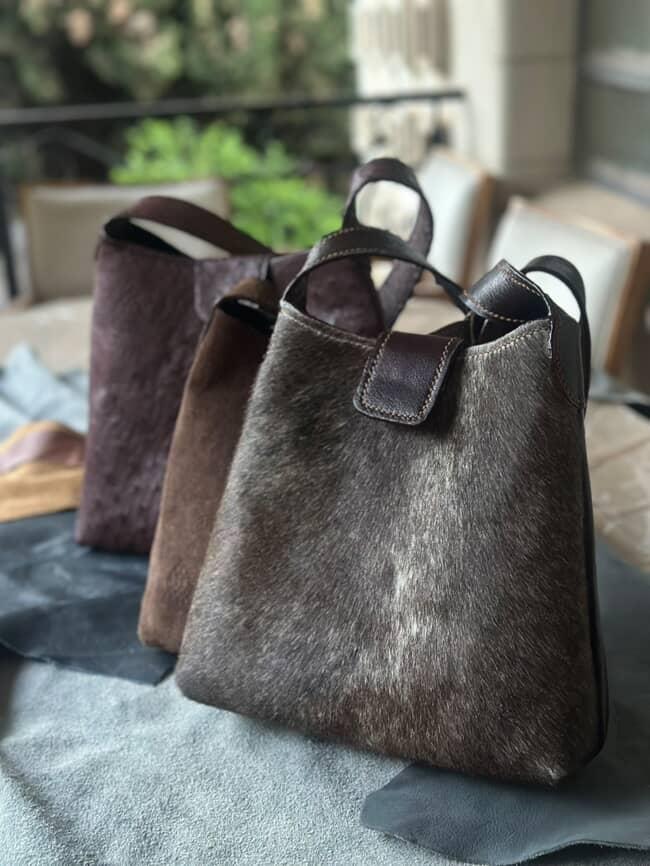
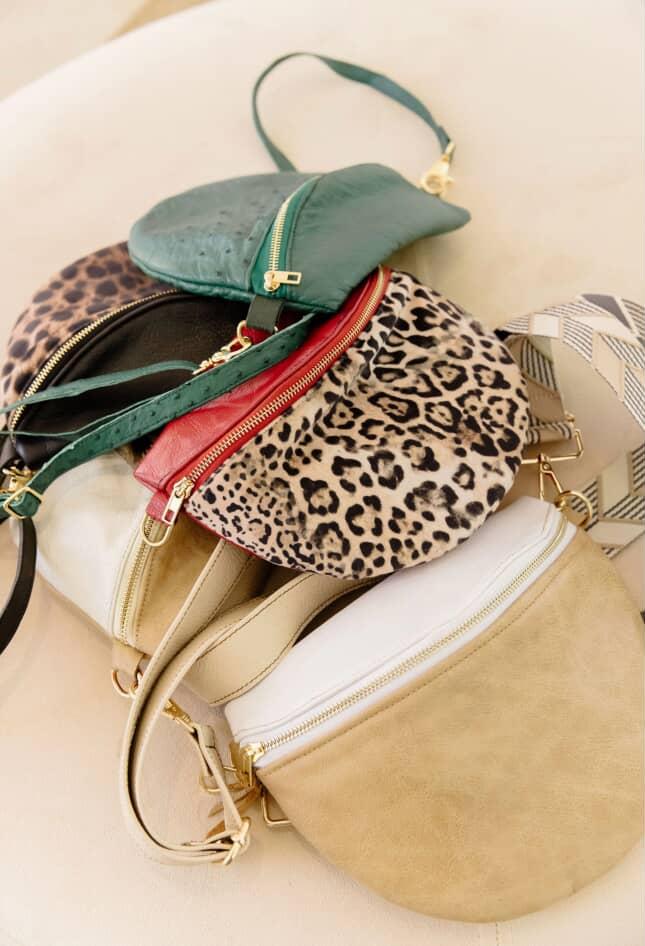
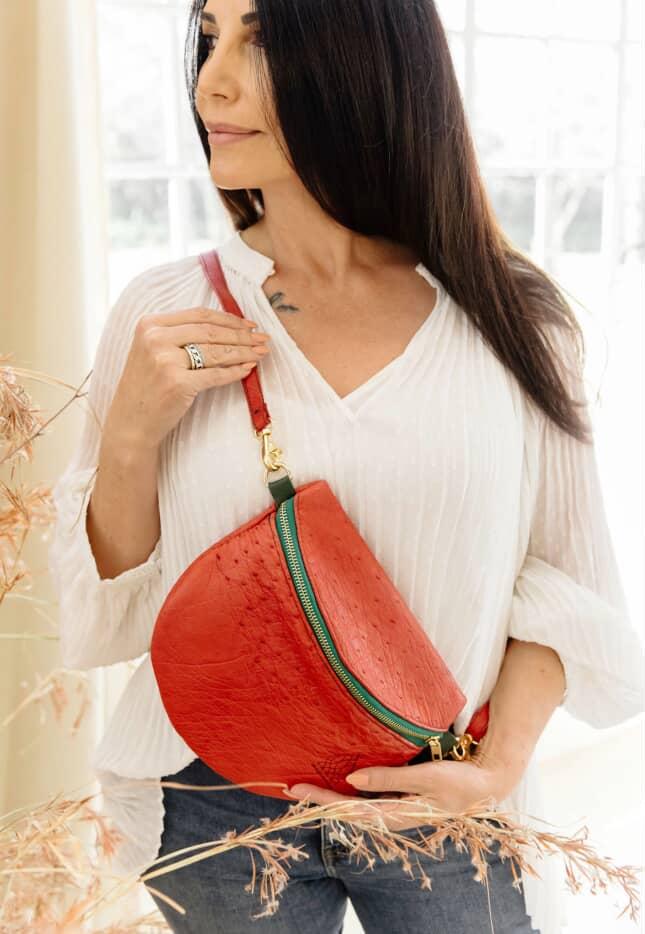
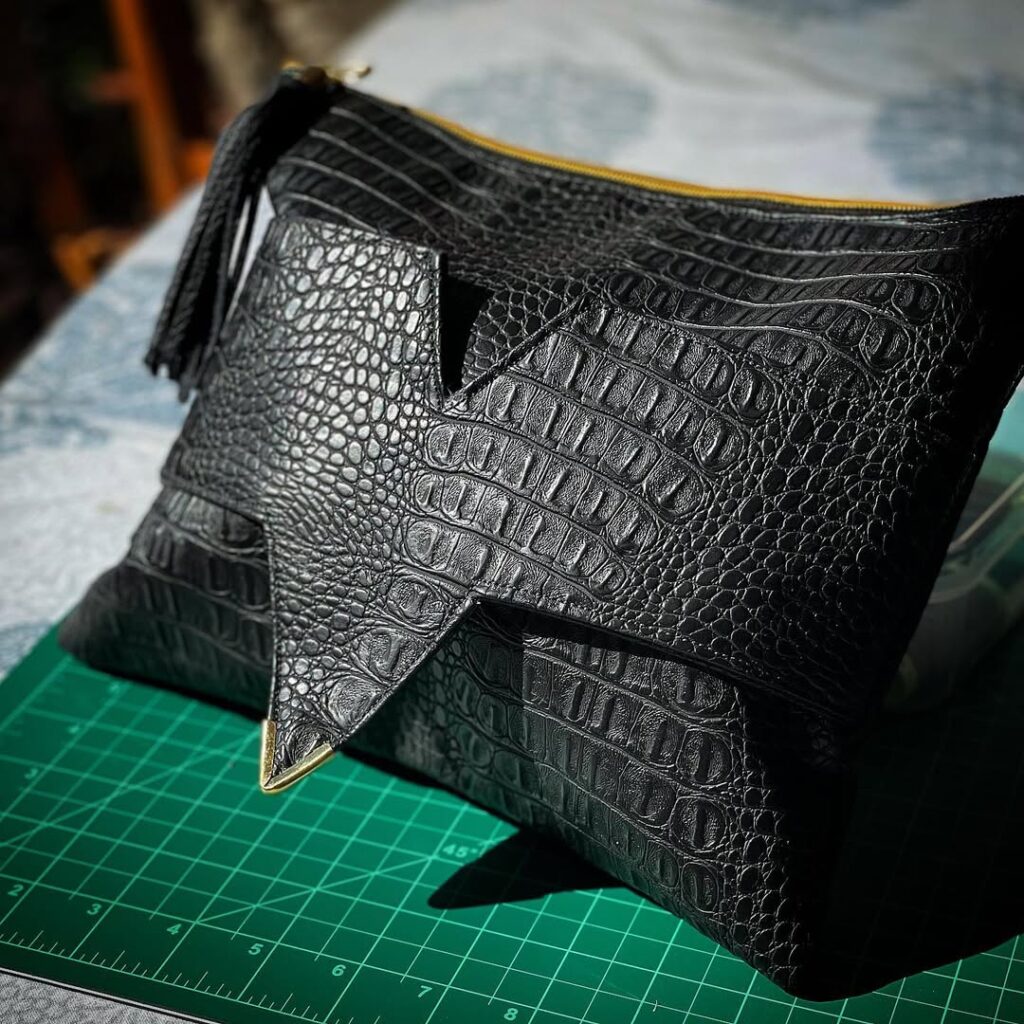
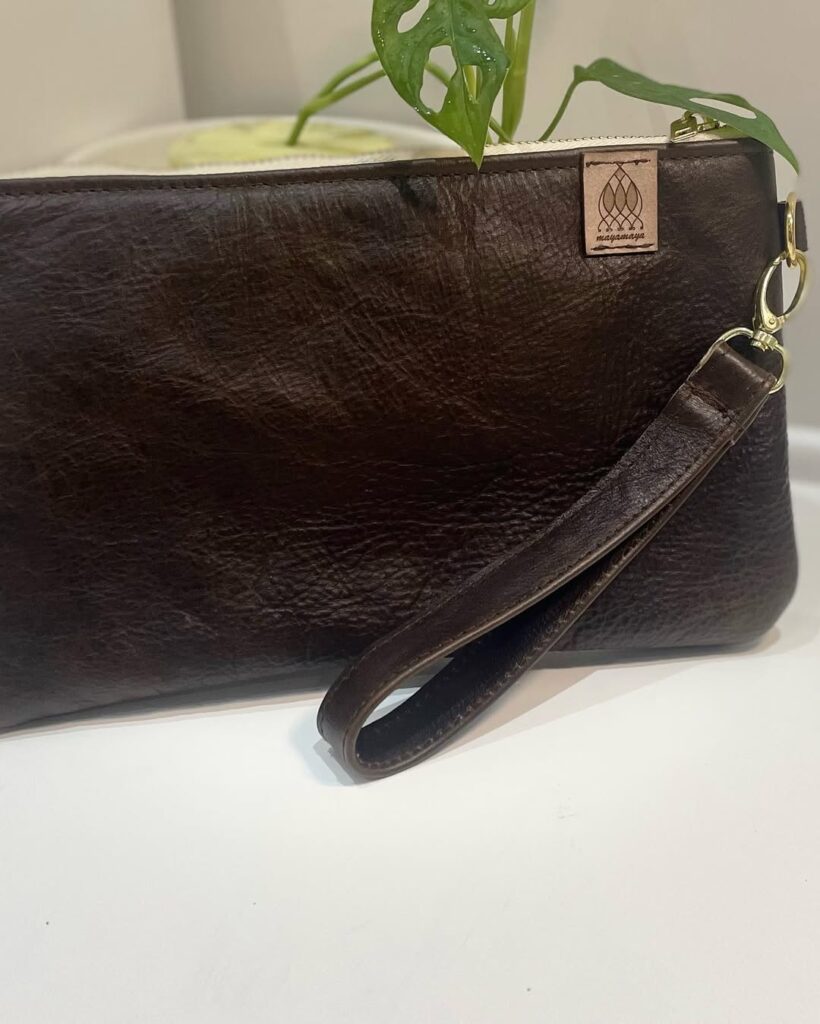
Mayamaya is an upcycling brand that makes luxury bags from genuine leather offcuts. Each piece is handcrafted carefully using premium materials such as cow leather, lamb leather, ostrich, and crocodile.
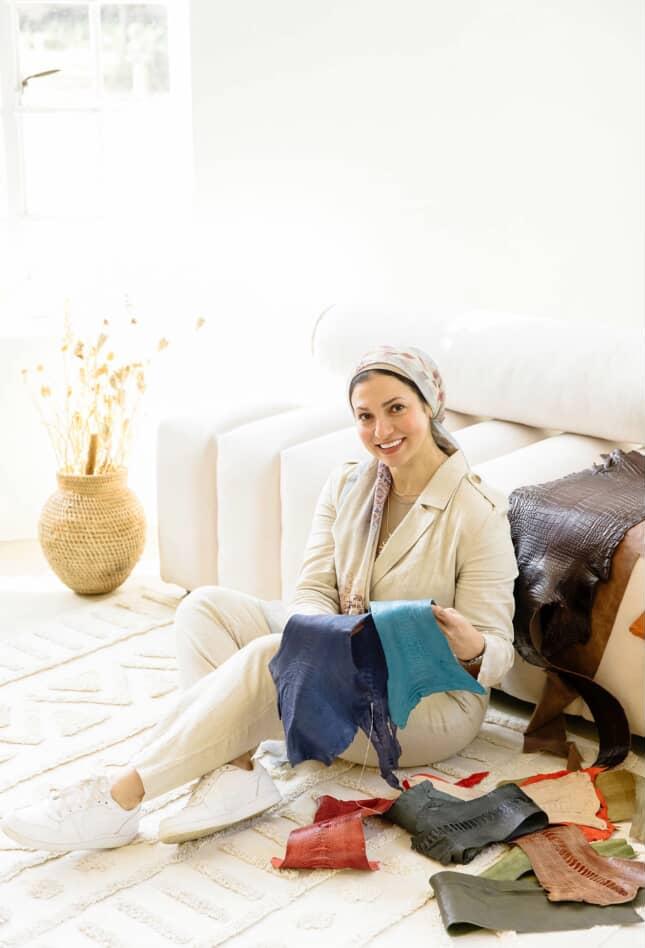
“From the very beginning, I’ve always loved all kinds of materials, textures, and colours. I had the opportunity to collect beautiful offcuts of genuine leather and high quality fabrics. I used to keep every single piece for a long time because I saw beauty and potential in them. Over time, these collected pieces became the heart of my designs. My mission is to transform left over materials into elegant pieces, that are practical and timeless,” says Maiada.
Her new collection “New signature” is simple yet luxe. Aesthetically the collection combines minimalist simplicity with high-end, luxurious elements. The bags are made from high-quality offcuts materials, incorporating classic designs, and thoughtful, intentional details, rather than excessive ornamentation.
Mayamaya designs are sophisticated, refined, and an effortless look that feels both current and timeless. The upcycled bags are designed to be both timeless and functional. Each piece is firm and sturdy, crafted to be worn all day.
“The bags are made for elegant women who appreciate the timeless allure of classic, refined bags. They value exceptional quality and sophisticated design over fast fashion. It is for women who seek pieces that speak to individuality and elegance. These women are drawn to unique creations that reflect their personal style and offer a sense of understated luxury rather than following short-lived trends,” she says.
ABOUT THE FOUNDER AND DESIGNER
Maiada Salousa
Maiada Salousa in an Egyptian currently residing in South Africa, who comes from an artistic background. Her father is the renowned Egyptian painter, Ahmed Salousa. Surrounded by art, Maiada developed a profound appreciation for the beauty of materials and fabrics.
In 2016, driven by curiosity and desire to create, she taught herself how to crochet through online tutorials. This new found craft deepened her love for textile, and she felt compelled to explore beyond the craft. Eager to broaden her skills, she pursued sewing and other forms of artistic expression. Each new endeavour fueled her passion further.
Today, Maiada’s artistic journey continues as she implements ways to expand her expertise. She is constantly seeking new avenues to blend creativity and craftsmanship into the world of fashion and design. Her fascination and appreciation for upcycling fabrics has propelled her to strive to design the best quality, sustainable and durable bags.



 Collaboration with @rebeccasearlstevens