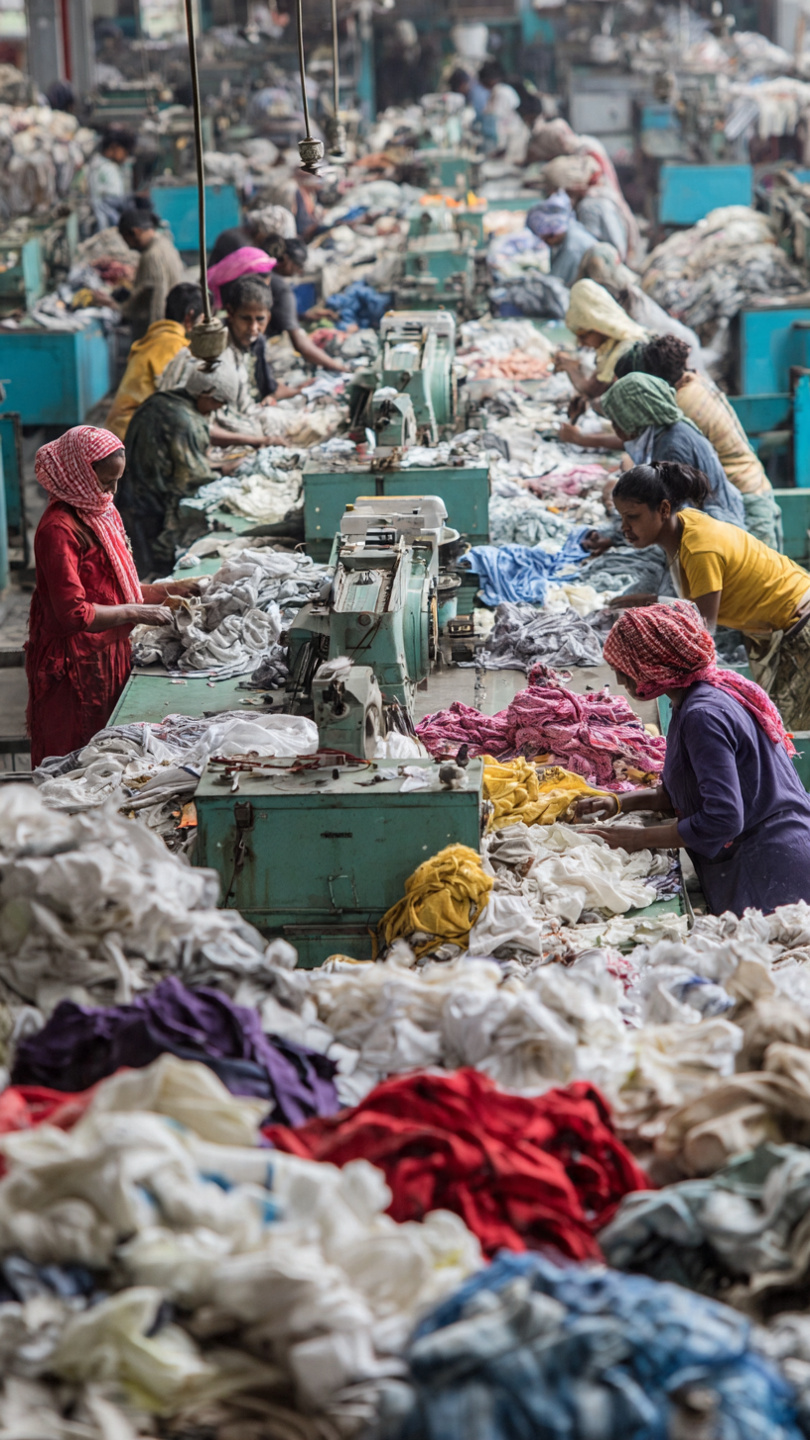
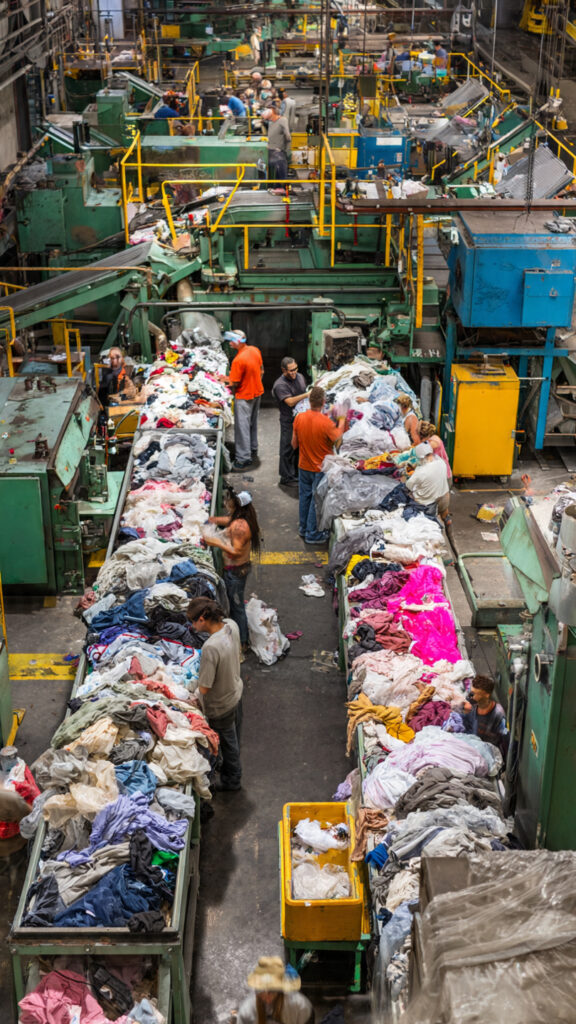
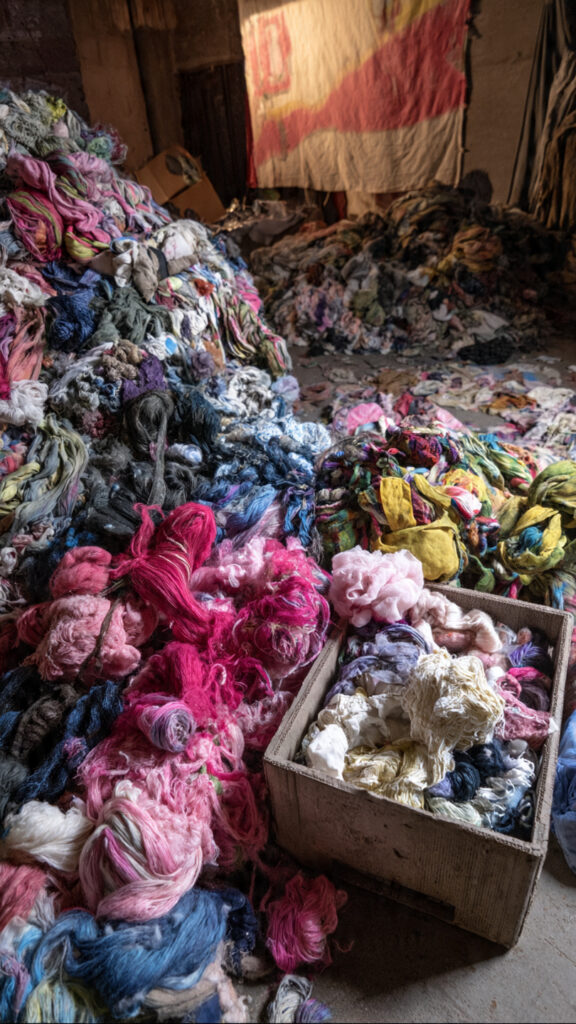
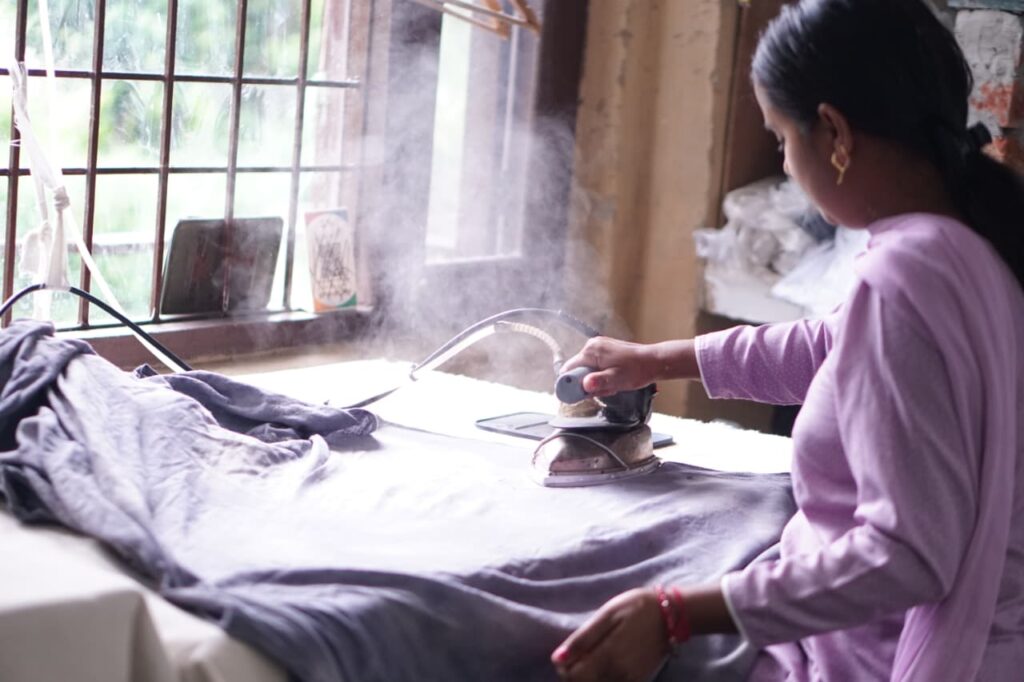
The fashion industry is one of the world’s largest polluters, with textile waste piling up in landfills and oceans. The statistics are staggering: the average person generates 12.8 kg of textile waste per year, with only 1% of materials being recycled into new clothing. But what if we could turn the tide? The key to a more sustainable future lies in textile recycling, and it’s being held back by a major hurdle: disassembly.
The complexity of textile materials, particularly blended fabrics, makes it challenging to separate and recycle them efficiently. Mixed fiber blends, lack of standardization, high costs, and limited infrastructure are just a few of the barriers to textile recycling.
The Challenges of Textile Recycling
– Mixed Fiber Blends: Difficulty in separating different fiber types, such as cotton and polyester, complicates recycling processes.
– Lack of Standardization: No global systems for tracking textile waste, making it hard to determine origin, fiber makeup, and chemical treatments.
– High Costs: Recycling processes are often more expensive than producing new materials, making it economically unviable.
– Limited Infrastructure: Insufficient recycling facilities and technologies to handle complex textile waste.
Innovative Solutions
But there’s hope. Researchers and innovators are working tirelessly to develop new solutions. Some of the most promising include:
– Automated Disassembly: Using advanced technologies to remove problematic elements and improve recycling efficiency.
– Advanced Sorting Technologies: Implementing near-infrared and hyperspectral imaging for precise fiber separation.
– Chemical Recycling: Breaking down synthetic polymers like polyester using methods like solvolysis and pyrolysis.
– Biological Recycling: Using enzymes to break down natural fibers, showing promise for sustainable recycling.
The Future of Textile Recycling
So, what does the future hold? Here are a few trends to watch:
– Increased Use of Recycled Materials: Brands are incorporating recycled materials into their collections, reducing waste and promoting sustainability.
– Circular Design: Designers are creating garments with recycling in mind, making it easier to disassemble and reuse materials.
– Chemical Recycling: New technologies are emerging that can break down synthetic polymers like polyester, making recycling more efficient.
Industry Leaders Making a Difference
Companies like Patagonia, H&M, and Levi’s are already making strides in textile recycling. They’re investing in innovative technologies, implementing circular design principles, and promoting sustainability throughout their supply chains.
What You Can Do
– Shop Second-Hand: Reduce textile waste by shopping second-hand or renting clothes.
– Support Sustainable Brands: Choose brands that prioritize sustainability and circular design.
– Recycle Your Clothes: Participate in textile recycling programs and donate old clothes to charity.
The disassembly dilemma is a complex problem, but with innovation and collaboration, we can unlock the secrets of textile recycling and create a more sustainable future for fashion.
Suvetah is a textile company based in Dharamshala, Himachal Pradesh – India, which manufactures sustainable and biodegradable fabrics from natural and eco-friendly materials like hemp, bamboo, organic cotton, khadi, and ahimsa silk.
The company focuses on natural dyeing, eco-printing, and ethical practices, with many of their fabrics available in their natural white or greige state. Suvetah also offers less common fabrics like banana and orange fabrics, and lotus fabric. They have a range of over 50 textile fabrics extracted from different sources through natural and harmless methods.
Co-founder and Head Designer of Suvetah, Sakshi Khanna says, “Suvetah is a conscious effort to re-establish that long lost bond between humans and nature through our range of 100% natural, sustainable, and eco-friendly range of textiles that assures comfort, satisfaction, and safety to our customers. Thus, we have managed to produce a range of sustainable fabrics obtained from the stems and leaves of nature. Our material is biodegradable and skin friendly making it one of a kind.
Their fabrics are handcrafted and handwoven. With every stitch, Suvetah intends to establish a bond of trust and belief with customers. Clients can also order fabrics with natural dyeing and garment construction based on their specific needs.
“Our range furnishes you with a choice of sophisticated and classy colours that complement and accentuate your beauty. We have also added designing and finished customised products to our services,” says Khanna.
The main aim of the brand is to establish a one stop solution for sustainable textiles, to achieve optimum sustainability and zero carbon emission.
Sakshi Khanna
“Our lives have gradually detached from nature and natural methods to synthetic and artificial ones. Today, as we look around, every item is a blend of chemicals. What breaks our hearts is the production and synthesis of these chemicals, which are depleting and destroying our very own earth and its resources,” she says.
“Our fundamental cause has been motivated by one single vision; to bring back nature to the daily lifestyle of people. We recall the primitive times when we wrapped banana leaves over our bodies to cover ourselves. Our methods could be traced back to this source. Another revolutionary aspect is our range of colours used for dyeing the fabric. Usually, the world associates nature and natural textiles with bleak colours. Nonetheless, motivated to draw colours from nature, our partners assimilate the dyes from bright seasonal flowers. Although it restricts us from producing the same colours throughout the year, but that is our manner of cohabiting with nature. We intend to adorn you with seasonal colours that shine and glimmer, taking you another step closer to the environment. With that aesthetic beauty paired off with naturalistic nostalgia, you will shine bright every season,” she says.
Suvetah also offer a swatch book that helps more informed fabric choices. It gives an idea of the quality idea and look and feel of fabrics. They have a set of three organic fabric swatch books, featuring Power Loom, Handloom, and knitted fabrics. This helps customers who are launching labels or prototyping a collection. This also helps to explore textures, weights and finishes.
Suvetah works with local artisans hand-picked from the renowned textile states of India who toil every day to ensure to deliver quality work.
The genesis of Nargiz is a storytelling journey based on an imaginative process underpinned by innovation and strategic attention to detail for garment creation.
As Nargiza Marupova, creator and driving force behind the brand Nargiz narrates the journey of creating the brand, it is clear that her thought process was comprehensive.
And it is quite evident in the elaborate style of clothes the brand makes. Nargiz garments are for sophisticated women who enjoy finer things in life. They are for bold women who will wear the clothes without being overshadowed by their grandeur.
Moreover, Nargiz’ core design direction stems from a quest by Nargiza to incorporate modern elements, where traditional silhouettes, fabrics, or motifs are paired with contemporary designs.
Nargiza Marupova – Founder and Creative Designer of Nargiz
“Starting the brand was filled with challenges and discoveries. I learned to see beauty in detail, appreciate quality, and seek a balance between tradition and modernity. It is important to me that each collection tells its own story, carries a special energy, and is made with love and attention to every little detail. This project means more to me than just a business. It reflects my inner philosophy and my desire to create something unique that can inspire and transform the perception of fashion around us. I believe that clothing and style are powerful tools of self-expression that help each person reveal their individuality and confidence. I am proud that my brand is a part of the lives of those who choose quality and style with soul,” says Nargiza.
She says Nargiz is not just about the clothes but the philosophy of life that values sincerity, creativity, and the pursuit of perfection. She says her mission is to create pieces that not only adorn but also inspire, support, and help people feel authentic and free.
Nargiz’ clothes are made from vintage suzani textiles with a natural silk and cotton base. Nargiza says over time, the fabrics lost their original vibrant colours, so she dyed them to restore their richness and freshness.
“From these renewed materials, I sewed jackets and embellished them with tambour embroidery. This approach allowed me to preserve the traditional beauty of the suzani while giving the garments a modern, unique look,” she explains.
Suzani textiles are decorative, hand-embroidered fabrics from Central Asia, particularly Uzbekistan and Tajikistan, with origins in the Persian word “suzan” meaning “needle”. These vibrant pieces, traditionally made by young brides as part of their dowry, feature symbolic motifs like flowers, fruits (especially pomegranates), and sun disks, representing fertility and good fortune. Characterized by rich colours and intricate patterns, they are historically significant, culturally important, and widely collected and used by designers for home decor and fashion.
In a world where fashion is still too often driven by speed and profit, CABES (Commerce, Artisanat pour le Bien-Être Social), a textile cooperative based in Burkina Faso, has chosen a different path: one of patience, craftsmanship, and respect for the people behind the fabric.
Founded by four visionary women, Lankoande Flora, Zagre Alimata, Sakande Djélia and the late Maiga Mariam. CABES now brings together more than 2,400 artisans, spinners, weavers, and dyers, who preserve ancestral techniques while shaping new horizons for Africa’s textile industry.
But CABES goes beyond spinning and weaving. The cooperative has built a coherent value chain where yarn becomes fabric, and fabric becomes a story. Dyeing is done with natural pigments, indigo, bark, leaves, restoring the prestige of techniques long overshadowed by mass chemical production. Their main raw material is locally grown organic cotton, cultivated without chemicals and transformed by hand with care for both people and the environment.
The social enterprise was established in Ouagadougou in 2014, in partnership with the Ethical Fashion Initiative (EFI), a programme of the International Trade Centre dedicated to building sustainable fashion practices in emerging economies. CABES’ client network tells another part of this story. The cooperative exports its fabrics to designers and fashion houses in Europe and Africa who seek unique, traceable textiles with meaning. Whether sober or vibrant, these handwoven fabrics are now seen in high-end ethical fashion collections, from niche craft brands to international catwalks.
Lankoande FloraZagre Alimata Sakande Djélia
This success is no accident, CABES has established itself as a central player in the African movement resisting fast fashion and claiming a rightful place in the global sustainable fashion arena. With a cooperative model at its core, the organization proves it is possible to combine creativity, ecology, and local development.
For South Africa, where designers are increasingly conscious of sustainability and transparency, CABES’ approach is deeply relevant. Imagine the bridges between Johannesburg, Cape Town, and Ouagadougou: handwoven textiles from Burkina Faso could become the unexpected ally of South African designers eager to tell a different story, one of an African fashion that is proud, authentic, and sustainable. CABES is more than a textile cooperative. It is a vision of a continent able to create beauty without compromising the future.
Karfa Yacoro
The enterprise connects these artisans with global brands committed to ethical and sustainable fashion. The cooperative provides artisans, particularly women, with skills, market access, and opportunities for independence. CABES have a list of global brands as their clients such as Loewe, Wales Bonner, Vivienne Westwood, United Arrows, The Corner and Camper. The draw is not only the brilliance of its fabrics but also that CABES is committed to using Global Organic Textile Standard (GOTS), certified dyes and cottons, and applies a code of conduct based on international labour conventions and the UN’s Sustainable Development Goals.
Thanks to these textiles, women can care for their families, improve their living conditions and make investments. Also, there’s the satisfaction of knowing that their work is being sold and appreciated around the world,” says CABES General Manager, Yacoro Karfa .