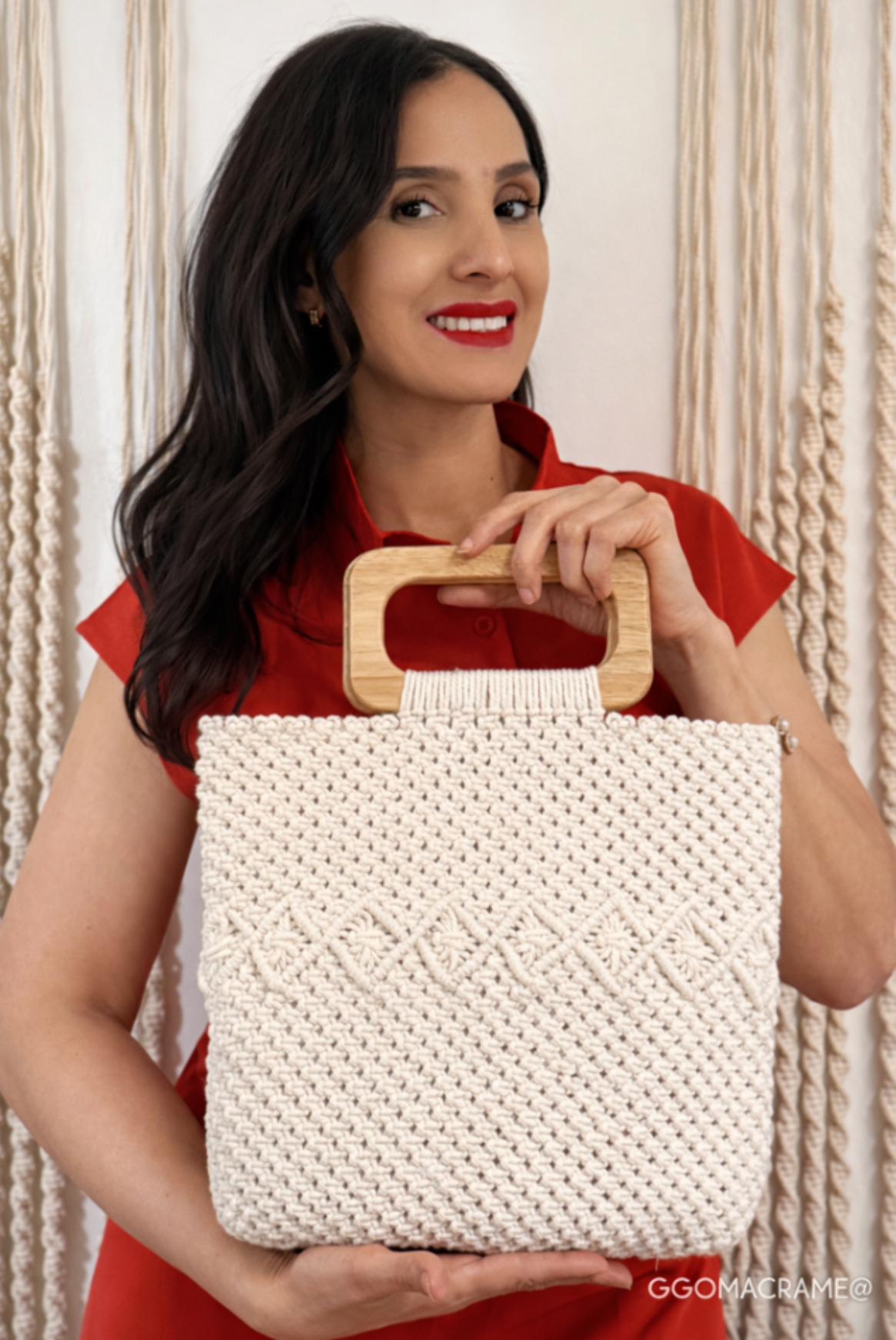
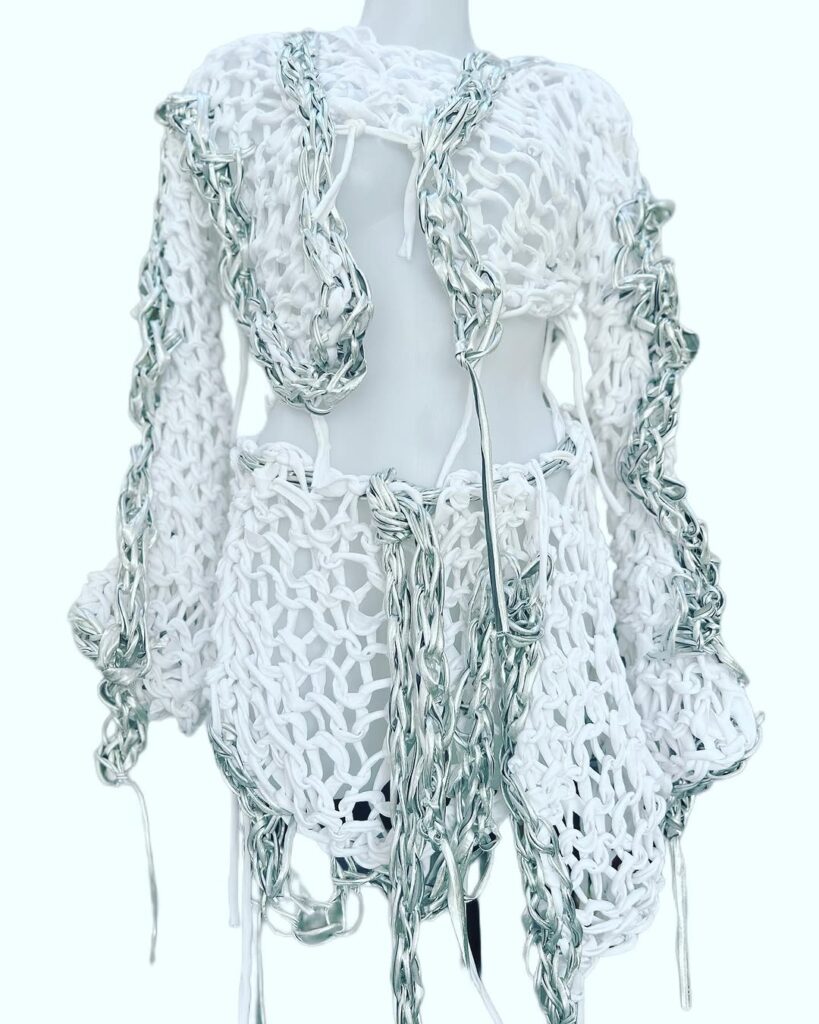
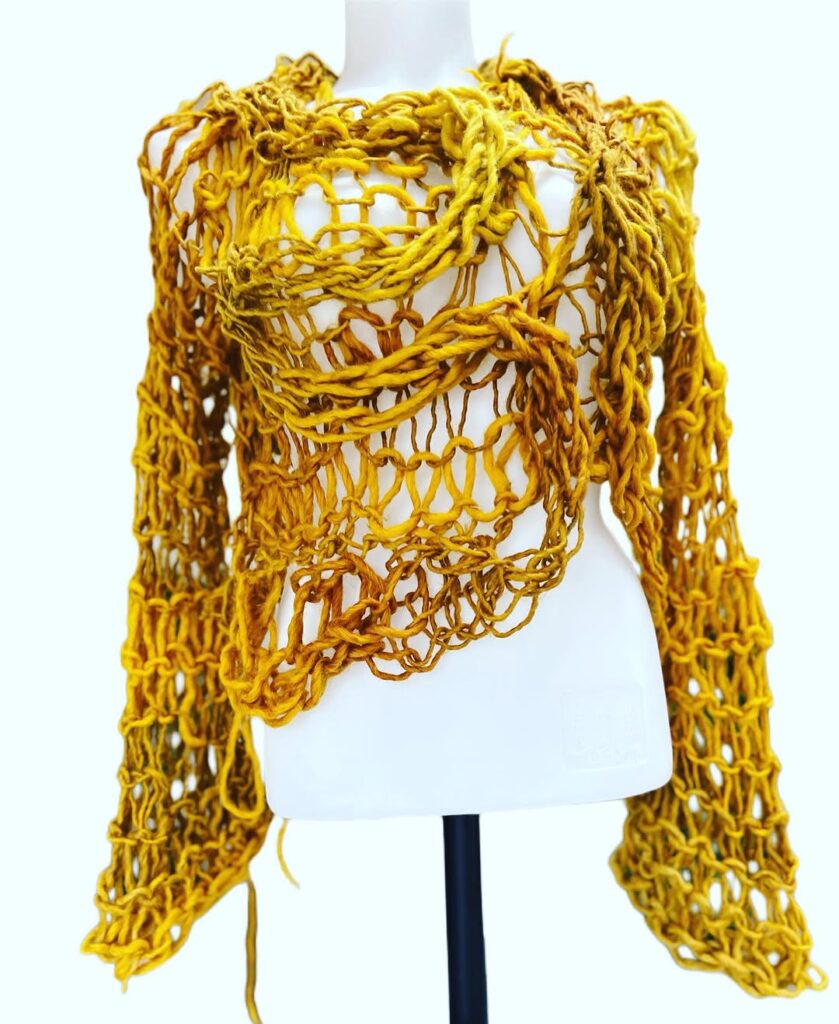
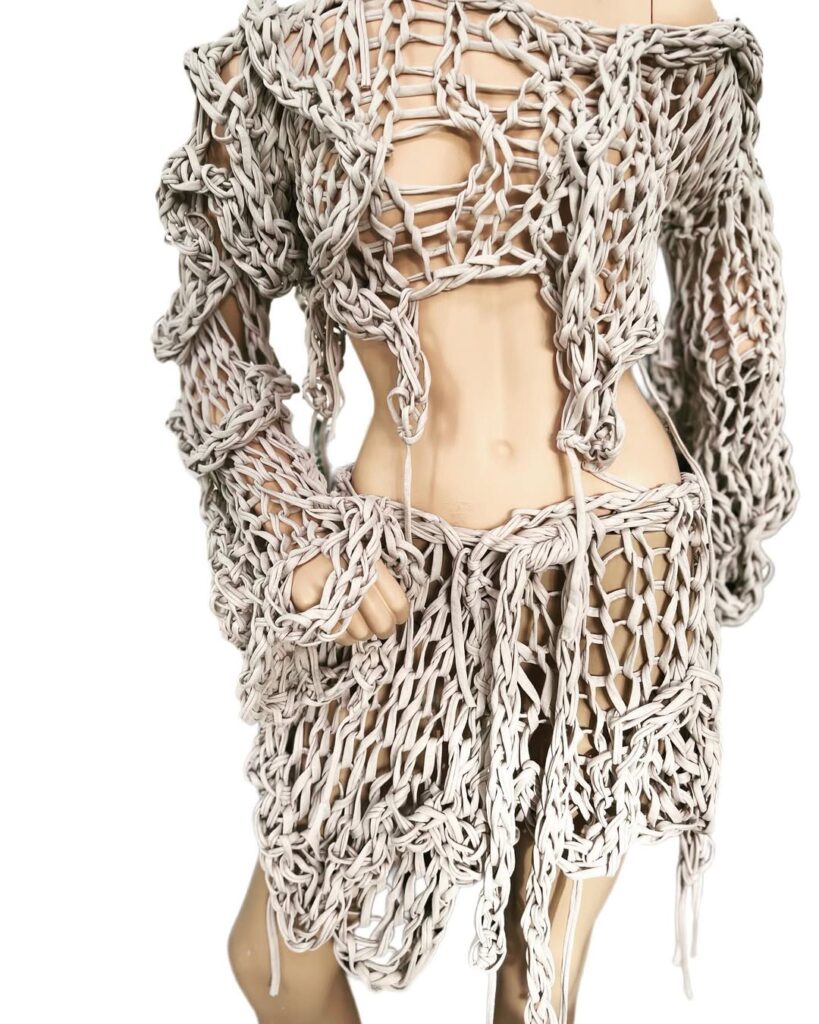
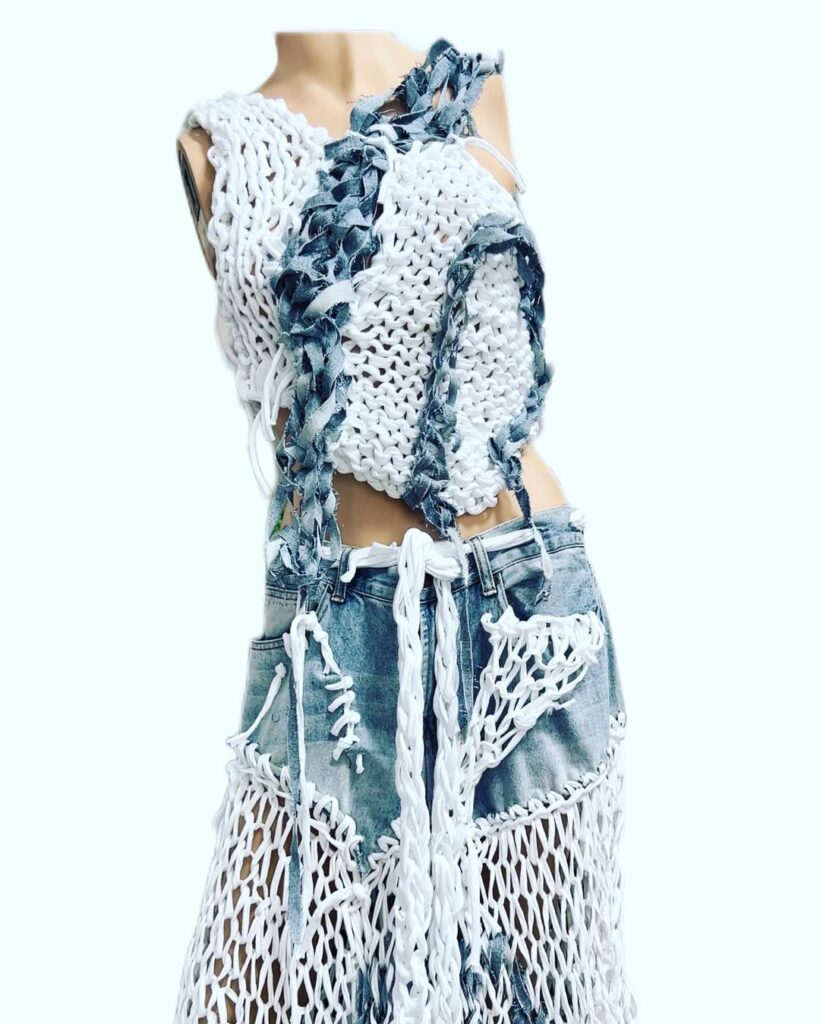
In the world of fast fashion, where speed and mass production often overshadow artistry, Yamilka Castellanos, founder of GGOMACRAME is a beacon of mindful creation. Based in New Jersey, USA, Castellanos’ journey into macramé began in 2022, a year of personal reflection and spiritual seeking.
“I felt drawn back to yarn and knotting, a craft I had once struggled to master,” she recalls. What started as a quiet prompting soon evolved into a disciplined practice of craftsmanship and intentional design.
Macramé, an ancient textile art form that originated from Arabic and Latin American traditions, involves creating intricate patterns and designs by tying knots in cords or yarns. It’s a craft that values patience, attention to detail, and creativity – qualities that Castellanos embodies in her work.
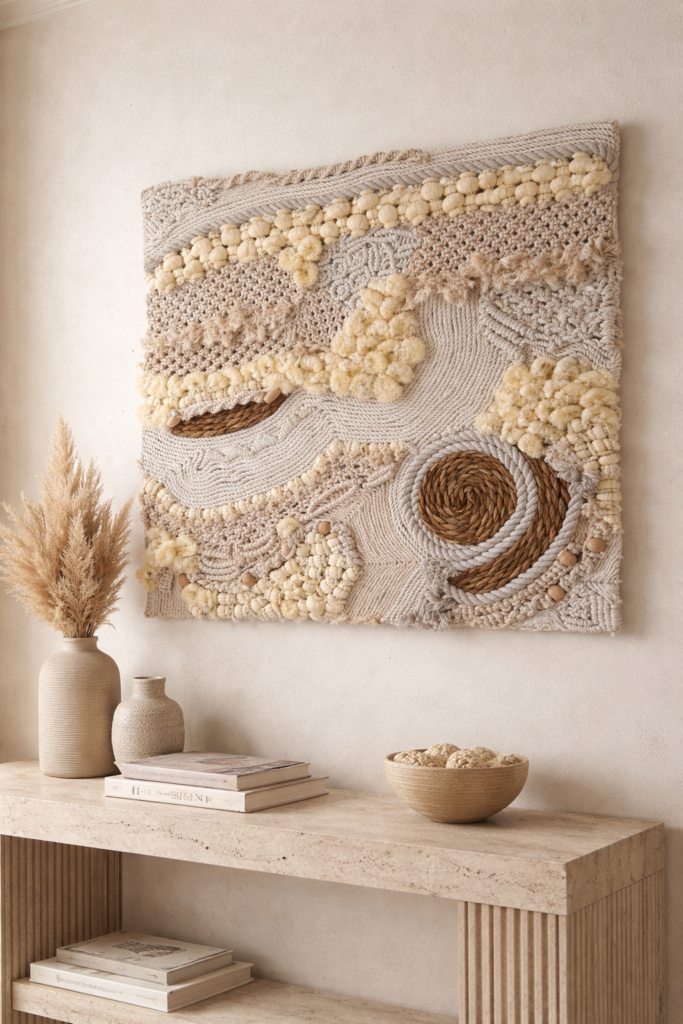
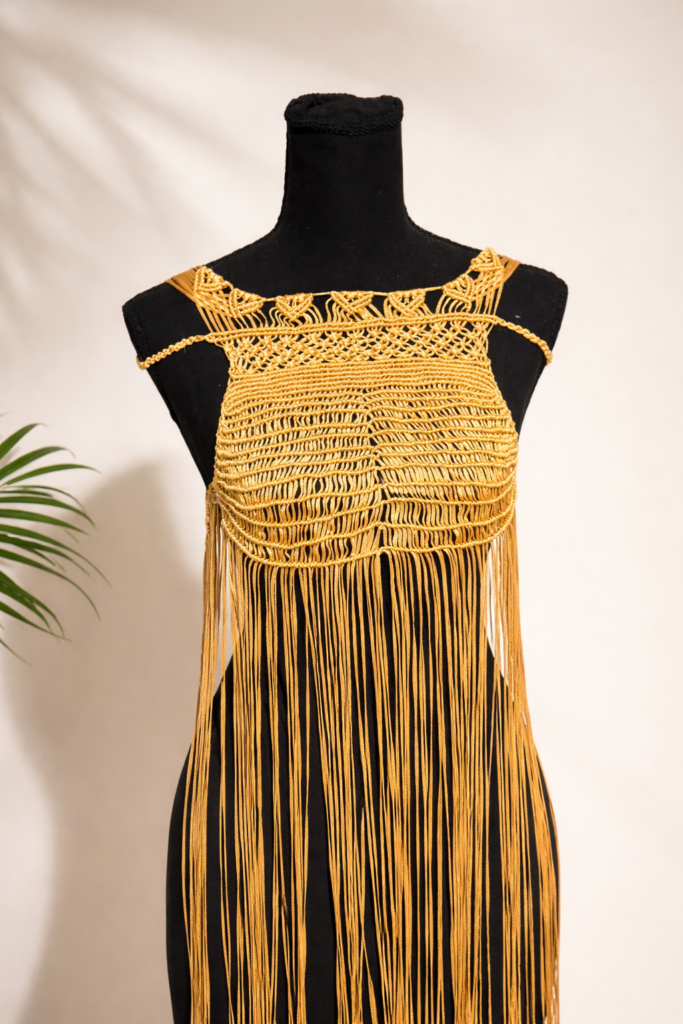
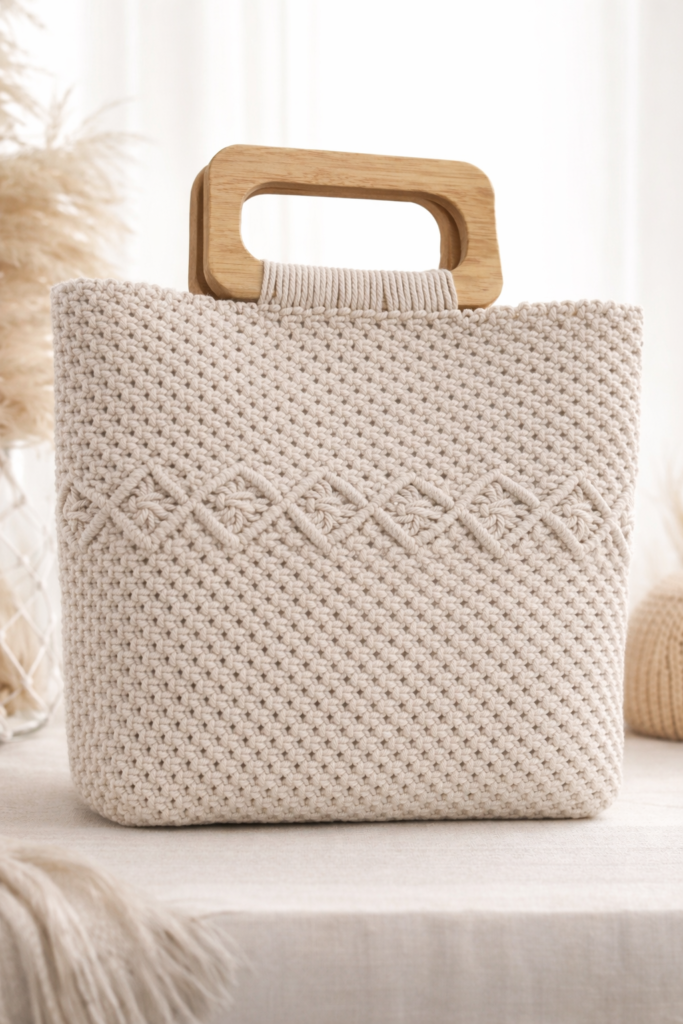
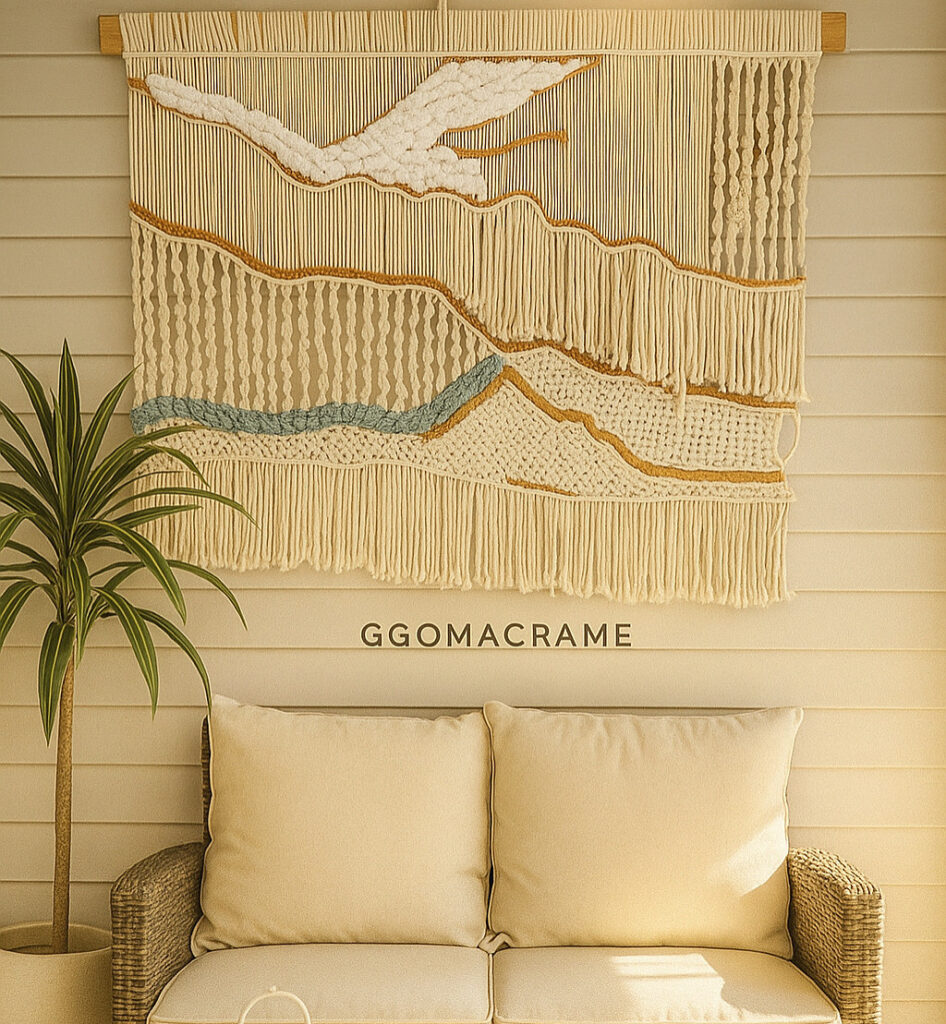
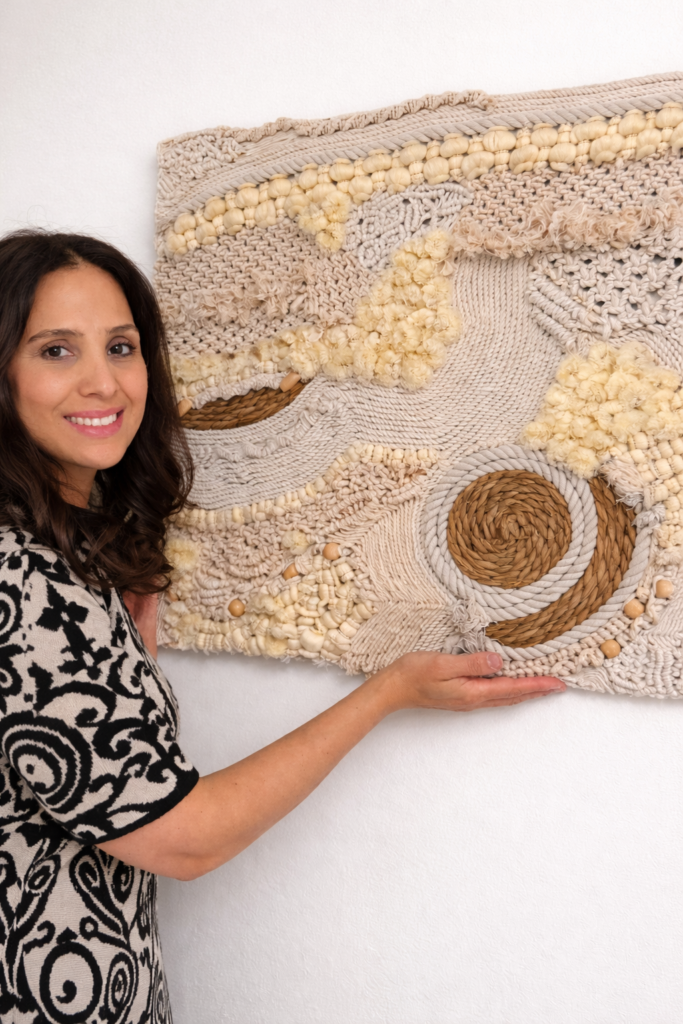
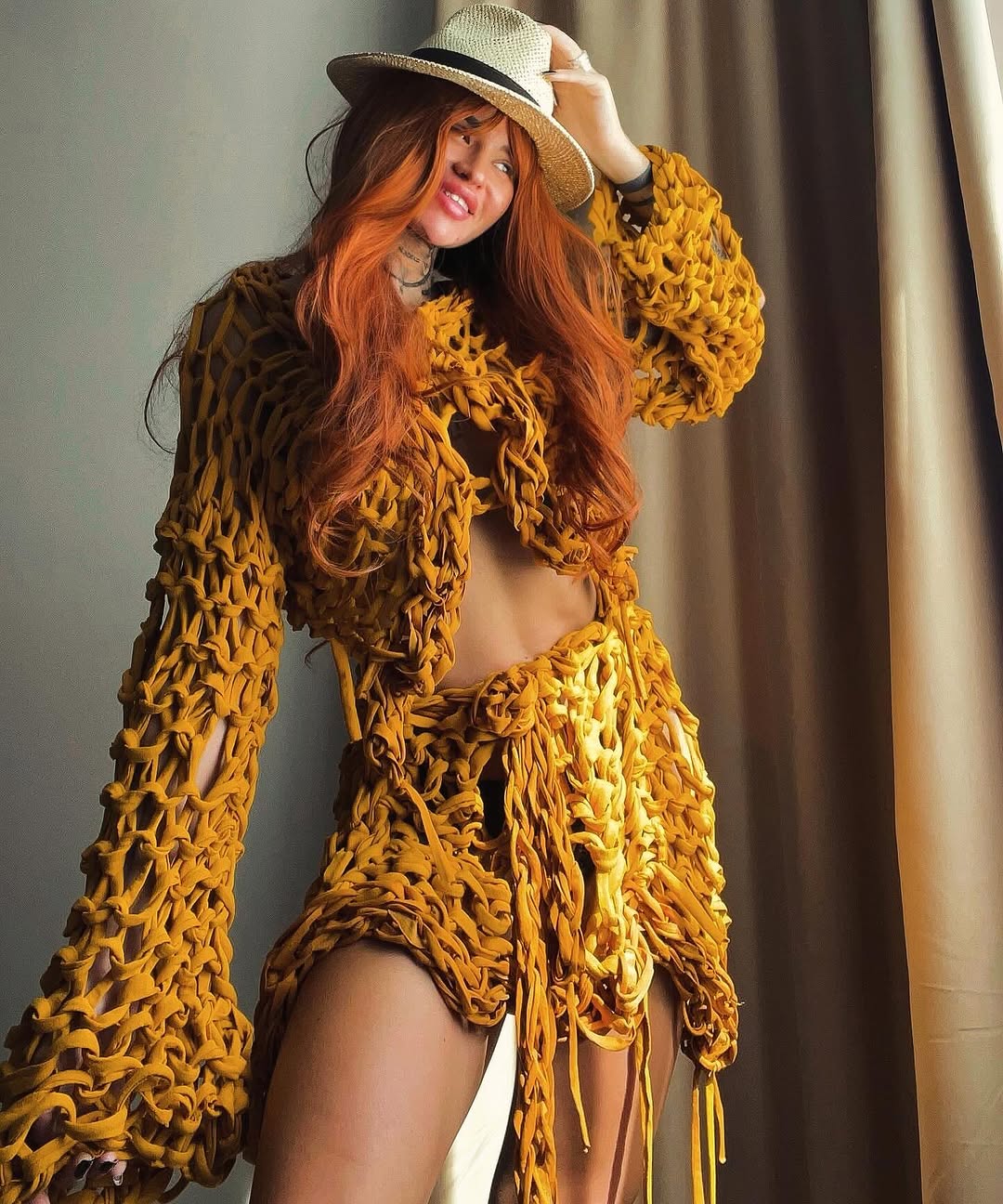
Today, Castellanos’ handmade fiber art is a testament to the power of slow fashion. Her collections feature exquisite macramé handbags, wearable pieces, wall installations, curtains, bassinets, and home textiles – each one a labour of love, crafted through deliberate hand-knotting techniques that honour time and tradition.
Yamilka Castellanos
“Every knot holds a moment of stillness – a quiet reminder that beauty does not need to rush,” Castellanos reflects. It’s this philosophy that guides her work and inspires her students.
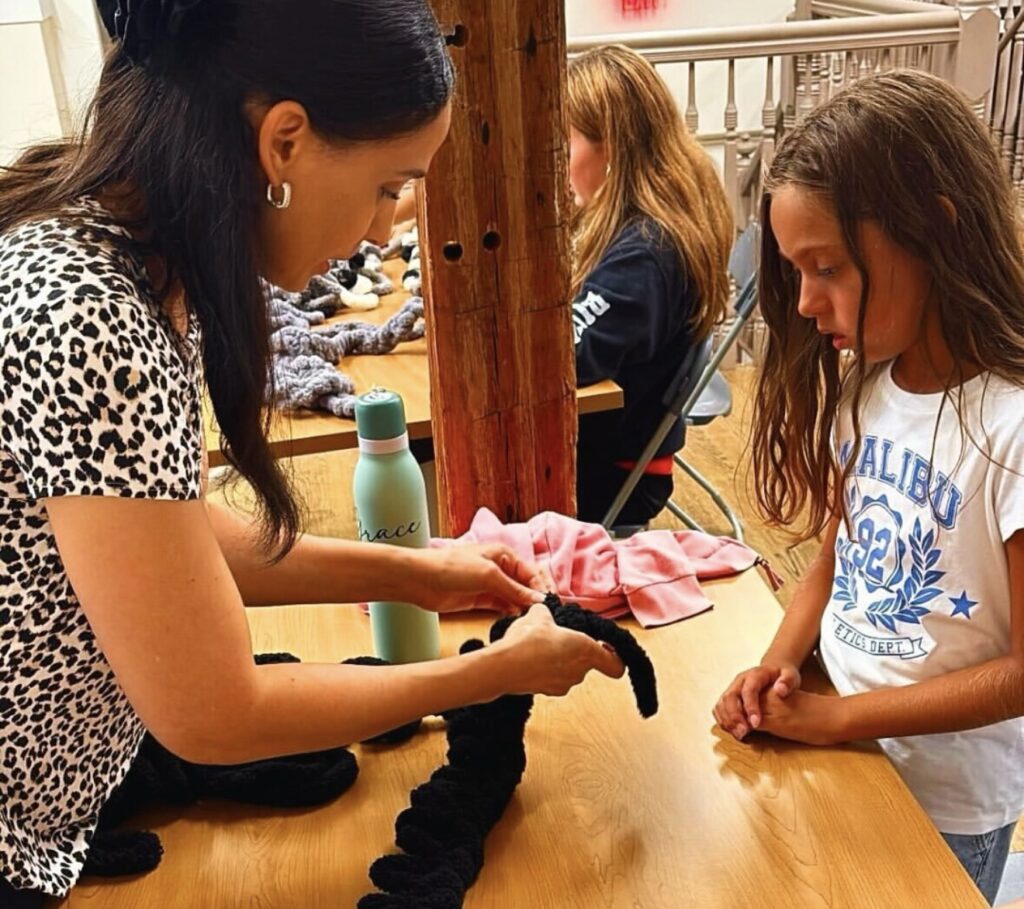
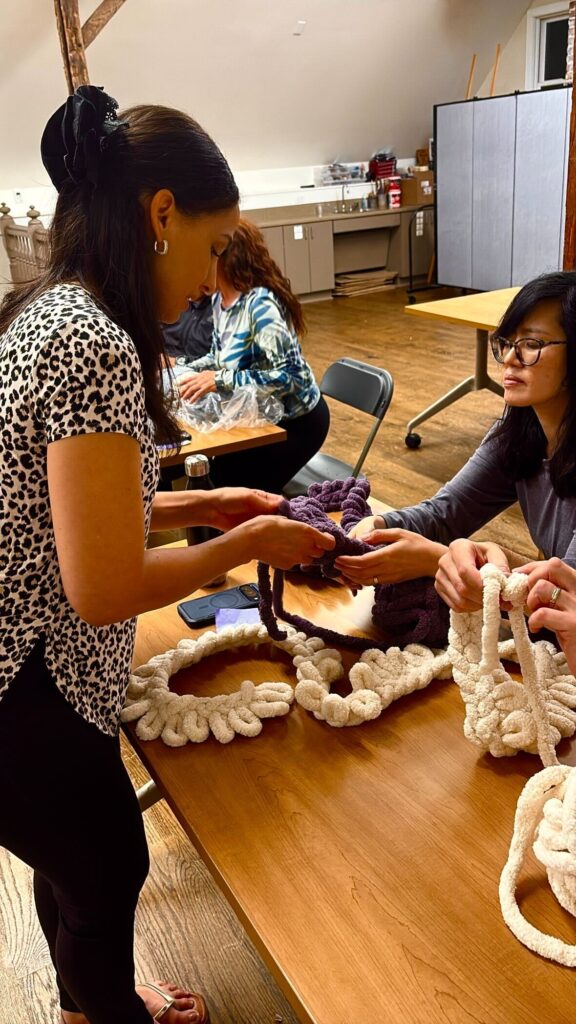
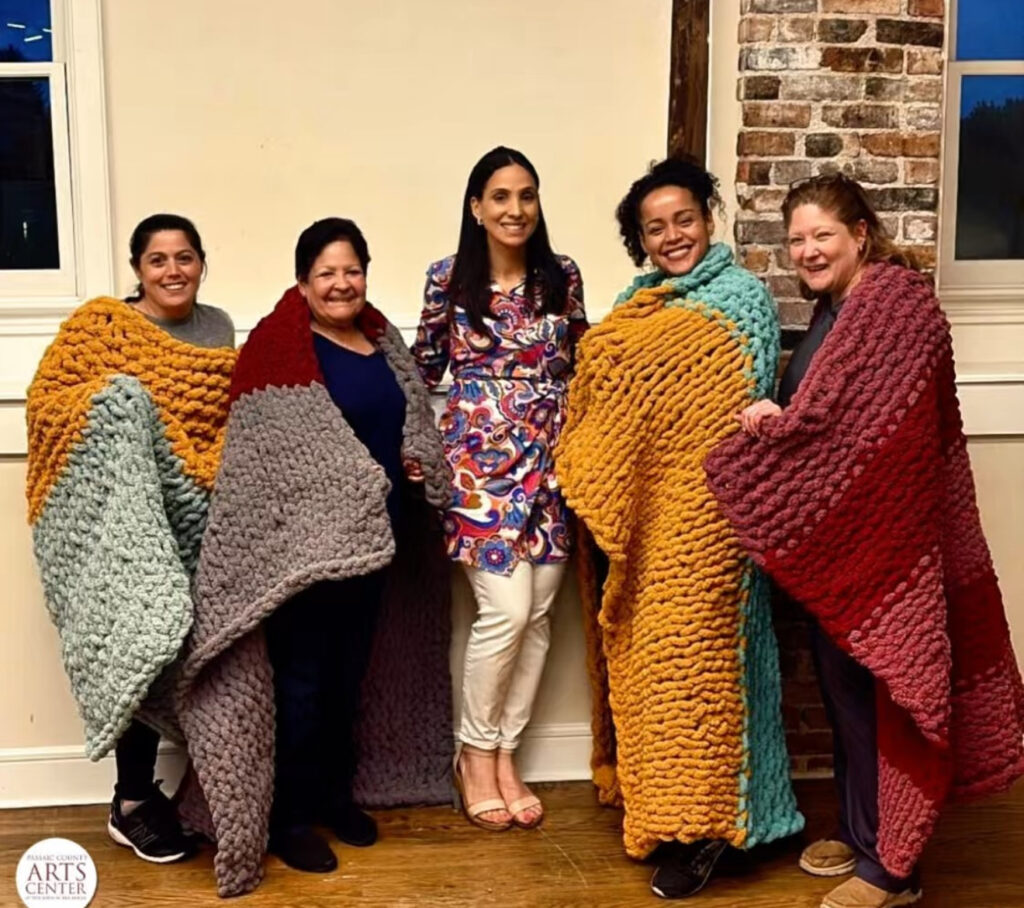
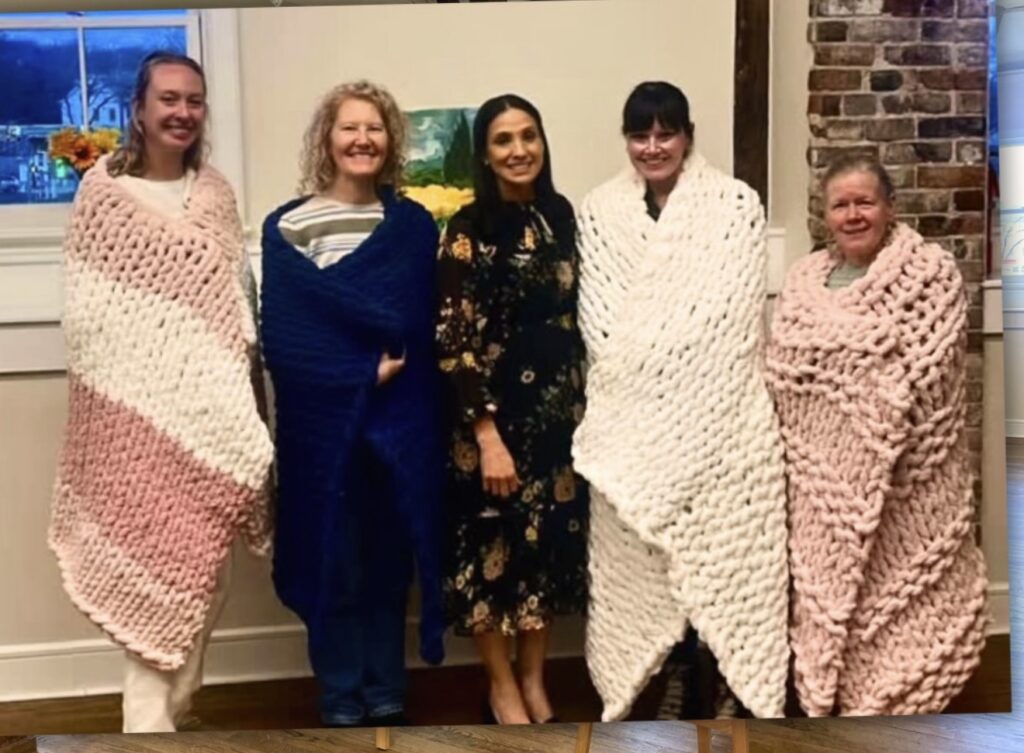
As an instructor at the Passaic Arts and Culture Center in Hawthorne, New Jersey, she shares her passion for slow craftsmanship with students of all ages, teaching them the value of patience and attention to detail.
This year, Castellanos achieved a significant milestone, being selected as a vendor for a New Jersey location of Michaels. “It’s an important step in the expansion of my woman-led brand,” she says with pride.
For Castellanos, macramé is more than a craft – it is devotion translated into design. Every knot carries intention and meaning, a reflection of her journey and purpose. In a world that often values speed over substance, she reminds us that true beauty lies in the slow, deliberate creation of something meaningful.
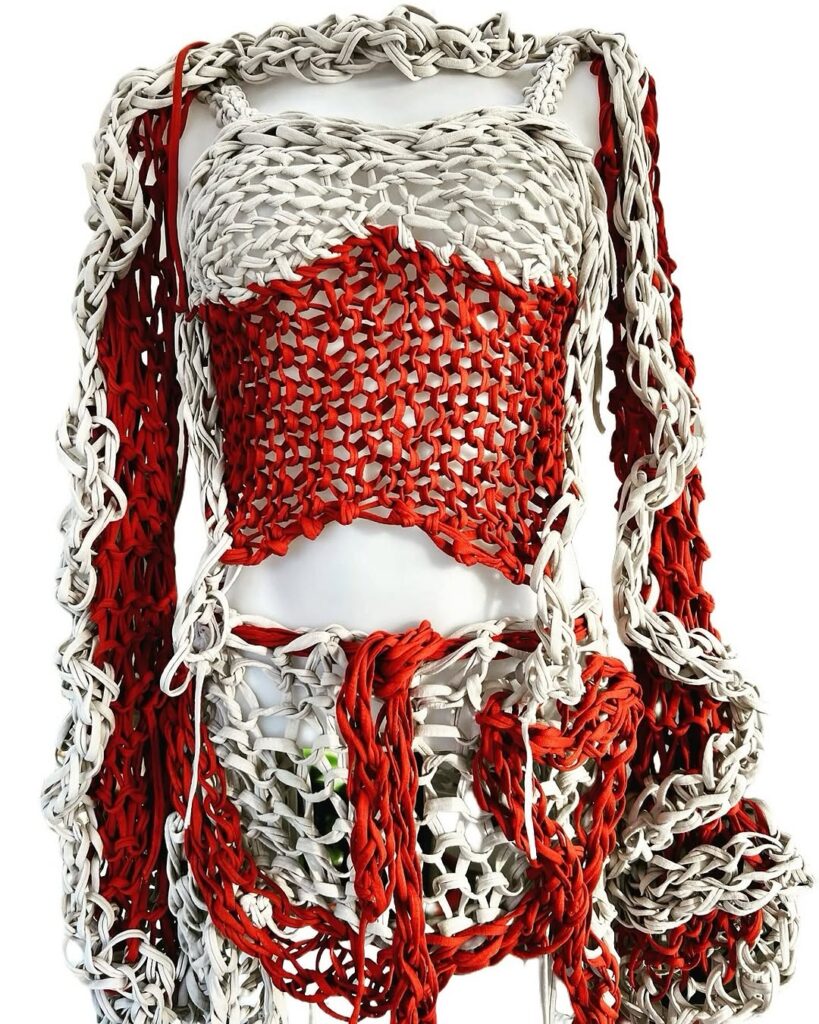
This body of work is a textural exploration of traditional hand-knitting and a celebration of traditional handcraft, translating complex textile work into contemporary sustainable fashion with sculptural qualities.
‘Looped In’ showcases voluminous, structured pieces built from complex Aran cables and loops, creating a dynamic visual rhythm and celebrating the inherent meaning in meticulous construction. Angelina Brodsky Elfasi created this range as her graduate collection for Bezalel Academy of Arts and Design in Israel.
“Looped In was created in response to living within an unpredictable reality, where a sense of control and stability is not always present. Within this context, I looked for a place of refuge a practice that allows me to slow down, focus, and create order. Knitting became that space for me; a steady rhythm, clear decisions, and a process I could fully shape. From this experience, the collection emerged as a way to translate uncertainty into tangible, enclosing forms that offer calm and a sense of protection,’ says Brodsky Elfasi.
Aran knitting is a traditional Irish style from the Aran Islands, famous for its heavily textured patterns, especially cable stitches, honeycomb, and Trinity stitch, often in solid colours like cream or white.
Brodsky Elfasi says over time, knitting became a language through which she could speak without words. She says she was drawn to the Aran technique because it allows storytelling through structure and that each cable carries meaning, enabling the garment to communicate through form rather than speech.
Angelina Brodsky Elfasi
“In a world where threats may appear at any moment and from any direction, a sense of anxiety and loss of control arises. Knitting became a practice that brought me inner calm. It is based on repetitive motion requiring focus, rhythm, and introspection. The collection creates a textile language built from knots and transitions. Aran knitting, with its intricate and twisting cables, weaves a story without words. The colour palette shifts gradually like emotions that rise and change throughout the process. Through this repetitive act, where I am in control, I create order from inner chaos. The garments are closed, enveloping structures, soft, resilient sanctuaries in an unpredictable reality,” she says.
She says creating this collection was a slow, process-driven approach using natural, durable, and biodegradable materials designed to last over time rather than be replaced quickly.
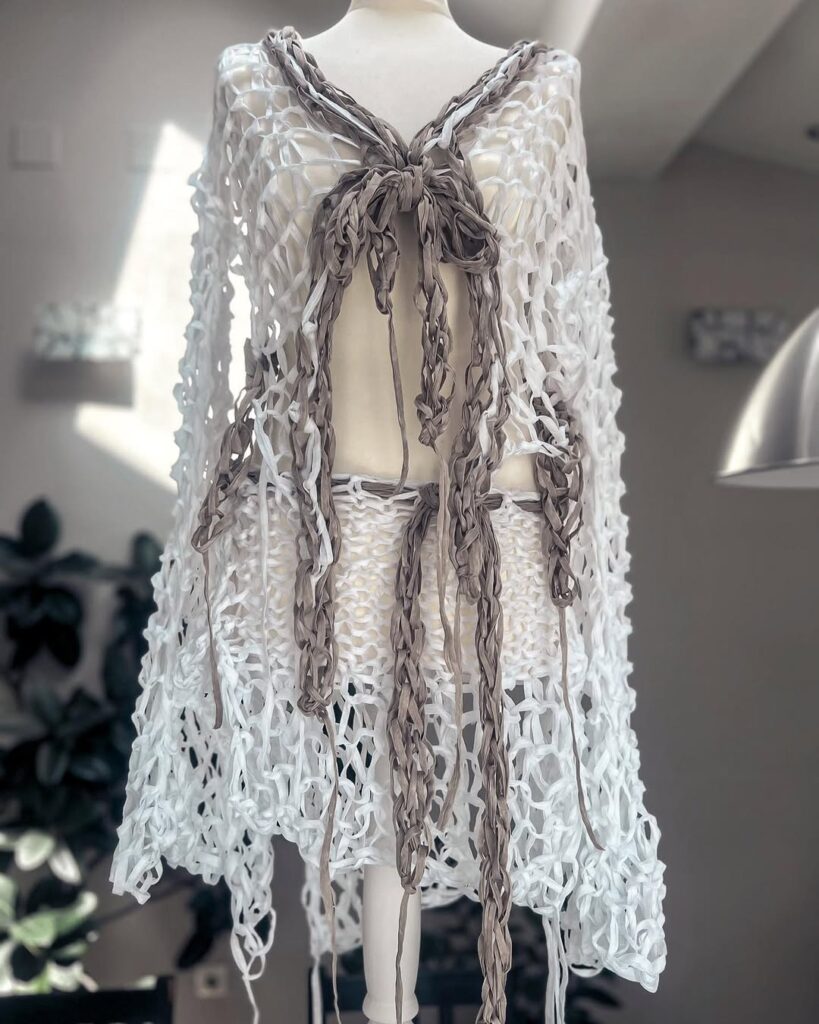
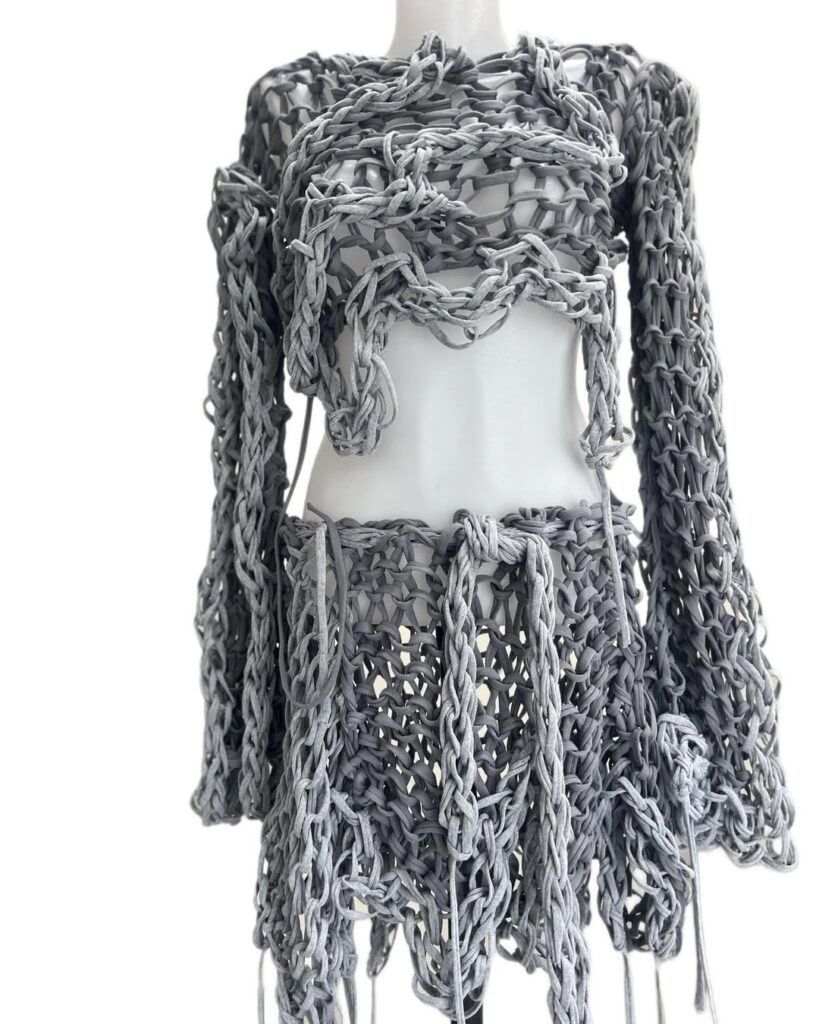
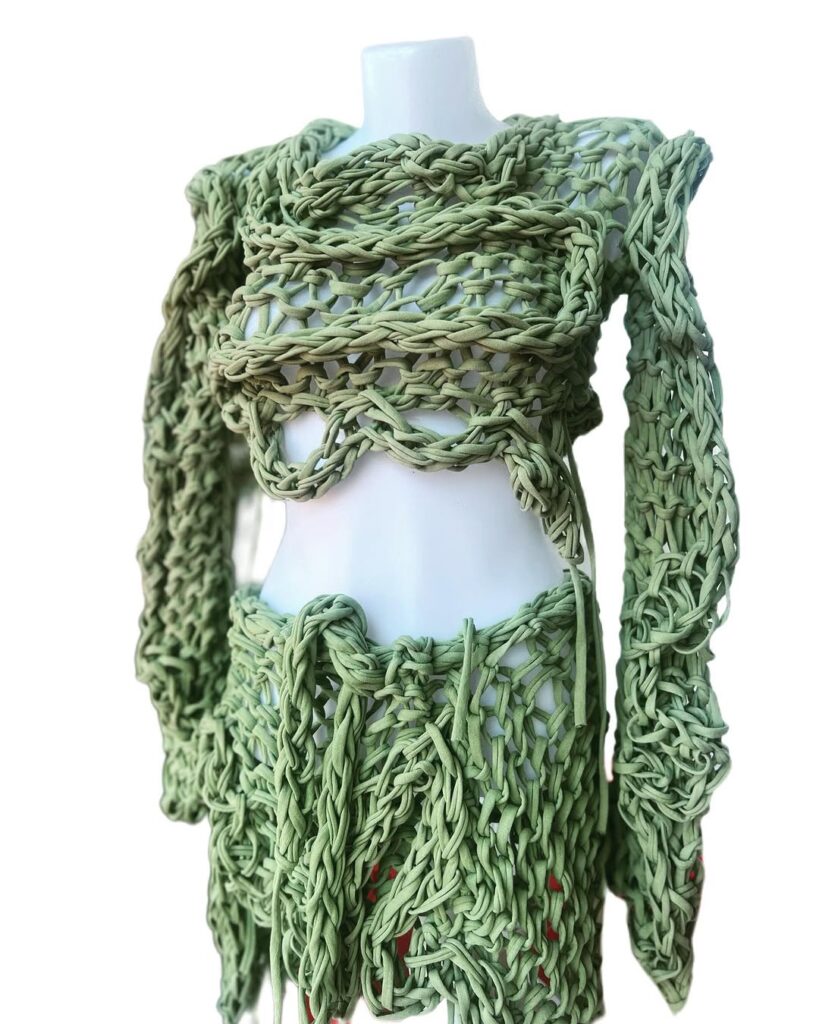
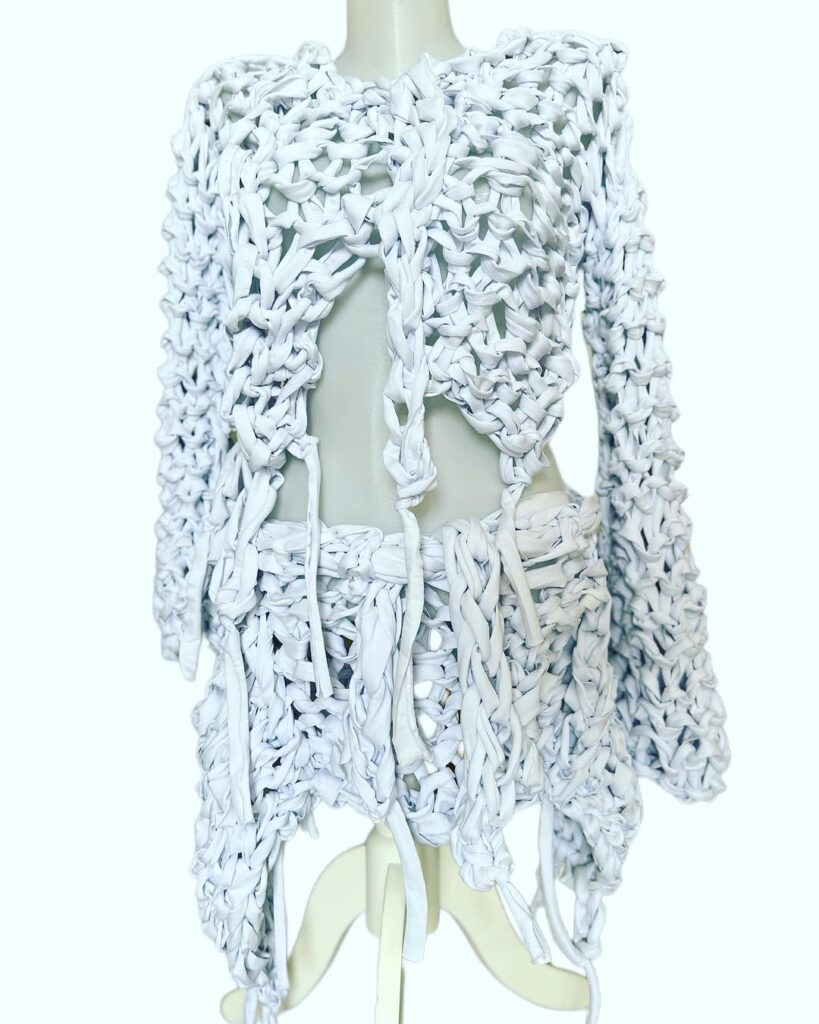
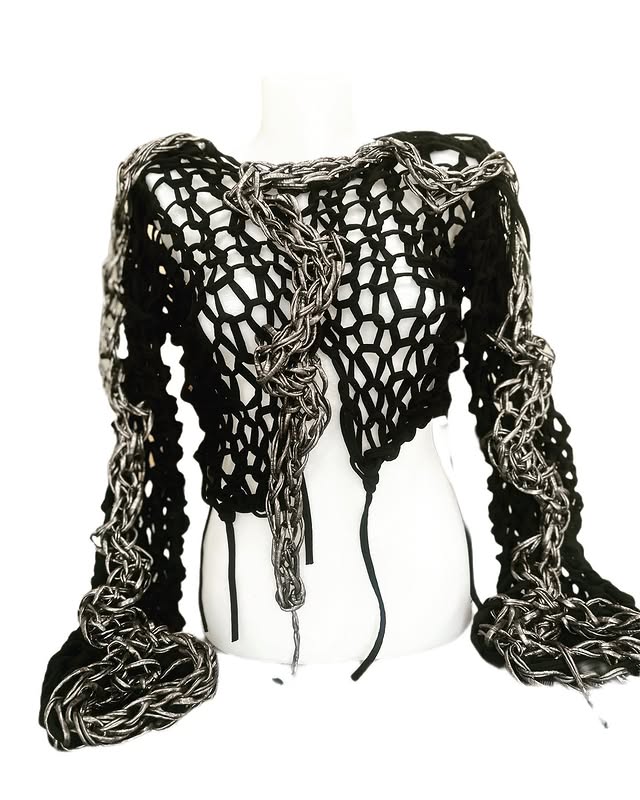
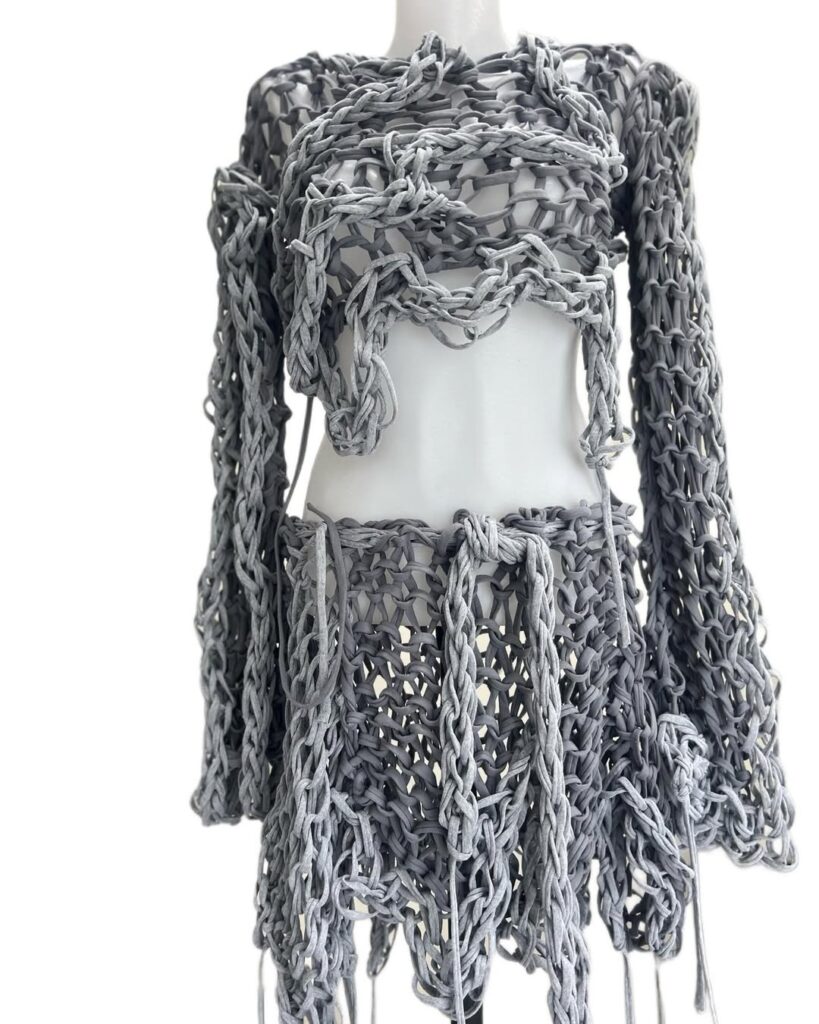
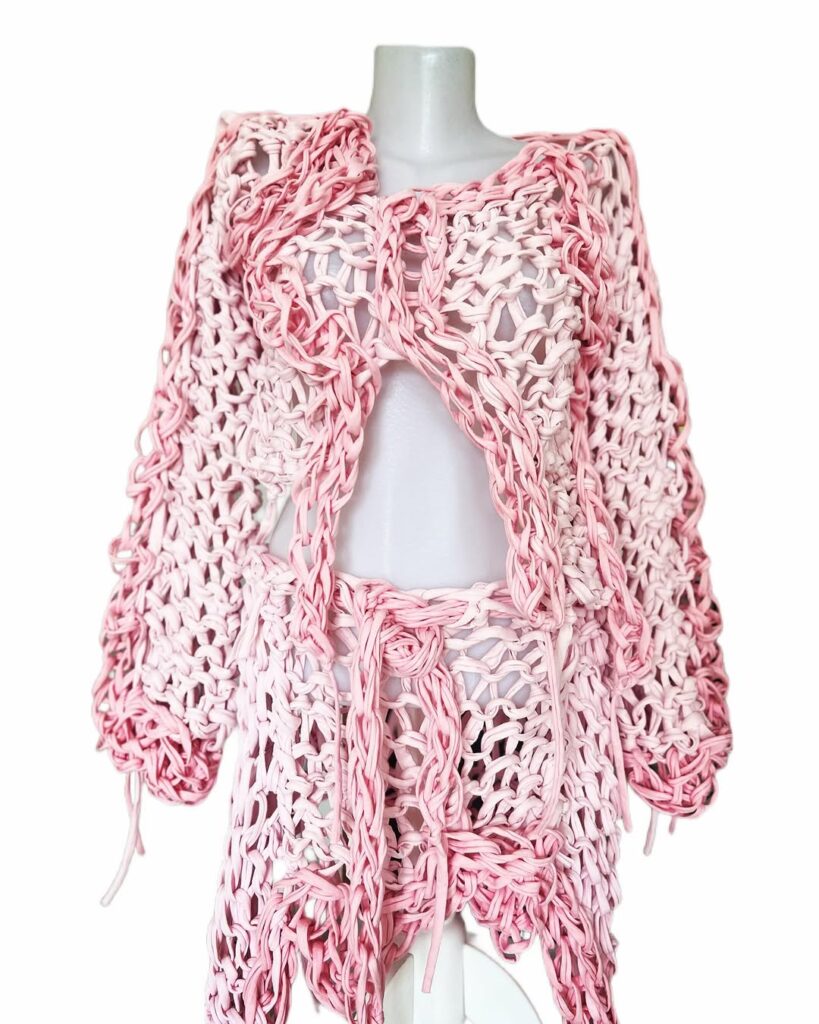
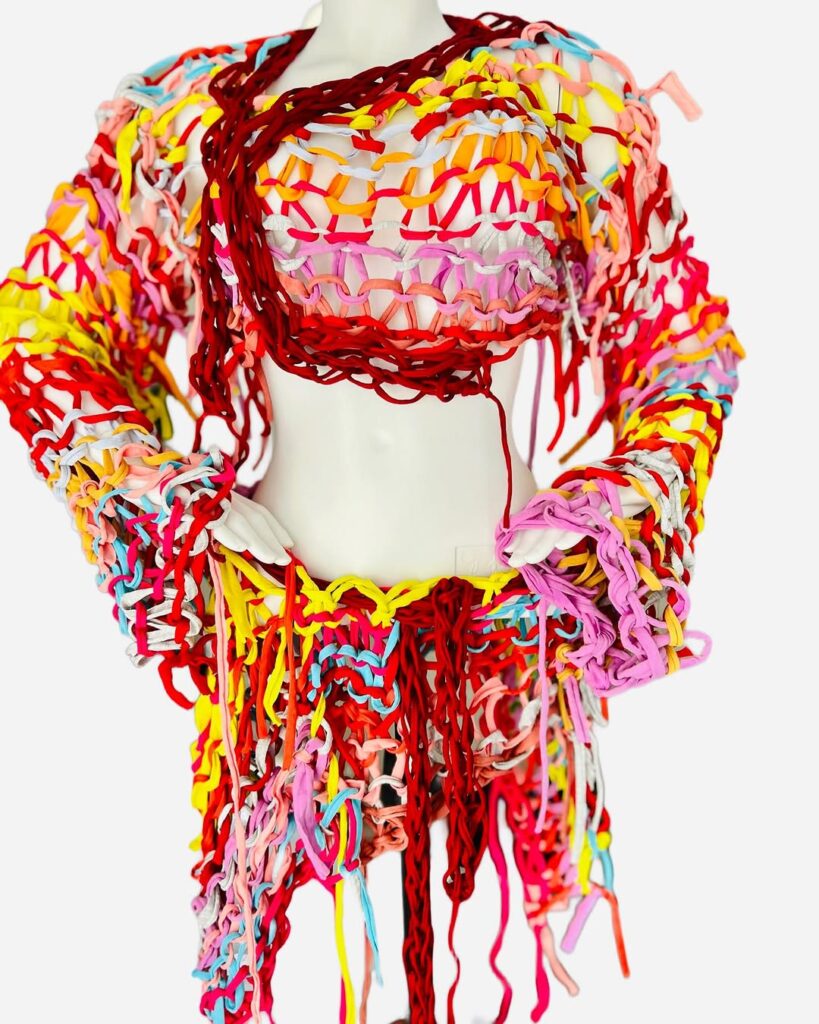
Finger knitting is the overall trend of knitting that is growing in popularity across different age groups, driven by factors like sustainability, mindfulness, and a connection to traditional crafts.
To become a skilled finger-knitter, you need consistent tension, a good sense of hand-eye coordination, and the ability to manage stitches on your fingers. Practicing with different yarn thicknesses and learning to hold stitches securely when taking a break are also important skills for creating a polished finished product.
Ioana Turcu, founder and designer of Toia Tricot has mastered this skill and craft. The designer has a flair for experimenting with knit patterns and crafts unique textures by blending various materials together. She creates custom, handmade pieces without traditional patterns or machines, emphasising a unique and intentional process.
The slow fashion brand, based in Bucharest – Romania, draws inspiration from concepts of freedom, emotion, and sculpture. At the heart of Toia Tricot’s work, lies the ingenious use of recycled yarns, born through a transformative process that reclaims and cleanses discarded items like PET bottles. This approach, fueled by a passion for eco-friendliness, makes a significant environmental impact, one stitch at a time.
“My commitment to sustainability goes beyond rhetoric; it is ingrained in my artistic process. While some may see limitations in higher costs and limited suppliers, I see an opportunity to create small-batch masterpieces that embody my eco-friendly approach. My choice of high-quality recycled yarns not only elevates my work but also sends a powerful message that fashion can be both artistic and ethical,” says Turcu.
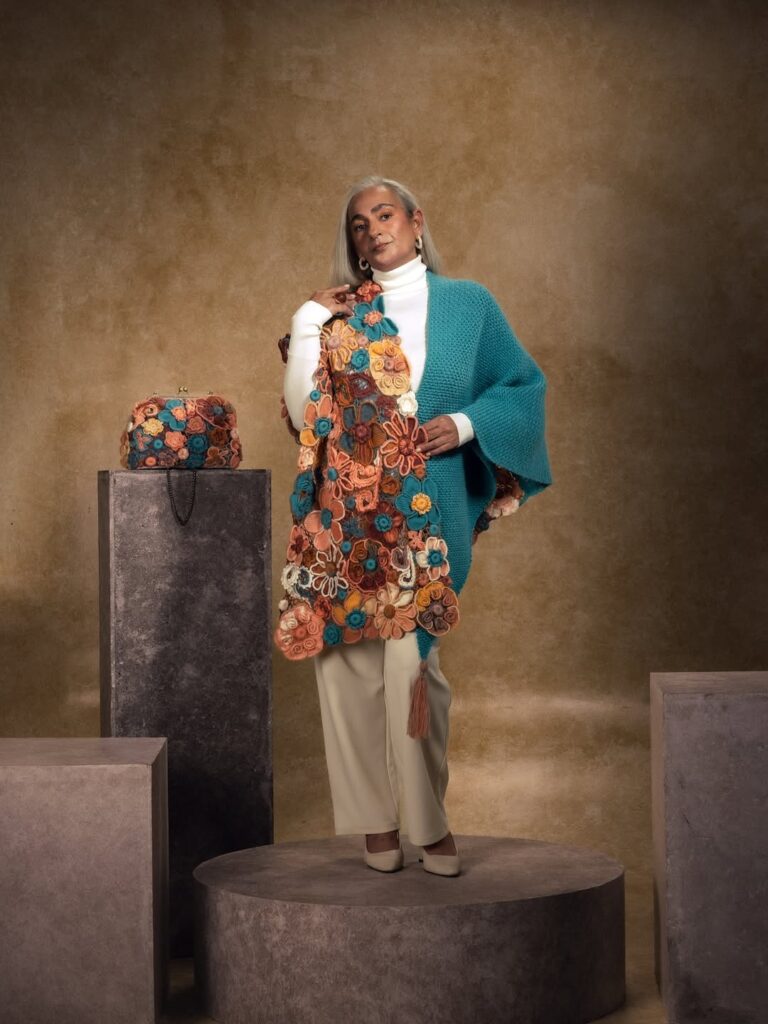
What began as a one-woman project slowly blossomed. As more people fell in love with her work, the team grew, the space expanded, and the dream got bigger. From a small corner at home to a cozy studio, and now a full showroom, Bouthina Handmade has become a global name in the world of handmade elegance.
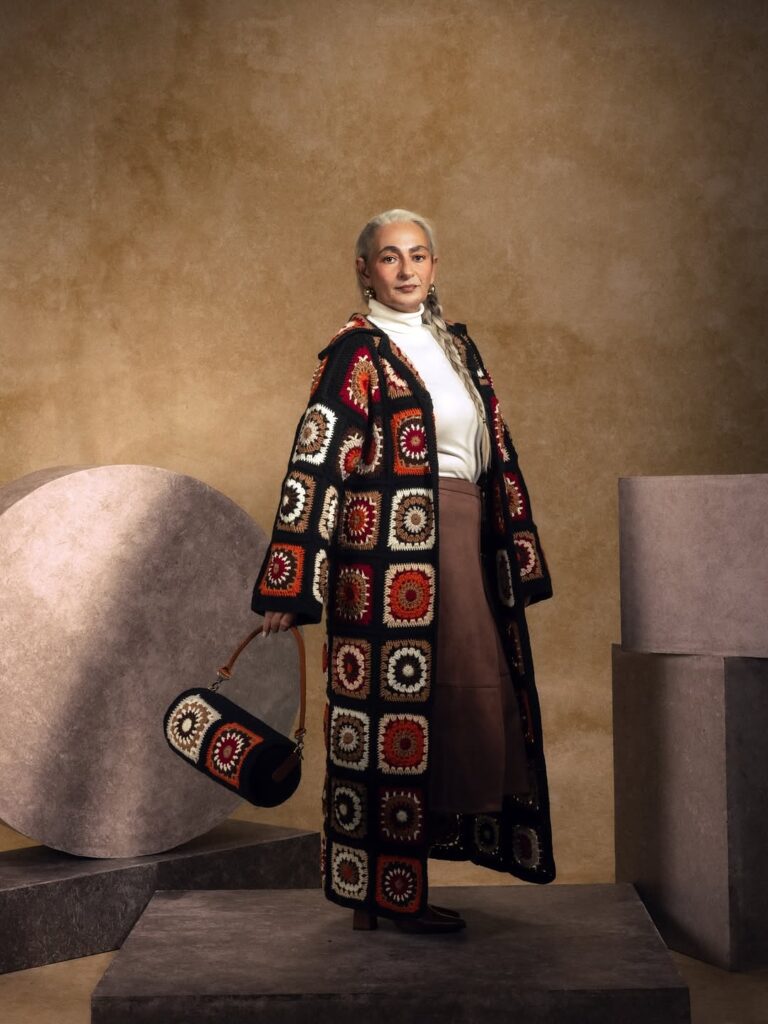
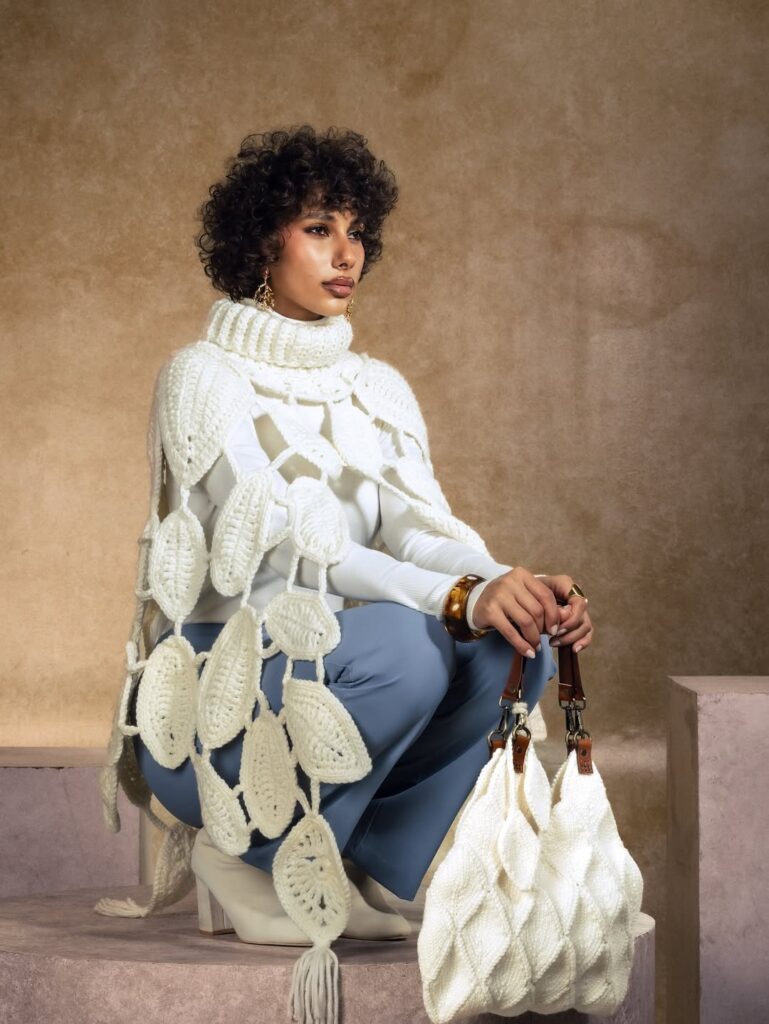
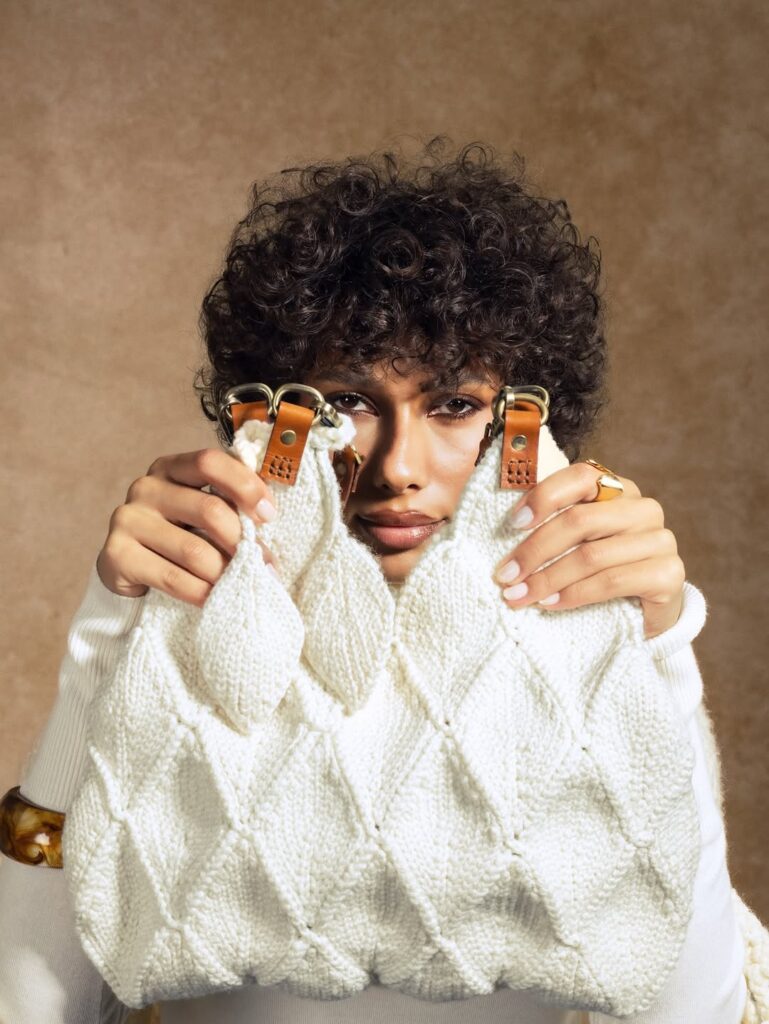
Bouthina Handmade started in 2014 with one woman, Bouthina Ahmed Mahroos, a crochet hook, and a heart full of passion. She began creating elegant, handmade crochet pieces from her home — each one crafted with love, care, and incredible attention to detail.
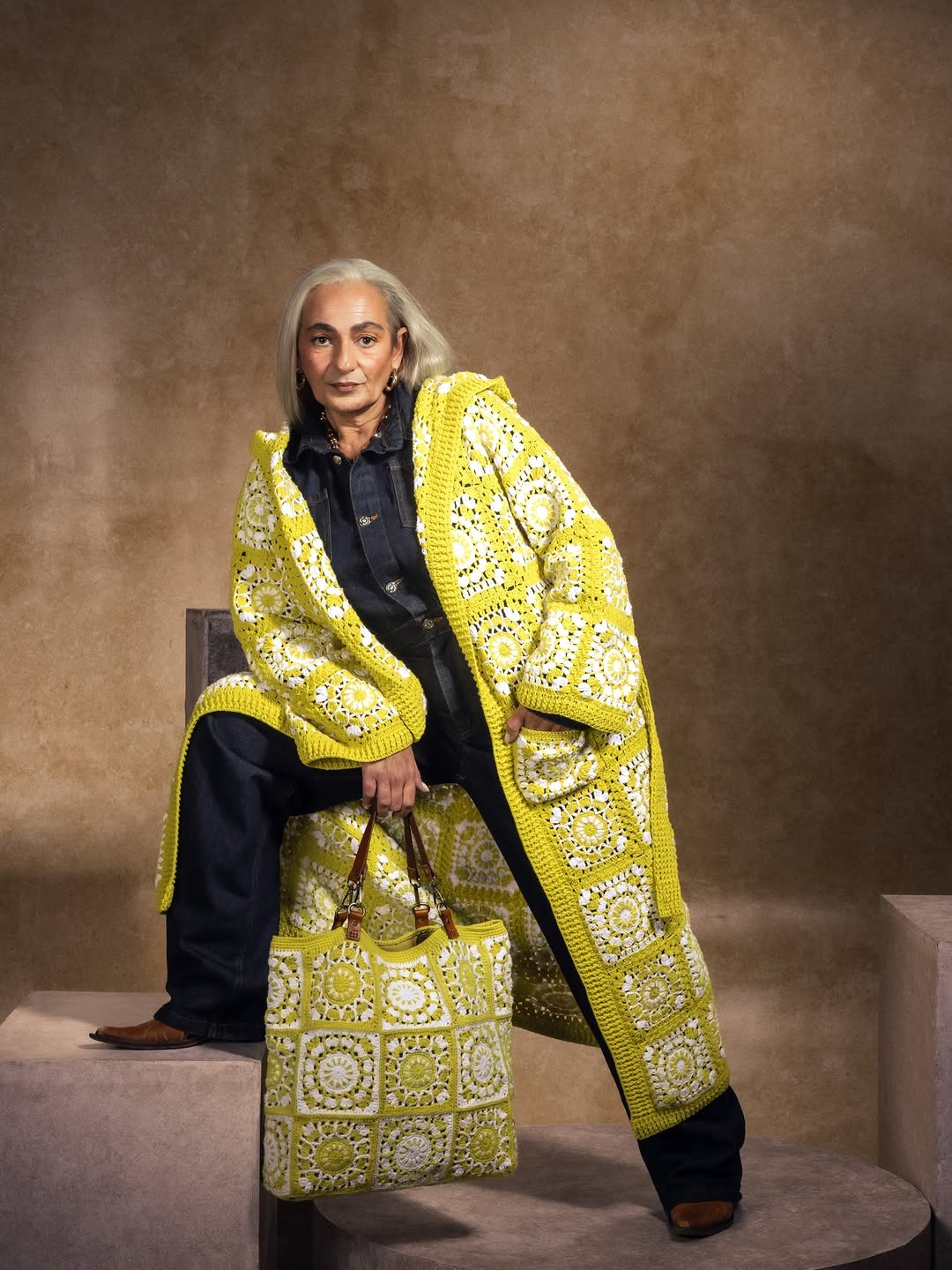
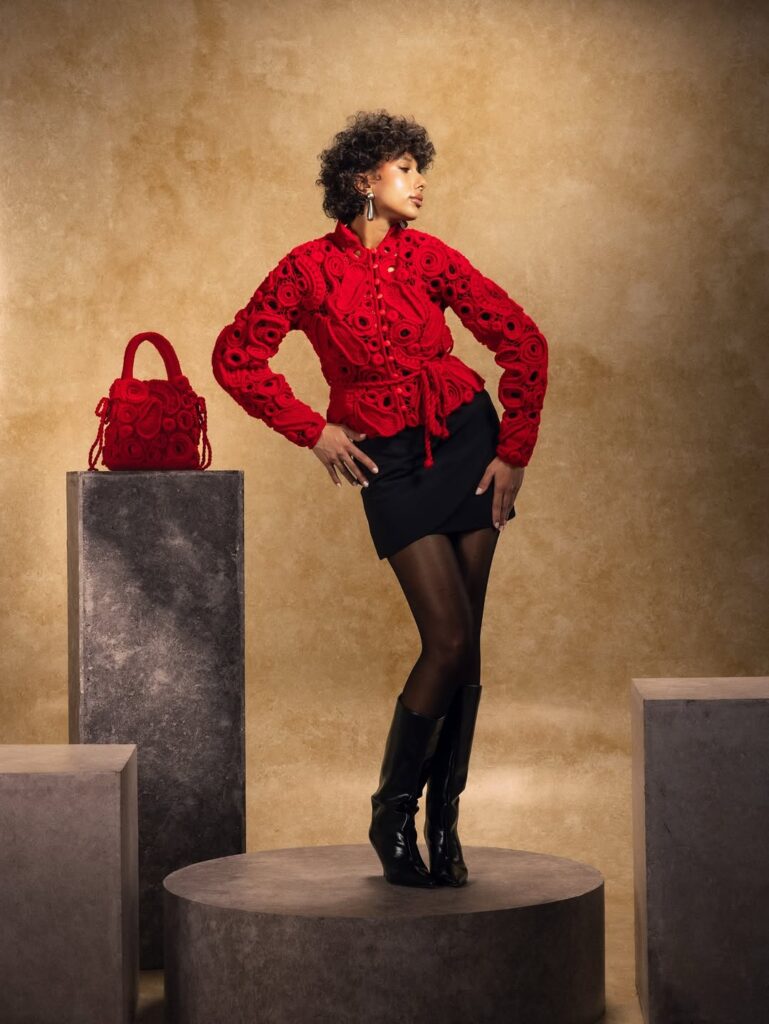
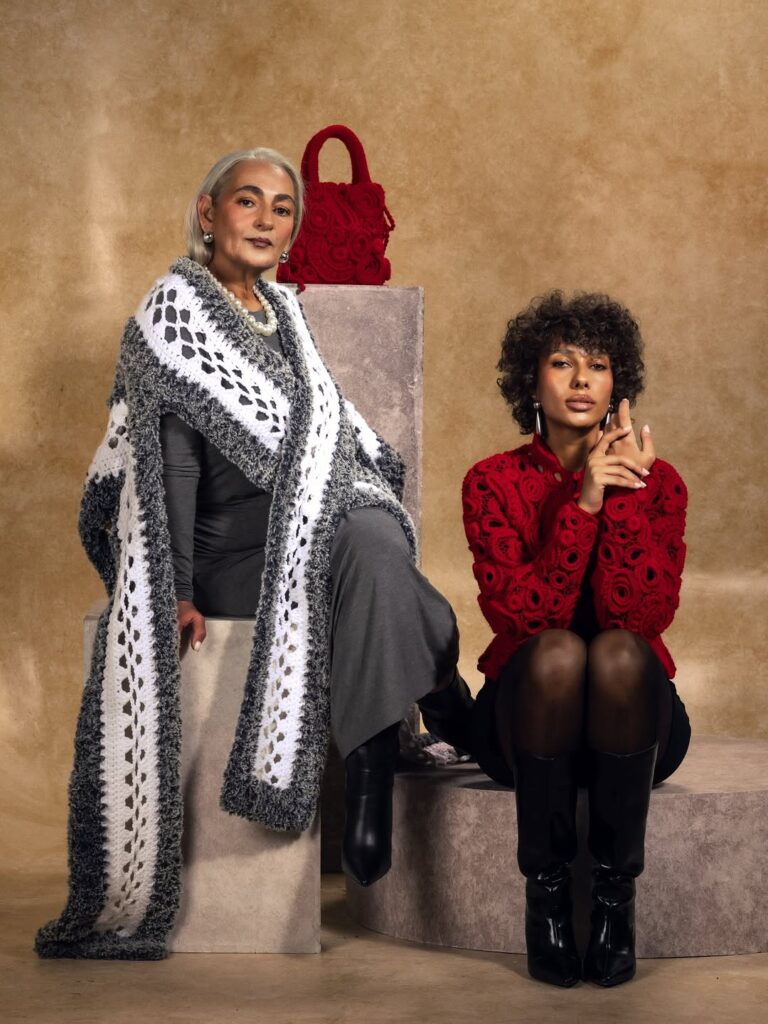
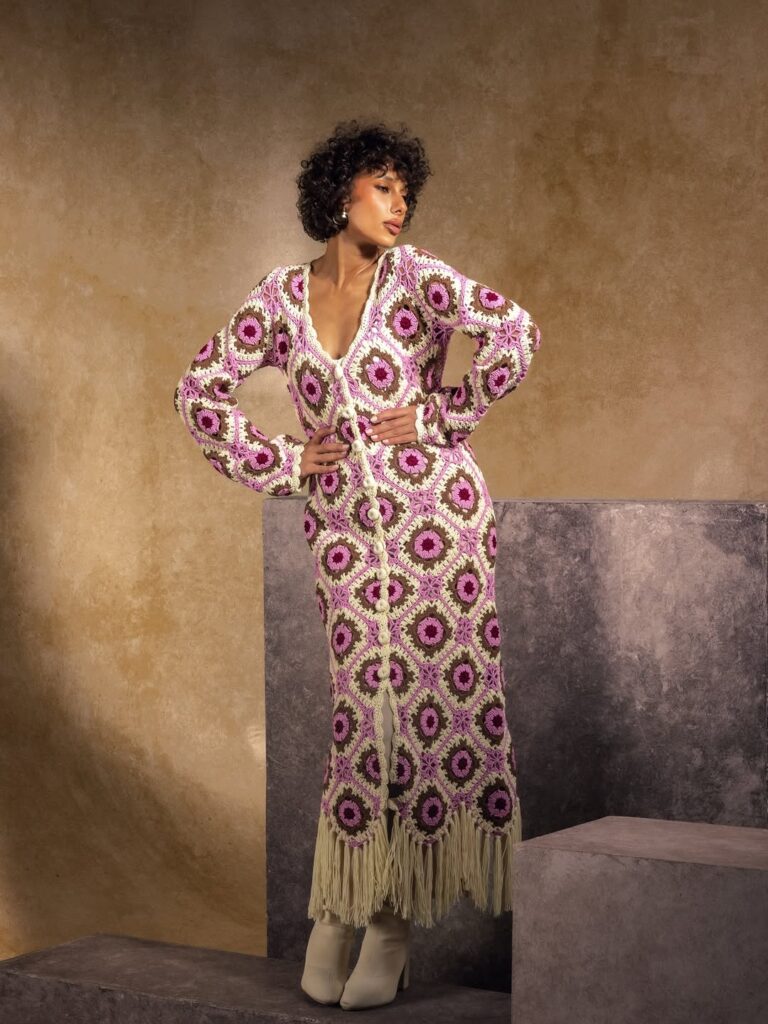
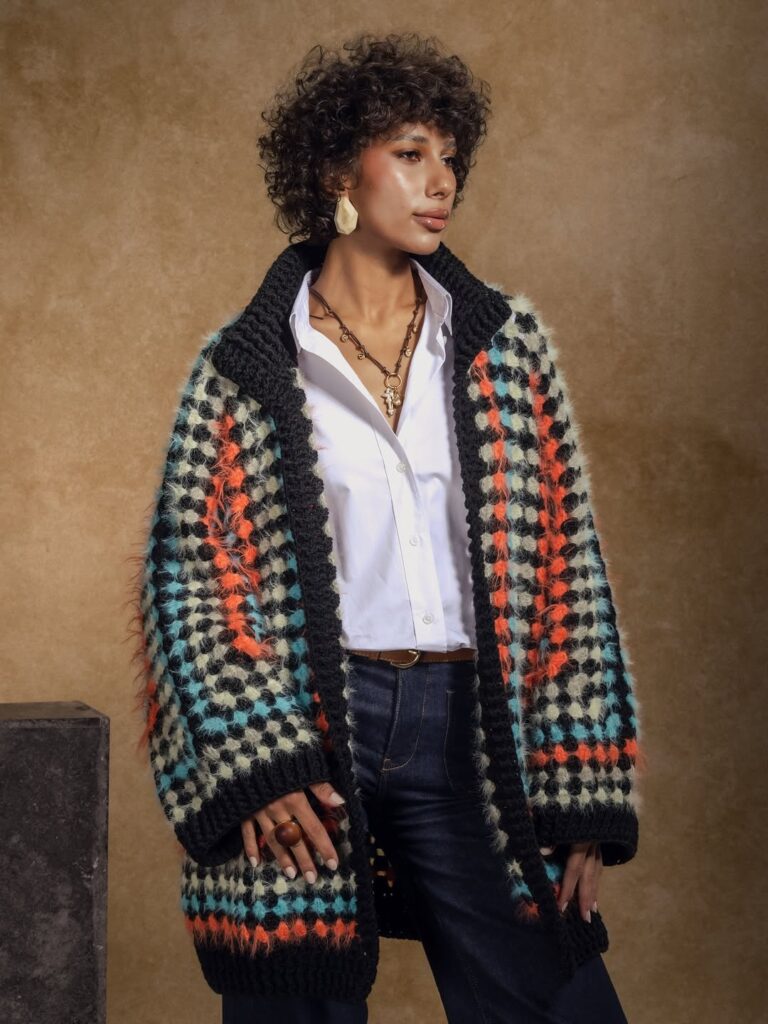
Bouthina Handmade is an Egyptian brand specialising in artisan-crafted, high-quality crochet fashion items, known for unique designs, vibrant colours, and intricate details in pieces like cardigans, bags, and jackets, offering “quiet luxury” and wearable art for effortless, statement style.
The brand’s sustainability is rooted in its approach to production and materials, which contrasts sharply with the environmental impact of industrial garment manufacturing. Each item, such as their crochet bags and cardigans, is crafted by hand with care, emphasising quality and unique details. This process is inherently more labour-intensive and less resource-extractive than mass machine production.
The brand uses high-quality yarns and materials to ensure that products are long-lasting, encouraging consumers to buy fewer items less often.The brand explicitly describes its products as “Eco-friendly and sustainable”. Bouthina Handmade positions itself as an alternative to “fast fashion,” focusing on unique designs and stories behind each stitch, which inherently promotes a more conscious consumption model.
By focusing on artisanal production and timeless style, Bouthina Handmade minimizes environmental impact compared to conventional apparel production methods. Their design aesthetic is characterized by artistic, individual pieces that stand out from mass-produced “fast fashion”.
Many items, such as bags and cardigans, use vibrant colours and intricate details to create a statement piece. Each item showcases the artistry of traditional crochet techniques and attention to detail.They offer a range from spacious, functional everyday bags to elegant dresses, shawls, and winter wear. Some pieces, like plain cardigans, are elevated by unique stitches and quality materials, designed for elegance and timeless style.
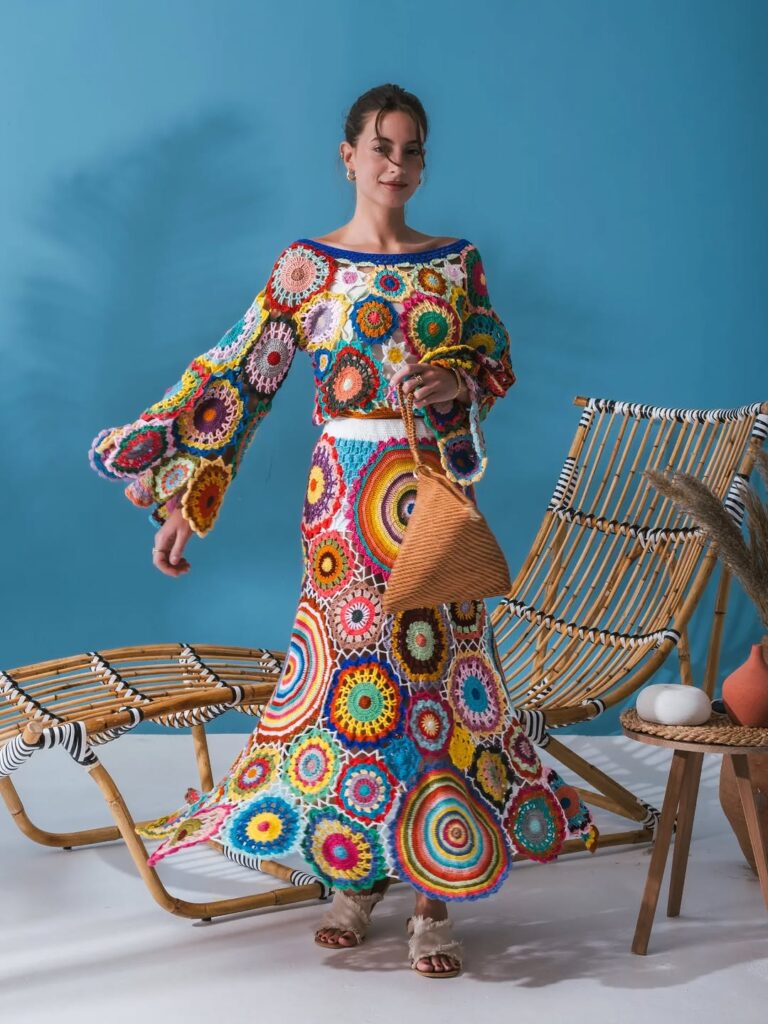
What started as Atieno Yarns, a Kenyan contemporary fashion brand specialising in crochet pieces, has developed into Vusha Studios, a phenomenal and conscious brand and a production facility where the handmade items are created, showcasing a collaboration focused on local Kenyan artisans. Vusha Studios serves as the physical location where Atieno Yarns’ unique crochet pieces are brought to life.
Vusha Studios is a luxury crochet studio recently established to create handmade crochet items like clothing and accessories, using 100% cotton yarn. The studio focuses on celebrating artistry, culture, and individuality through its designs. The brand creates bold, feminine pieces made to last, blending ethnic charm with modern flair.
Founder, Bettydora Odhiambo says, “As Atieno Yarns grew, I realised that not only was I building a crochet label, but that I was shaping a luxury African fashion house. So, the idea to create Vusha came from the need to evolve creatively and strategically. It represents a new chapter focused on African-inspired design, global export, stronger artistic direction, and a more holistic approach to craftsmanship. Atieno Yarns still informs the soul of the work, but Vusha gives the brand the space to scale, innovate, and collaborate with artisans on a larger, more global stage,” says Odhiambo.
Sustainability is the backbone of Vusha Studios. They use natural and biodegradable cotton yarn sourced from Uganda. The yarn is soft, vibrant, eco-friendly, and reduces environmental impact throughout the production cycle.
Crocheting with 100% cotton yarn is sustainable because it is a natural, renewable fiber that is biodegradable, decomposing relatively quickly, unlike synthetics that create microplastics.
“Crocheting has been part of my life since I was 10 years old. I learned crocheting from my mother and other women around me. So, the brand was born from both nostalgia and purpose. It was a desire to preserve Kenyan craftsmanship while creating sustainable, high-quality pieces. It also became a platform for empowering women artisans by offering fair work and a space to grow their skills,” she says.
“My design process always begins with storytelling. I draw inspiration from Kenyan traditional crochet patterns, and the everyday lives of African women. I sketch concepts, translate them into crochet patterns, create the first samples myself, then train my artisans to produce consistent, high-quality craftsmanship. I blend slow fashion principles with modern silhouettes, creating pieces that feel both nostalgic and timeless,” she says.
“I gravitate towards warm, earthy, sun-inspired tones, colours that speak to Kenyan cultural aesthetics, and the vibrancy of everyday life here. I choose colours that feel grounded but elevated, ensuring each piece is timeless enough for global markets while staying deeply rooted in African identity,” she says.
Vusha Studio’s latest collection features two signature pieces;the clutch bag called ‘The cherry on top’; a statement piece designed for versatile styling from evening wear to elevated day outfits.
According to Odhiambo, the Nene Tote is currently the most-loved piece. “It is spacious, bold, and handcrafted from pure cotton with soft canvas lining and leather touches. It is designed for women who carry more and do it in style, perfect for travel, work, for moms or everyday lifestyle needs,” she says.
She says both pieces balance traditional craftsmanship with luxury finishings, making them timeless staples.
Vusha Studios handcrafts for conscious consumers looking for African-inspired luxury, collectors, and fashion-forward individuals who value craftsmanship, authenticity, and ethically produced work.
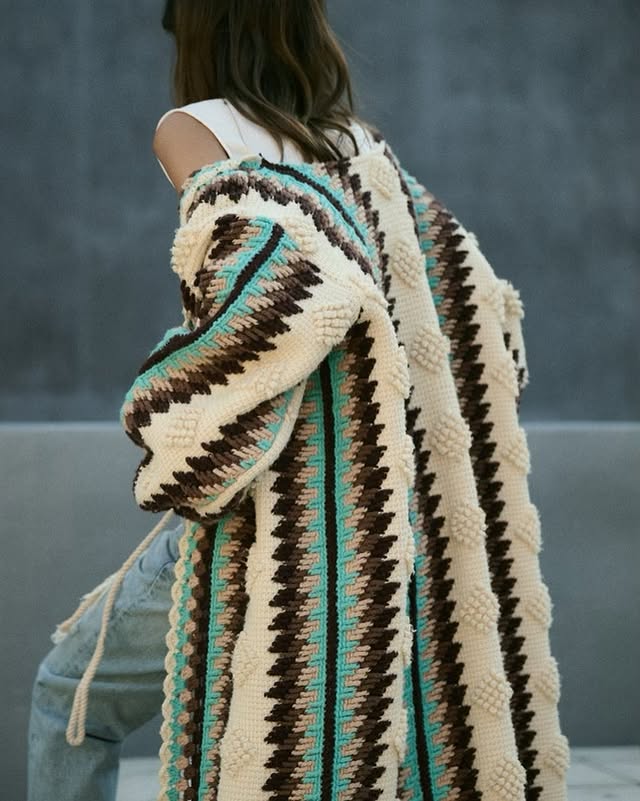
Cocoon sweaters are a fashionable item, popular for their comfort and versatility, and are considered a trend in contemporary knitwear. They are often seen in stylish looks due to their unique, loose, and rounded shape, which can be layered over other clothing items and worn in multiple ways.
Cocoon sweaters fit into broader knitwear trends that include other evolving cardigan styles and are embraced by various fashion demographics. But there’s a deep cultural story that lies behind the now trendy cocoon sweaters, made from crocheted blankets.
The culture surrounding women and crocheted blankets is deeply tied to community, creativity, and heritage. Historically, it was a way for women to express creativity and a means of producing useful and beautiful items, sometimes out of necessity. Today, crocheted blankets are celebrated for their connection to the past, serving as heirlooms, but also for fostering modern creation.
Now designers have given rise to upcycled designs like the crocheted cocoon sweaters. Seasoned Designers such as Nichole Moss, founder of Renewed by NM are preserving the culture by upcycling the intricately designed vintage crocheted blankets into elegant cocoon sweaters.
“Discover timeless warmth and love woven into every stitch with our cocoon sweaters collection. Each piece is crafted from one-of-a-kind vintage hand-crocheted blankets, lovingly knitted by moms and grandmas of generations past. Some call it upcycling, I call it Renew by NM,” this is how Nichole passionately describes her collection and brand.
A cocoon sweater is an oversized, loosely-fitting sweater that resembles a cocoon, with a circular or rounded shape. These sweaters are designed for a relaxed, “cuddly,” and comfortable feel and can be layered to create effortless and stylish looks.
“Our elegant cocoon sweater jackets breathe new life into cherished memories, preserving the tradition of handmade craftsmanship. Treat yourself to your new forever favourite that celebrates the bond of family and the beauty of handcrafted artistry. So you can always be wrapped in a mother’s love,” says Nichole.
The vintage crocheted blanket cocoon sweaters are generally sustainable because they extend the life of existing garments and divert them from landfills. They are a form of upcycling, which is more sustainable than buying new, as it avoids the resources and waste associated with new production.
The sustainability of the original material is also a key factor; natural fibers like wool or cotton are renewable and biodegradable, unlike synthetic yarns that can shed microplastics.
“Using vintage hand-crocheted blankets to make cocoon sweaters is a way to upcycle, create a unique garment, and achieve a cozy, retro style. This method is popular because it gives new life to old blankets, allowing for creativity with existing patterns, and results in a warm, one-of-a-kind garment with a unique, handcrafted feel. Nothing is old, nothing is new, it is just a matter of your point of view,” she says.
Nichole Moss
Drawing from her background in apparel production, Nichole designs ageless, sustainable, and gorgeous cocoon sweaters. Nichole recently collaborated with NSF, a Los Angeles-based clothing brand that offers relaxed, luxury womenswear with an LA-inspired, vintage aesthetic.
“Strolling through Erewhon Market in Los Angeles, I serendipitously met Nick, the CEO and Creative Director of the well-known brand NSF Clothing. Known for their artisanal denim, and luxury separates with California cool vibes. Nick spotted my cocoon sweater, and upon learning about my admiration for NSF, he suggested a collaboration for a capsule collection, resulting in the first drop. The collection was a huge success, selling out in just 24 hours. I am eternally thankful to Nick and Kimberly for wholeheartedly believing in and supporting the vision. Stay tuned for the second capsule drop,” she says.