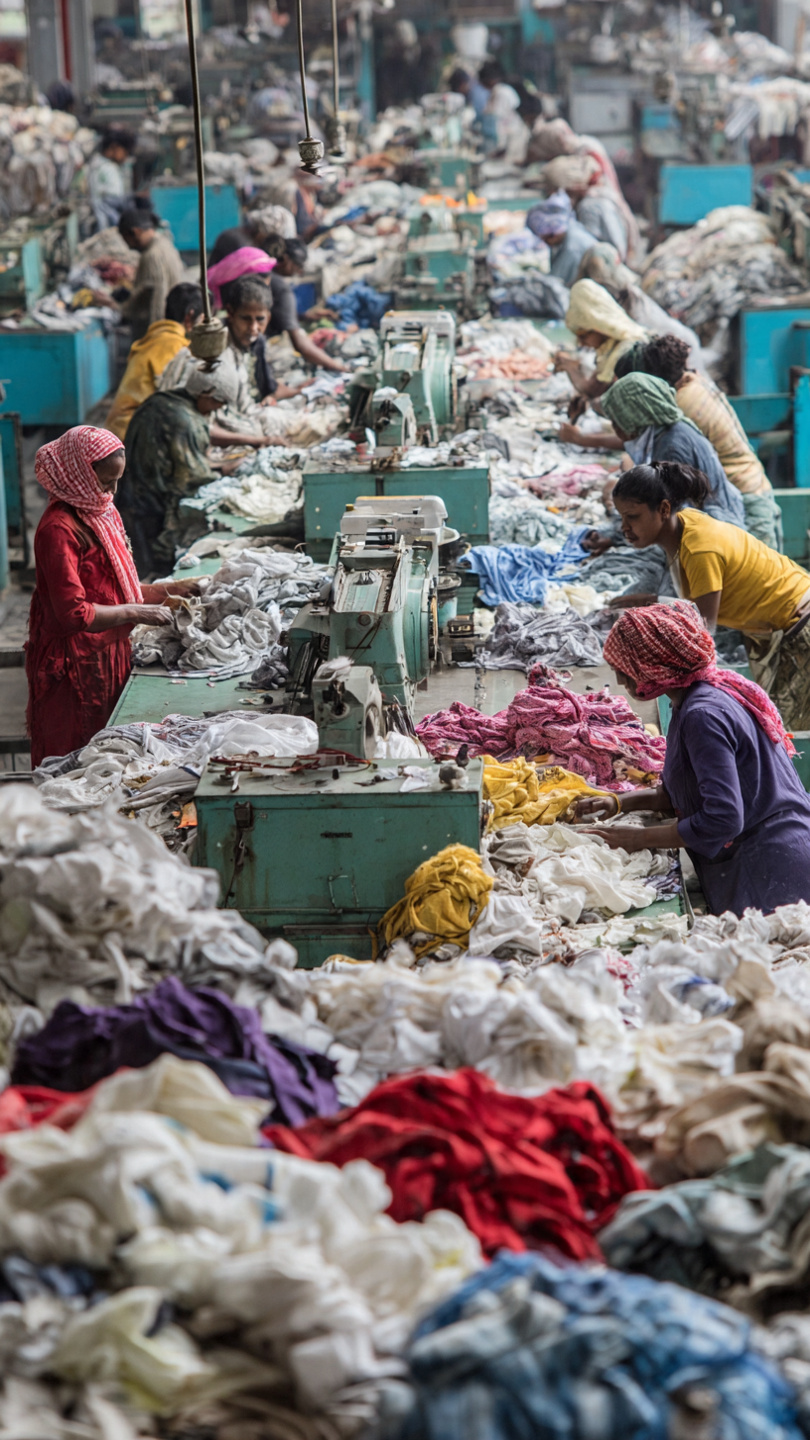
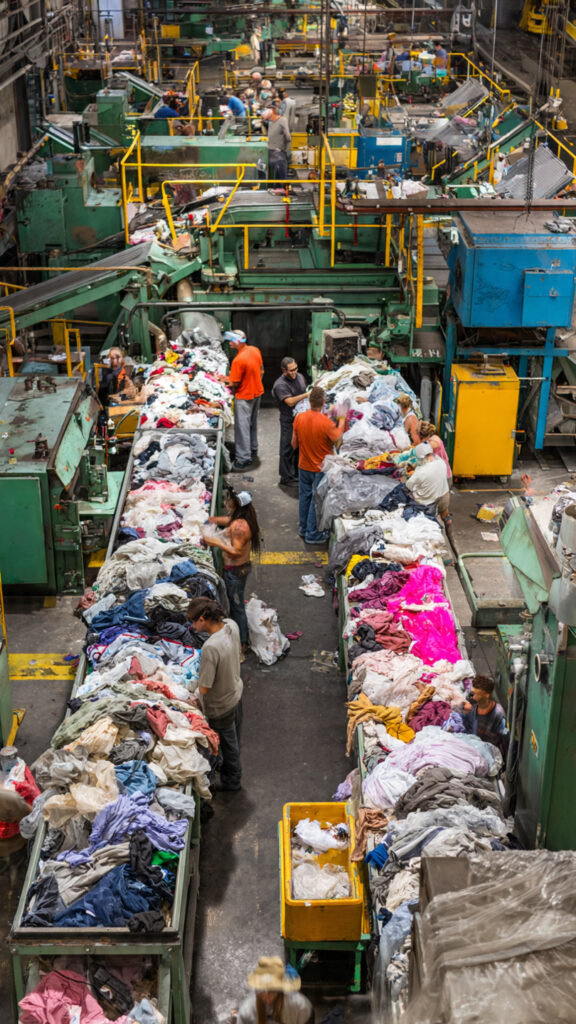
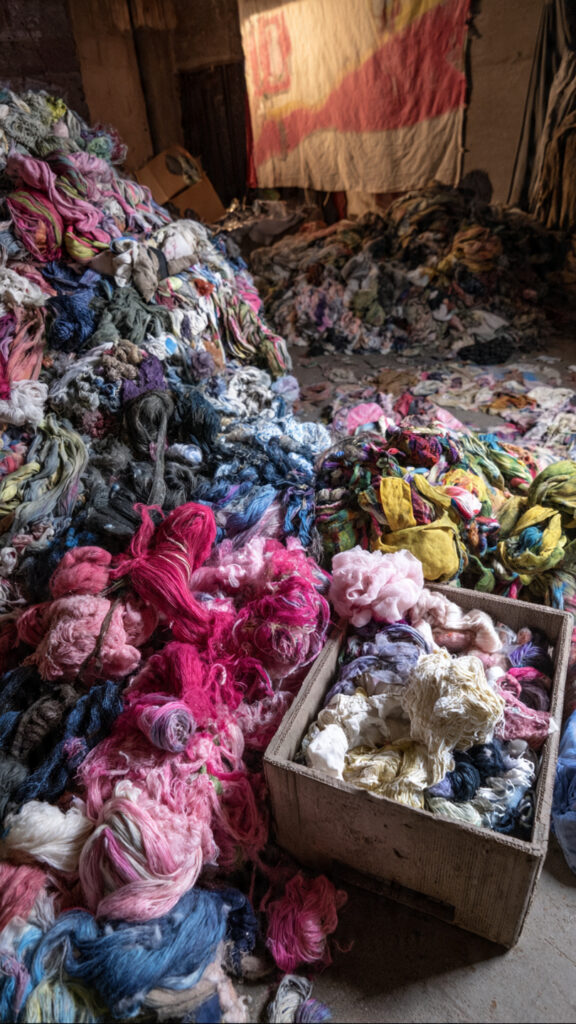
The fashion industry is one of the world’s largest polluters, with textile waste piling up in landfills and oceans. The statistics are staggering: the average person generates 12.8 kg of textile waste per year, with only 1% of materials being recycled into new clothing. But what if we could turn the tide? The key to a more sustainable future lies in textile recycling, and it’s being held back by a major hurdle: disassembly.
The complexity of textile materials, particularly blended fabrics, makes it challenging to separate and recycle them efficiently. Mixed fiber blends, lack of standardization, high costs, and limited infrastructure are just a few of the barriers to textile recycling.
The Challenges of Textile Recycling
– Mixed Fiber Blends: Difficulty in separating different fiber types, such as cotton and polyester, complicates recycling processes.
– Lack of Standardization: No global systems for tracking textile waste, making it hard to determine origin, fiber makeup, and chemical treatments.
– High Costs: Recycling processes are often more expensive than producing new materials, making it economically unviable.
– Limited Infrastructure: Insufficient recycling facilities and technologies to handle complex textile waste.
Innovative Solutions
But there’s hope. Researchers and innovators are working tirelessly to develop new solutions. Some of the most promising include:
– Automated Disassembly: Using advanced technologies to remove problematic elements and improve recycling efficiency.
– Advanced Sorting Technologies: Implementing near-infrared and hyperspectral imaging for precise fiber separation.
– Chemical Recycling: Breaking down synthetic polymers like polyester using methods like solvolysis and pyrolysis.
– Biological Recycling: Using enzymes to break down natural fibers, showing promise for sustainable recycling.
The Future of Textile Recycling
So, what does the future hold? Here are a few trends to watch:
– Increased Use of Recycled Materials: Brands are incorporating recycled materials into their collections, reducing waste and promoting sustainability.
– Circular Design: Designers are creating garments with recycling in mind, making it easier to disassemble and reuse materials.
– Chemical Recycling: New technologies are emerging that can break down synthetic polymers like polyester, making recycling more efficient.
Industry Leaders Making a Difference
Companies like Patagonia, H&M, and Levi’s are already making strides in textile recycling. They’re investing in innovative technologies, implementing circular design principles, and promoting sustainability throughout their supply chains.
What You Can Do
– Shop Second-Hand: Reduce textile waste by shopping second-hand or renting clothes.
– Support Sustainable Brands: Choose brands that prioritize sustainability and circular design.
– Recycle Your Clothes: Participate in textile recycling programs and donate old clothes to charity.
The disassembly dilemma is a complex problem, but with innovation and collaboration, we can unlock the secrets of textile recycling and create a more sustainable future for fashion.
The global upcycled fashion market is on the cusp of a revolution, with a projected value of $12.45 billion by 2030. But this isn’t just a numbers game – it’s a movement that’s redefining the very fabric of the fashion industry. Welcome to the world of upcycled fashion, where old becomes new, and sustainability is the ultimate style statement.
From Waste to Wow
Less than 1% of textile materials are recycled into new clothing, leaving a staggering amount of post-consumer garments ripe for reinvention.
Upcycling turns these discarded clothes into new, unique products, reducing waste and promoting a circular economy. It’s a no-brainer, really – who wouldn’t want to give old clothes a new lease on life?
The Rise of the Circular Fashionista
Consumers are driving this trend, with 60% willing to change their buying habits to reduce environmental impact. They’re not just talking the talk; they’re walking the walk, seeking out brands that share their values. And brands are listening. From Patagonia’s Wrecked program to H&M’s Garment Collecting Initiative, circular business models are becoming the norm.
The Numbers Don’t Lie
– Apparel segment leads the market with 69.35% share- Denim and outerwear are top categories for upcycled collections
– Women’s segment dominates, but men’s segment is growing faster (10.01% CAGR through 2030)
Innovation in Action
Companies like Newless are pushing the boundaries, offering mail-in and pop-up upcycling services that transform old garments into customized pieces.
Digital Product Passports and 3D prototyping are also reducing waste and increasing supply chain transparency.
The future of fashion is looking greener, and upcycled fashion is leading the charge. As sustainability becomes a strategic priority, upcycling is set to become a scalable business model.
Global Fashion Agenda (GFA) has released a new insights paper, “Unpacking Pay Equity in Fashion: Türkiye”, shedding light on the drivers of gender pay disparities in Türkiye’s fashion manufacturing sector.
The paper, launched at the OECD Forum on Due Diligence in the Garment and Footwear Sector in Paris, reveals that Türkiye’s gender pay gap stands at 15.6-17.4%, exceeding the EU average of 12%. The study, based on a survey of 43 Turkish textile and apparel manufacturers, highlights that occupational segregation, care responsibilities, and limited data visibility contribute to pay inequalities. Women are concentrated in lower-paid roles, while men dominate higher-paid technical and supervisory positions.
Key findings include:
– Structural inequalities: Gender pay disparities are driven by structural factors, not unequal pay for the same work.- Limited data: Inadequate measurement and disclosure of gender-disaggregated wage data hinder companies’ ability to address inequality.
– Economic pressures: Ongoing economic challenges strain the sector, but manufacturers are working to maintain formal employment and comply with labor laws.Closing gender pay gaps is both a social and business imperative. Improving pay equity can boost workforce morale, retention, and long-term resilience, aligning with evolving EU regulatory expectations.
As part of Seamless’ program to build a coordinated national system for clothing collection, sorting, reuse and recycling, the Seamless Circular Clothing Textiles Fund is supporting seven real world projects that are finding new ways to keep clothing out of landfill. One of these initiatives is the National Circular Textiles Pilot, led by Australia Post.
The organisation sat down with Marty Rowell, Head of Circularity and Decarbonisation, to learn how, together with their partners, Australia Post is making it easy for consumers to return used clothing in purpose-designed satchels for recycling and recovery.
The National Circular Textiles Pilot is a real-world trial they’re leading in collaboration with R.M.Williams, REMONDIS Australia, BlockTexx and iQRenew to test a simple way for Australians to return clothes that are no longer needed. Using a purpose-designed satchel, R.M.Williams customers can send back shirts and T-shirts for recovery through a traceable, circular system.
The pilot will help to demonstrate how a national clothing recovery system could work at scale. Each company brings their own expertise essential for closing the loop, with Australia Post acting as the facilitator and enabler.
Each partner plays a critical role in bringing the circular service together:This pilot is both a learning opportunity and a practical example of how Australia Post could help deliver circular solutions at scale – and enable a more circular future for clothing in Australia.
The pilot uses a purpose-designed circular satchel that works seamlessly with Australia Post’s existing network, making it easy for customers to return clothing they no longer need. Made from 100% recycled content collected from Australian kerbside bins, the satchel shows how everyday “waste” can become a valuable resource.
The satchel is made entirely from Australian household soft plastics (LDPE) – processed, manufactured, collected and recovered for re-manufacture, all onshore.
Another important innovation in this trial is data traceability. For the first time, Australia Post is capturing detailed data as garments move through their circular journey downstream from the consumer.
This means every item can be tracked to its next use, providing transparency and confidence in the system. It also enables merchants to offer verified incentives that support circular behaviour. This data traceability is a key foundation for scaling a trustworthy, transparent circular economy.
Seamless’ role is to provide the national infrastructure combined with the data capability to make the service simple, accessible and reliable.
R.M.Williams plays a pivotal role in consumer engagement as a trusted connector for customers seeking sustainable solutions. The brand is expanding its service offering by providing circular satchels through its website and actively encouraging customers to participate in the trial.
REMONDIS sorts the returned garments and ensures each item is directed to its best possible next use, whether reuse, re-manufacturing or recycling, while collecting the data needed to verify the circular pathway.
BlockTexx transforms unwearable garments into recycled polyester and cellulose, creating new materials for manufacturing and agricultural applications.
iQRenew supports the creation of the circular satchels using Australian-made recycled resin pellets and recycles the used satchels back into pellets for re-manufacture.
Creating a truly circular economy at scale depends on strong collaboration across the entire ecosystem, from product design through to material recovery, because no single organisation can achieve it alone.
This pilot brings together committed partners to test, learn and refine circular processes in the real world. These findings will help shape a scalable circular clothing sector for Australia, with the potential to expand into other sectors over time.
The pilot will test the technical, operational, and customer experience aspects of a circular model, providing data-driven insights. Seamless will track participation and the volume of clothing returned, and will provide insights into what it would take to scale the service nationally. These learnings will contribute to the design and evidence base for a national coordinated circular clothing system for Australia.
This pilot is one step in a much larger ambition; to facilitate and enable circular services and programs that are simple, accessible and part of everyday life.
There’s genuine excitement across the value chain, with partners increasingly seeing how this concept could grow into a scalable service that transforms how clothing moves through the economy.
In a year defined by growing scrutiny of climate commitments and the urgency to decarbonise, transparency has emerged as one of fashion’s most powerful accelerators for change. Recently, H&M Group, a Strategic Partner of Global Fashion Agenda, was ranked first among 200 global fashion brands in Fashion Revolution’s What Fuels Fashion? 2025 report, which assesses the public disclosure of climate and energy-related actions across the industry.
Scoring 71% across five categories — accountability, decarbonisation, energy procurement, financing decarbonisation, and transparency and advocacy — the company’s performance reflects a broader momentum toward openness in how fashion communicates progress.
“This ranking shows we are moving in the right direction, but it also reminds us that action must go further and faster. No brand can tackle this challenge alone. By working together and sharing more openly, we can lift the entire industry and drive meaningful change,” comments Leyla Ertur Genç, Chief Sustainability Officer, H&M Group.As the report demonstrates, transparency has become more than a compliance measure. It is a foundation for trust and accountability, and a reflection of the courage it takes for companies to share their progress and challenges openly.
Yet, as sustainability reporting becomes more regulated, many brands are disclosing less voluntarily. True transparency now lies in showing proof of progress and how words translate into measurable change.H&M Group’s latest Sustainability Progress Report 2024 outlines substantial verified progress across climate, circularity, and human rights.
The company achieved a 41% reduction in absolute scope 1 and 2 emissions and a 24% reduction in scope 3 emissions (excluding use-phase emissions) compared to its 2019 baseline, with 96% renewable electricity in operations and ongoing efforts to phase out coal in its supply chain by 2026. It also reported a 9.5% absolute reduction in freshwater consumption in its key garment supplier tiers (tiers 1 and 2) from a 2022 baseline, and 89% of materials are now sourced as recycled or sustainably produced.
These actions illustrate a move beyond disclosure toward proof of progress. This shift is also reflected in how rankings themselves are evolving. Where once they primarily rewarded disclosure, the industry’s most credible benchmarks now measure how brands are implementing change.
Textile Exchange Material Change Index (MCI), for example, tracks progress in the use of preferred materials, circularity, and responsible sourcing across 16 material categories. In its latest edition, H&M Group achieved a leading performance band, signalling measurable integration of circular and low-impact materials across its portfolio.
As the metrics mature, so too does the conversation. Transparency is no longer about how much information is shared, but about the integrity of that information and the ability to demonstrate progress over time. It asks whether the data shows tangible results, such as fewer emissions, safer workplaces, and fairer partnerships, and whether progress can be verified and sustained.
This mindset aligns with the Fashion CEO Agenda 2025, Global Fashion Agenda’s leadership framework calling on companies to embed accountability within all levels of decision-making. The Agenda highlights Resource Stewardship and Respectful and Secure Work Environments as two essential priorities where transparency drives meaningful change.
Resource Stewardship urges companies to align operations with planetary boundaries through cleaner energy and responsible material use, while Respectful and Secure Work Environments emphasise that progress on decarbonisation must advance alongside fair and safe working conditions.Courage can push transparency beyond necessary reporting toward genuine collaboration and measurable impact. When companies disclose their challenges as openly as their successes, they enable others to learn, adapt, and act faster.
For fashion to thrive in a decade defined by regulation, resource constraints, and rising expectations, transparency must continue to bridge ambition and delivery.
The industry’s next phase will be defined not by who shares the most, but by who demonstrates the most progress. The future of fashion will belong to those willing to prove it.
On 25 September 2025, the Global Fashion Agenda (GFA) launched the Fashion CEO Agenda 2025, a strategic resource for leaders of fashion brands and retailers, designed to guide immediate action to future-proof businesses while advancing towards a net-positive fashion industry by 2050.
This was launched on the occasion of New York Climate Week. The publication takes place at a pivotal mid-decade reflection point, with less than five years remaining to meet the UN Sustainable Development Goals. The report comes as the industry faces turbulence, from economic volatility and deregulation to escalating climate and social crises.
The updated agenda urges executives to take action according to its long-standing five-priority sustainability framework. Respectful and secure work environments, better wage systems, resource stewardship, smart material choices, and circular systems.
For the first time, the 2025 edition introduces priority accelerators: innovation, capital, courage, incentives, and regulation. These build on the themes discussed at the Global Fashion Summit: Copenhagen Edition this year, positioned as critical levers that cut across all five priorities, enabling systemic change at speed and scale.
The Fashion CEO Agenda 2025 is structured in two clear parts: Part one presents overarching ambitions for the fashion sector that demand collective action across stakeholders, while part two outlines the immediate, short-term, practical steps brands and retailers can take today to advance those ambitions.
The 2025 edition builds upon the ambitions first presented in the 2023 Fashion CEO Agenda which was developed through years of stakeholder engagement and validated by GFA and the UN Environment Programme’s global Fashion Industry Target Consultation.
Two years on, these ambitions remain central to industry-wide progress. For 2025, they’ve been re-evaluated in consultation with leading multi-stakeholder initiatives and experts to ensure continued ambition, impact, and relevance.
The scope now expands to further urgent priorities such as fair and ethical treatment of migrant workers and empowering workers through inclusive automation and reskilling, with a firm focus on the need for transformation that benefits both the planet and its communities.
To support implementation, GFA has also released new complementary materials including a practical toolkit guiding companies to credible existing industry tools, guidelines, and programmes, as well as a presentation deck that fashion leaders can adapt internally to educate teams.
These resources are designed to help leaders embed the Fashion CEO Agenda into company strategies and communicate it effectively throughout their organisations.
Federica Marchionni
CEO of Global Fashion Agenda, Federica Marchionni says that, “Climate change is the defining certainty in an uncertain global world, impacting all lives and communities. The investments needed to future-proof businesses will keep increasing and the cost of inaction will inevitably become greater than the investments needed to address it. This year’s Fashion CEO Agenda provides leaders with a clear path to embed sustainability at the heart of corporate strategy, supported by enabling conditions that make bold action both possible and necessary.”