
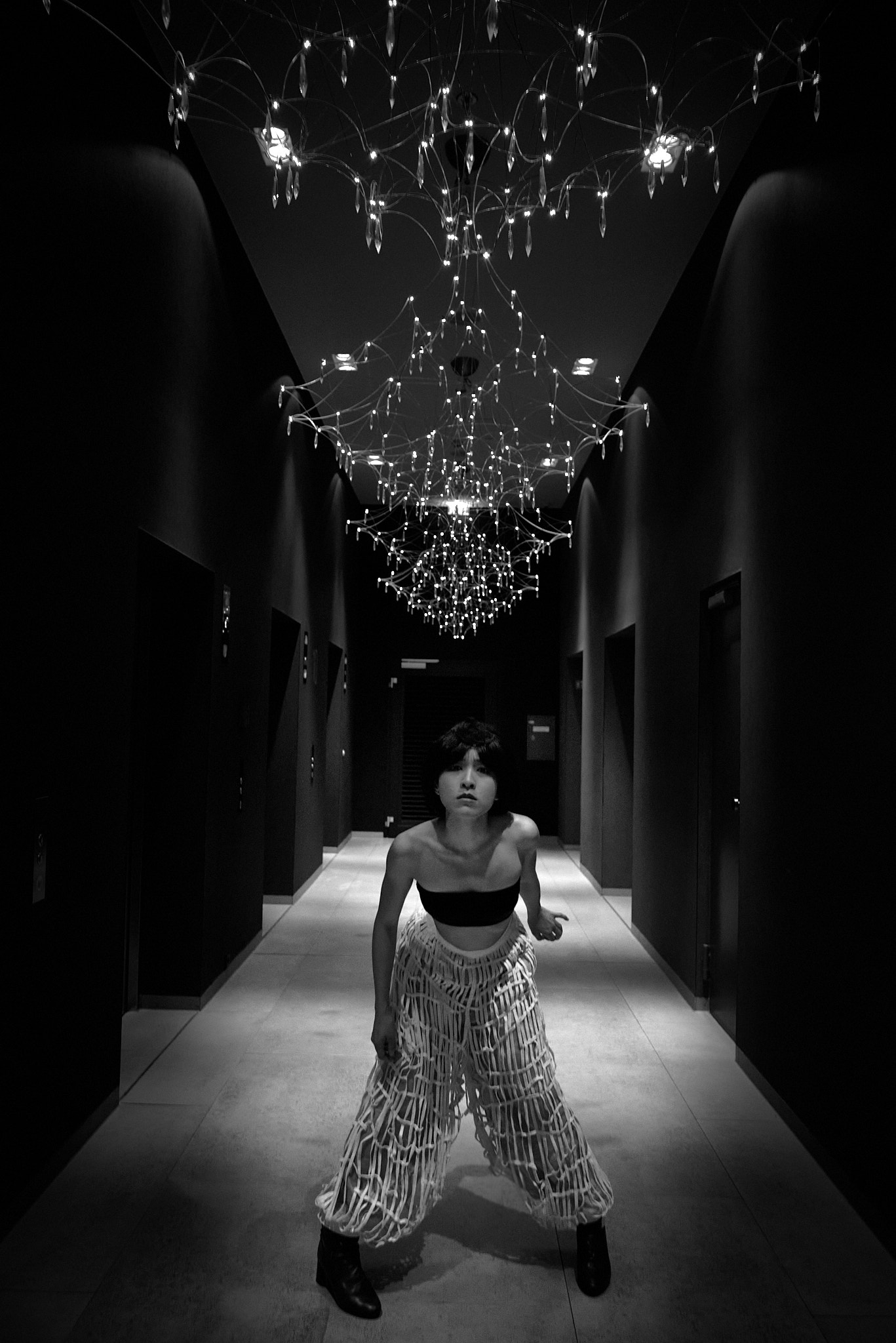
She is a genius creative, with an exceptional imaginative ability, a risk-taker, dedicated to her craft, consistently pushing boundaries and producing groundbreaking work that can reinvent existing knowledge and create new standards. She is a self-taught fashion designer who in a short period of time has displayed phenomenal garment creations.
Nakira Pansurini is a designer and founder of Nakira Studio, based in Berlin, Germany. She is an artist who transforms discarded objects and repurposes clothing into wearable art. She is a Butoh-inspired fashion designer, who creates garments that focus on texture, form, movement, and the body’s relationship to gravity and the environment, rather than just surface-level aesthetics or trends.
Through this practice, she turns the mundane into the extraordinary, the discarded into the performative. Her work is not about perfection but about the process, play, and possibility. Each piece she creates emerges unpredictably, alive with movement, turning waste into radical, performative fashion. Nakira creates wearable art from what others throw away, discarded clothes, forgotten fabrics, and mundane objects from everyday life.
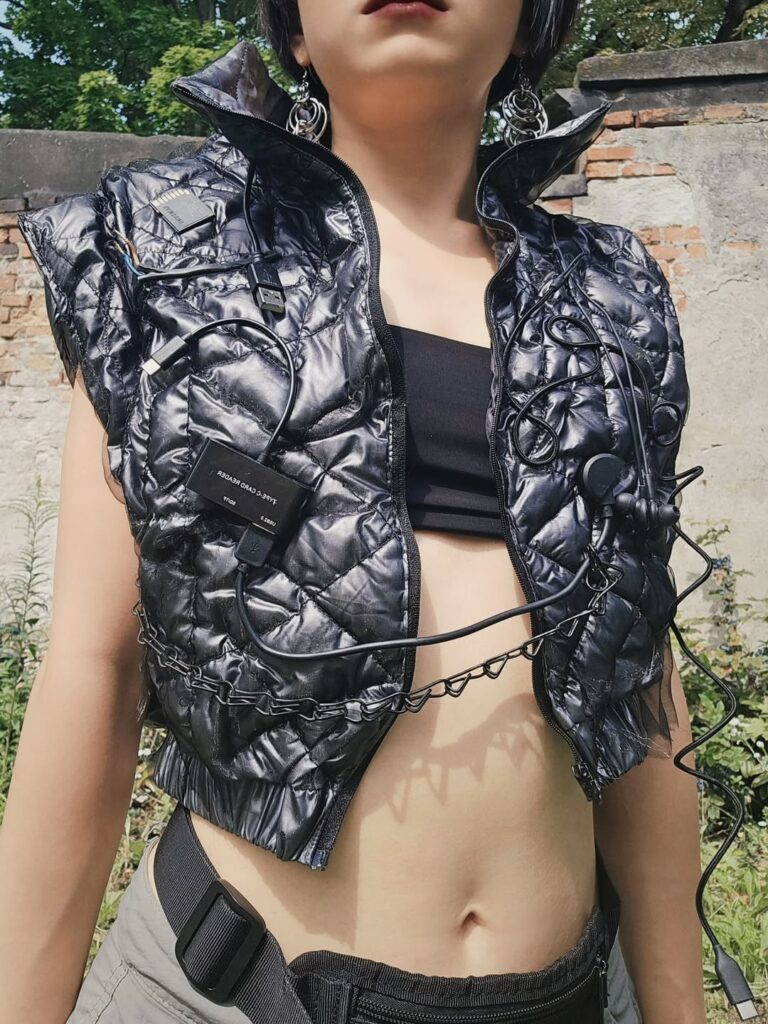
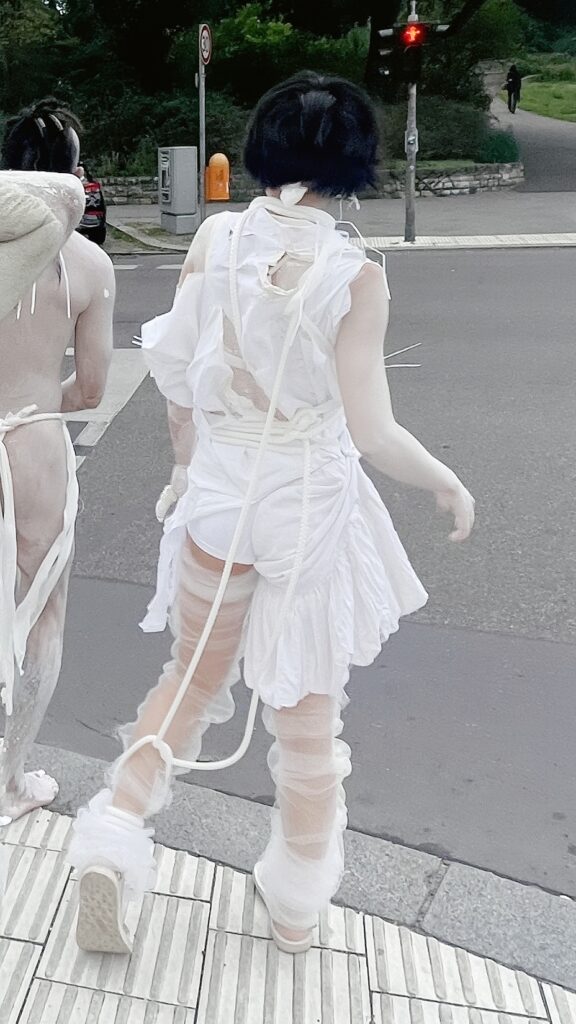
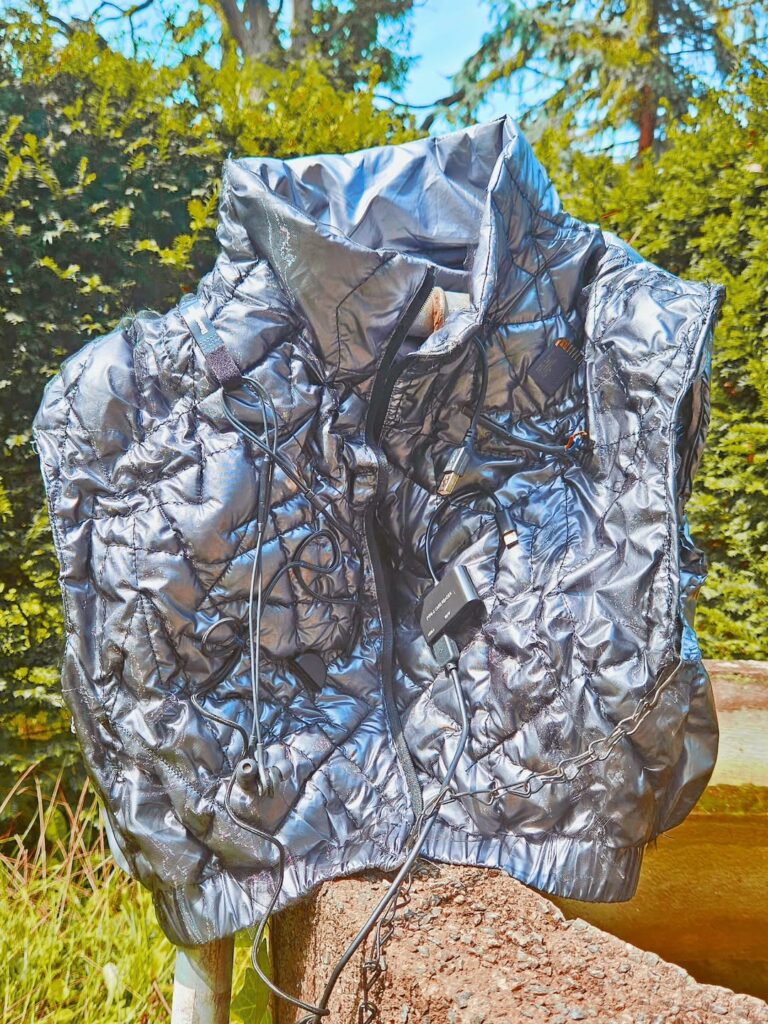
“My practice is rooted in Butoh, an experimental Japanese dance form born in the 1960s. Butoh is not about technique or polished form, it is about surrender. The dancer does not control movement but allows themselves to be moved by external forces, the environment, the air, gravity, textures, memories,” says Nakira.
Nakira’s use of improvisation is a significant element in her design process, allowing for spontaneous movement creation and the exploration of experimental design processes, such as the tearing and reassembling of fabrics, where the form is discovered through intuitive action rather than a fixed plan.
Nakira flips garments inside out or upside down. Sleeves become pantlegs, pants become sleeves, socks emerge from sleeves. Nothing is fixed; nothing is wasted. A bathrobe becomes a dress, shower puffs become leggings, yet their essence remains visible.
“I transform discarded clothes and forgotten objects into wearable art. Nothing stays as it was. Sleeves become pant legs, pants become sleeves, and ordinary fabrics are flipped, torn, and reimagined into moving sculptures. My background in dance drives me to create garments that stretch, shift, and deconstruct during performance, making the act of wearing inseparable from the art itself. I thrive on limitations, no budget, no rules, no fixed plans and using constraint as fuel for invention,” she says.
“I grew up in poverty in the suburbs of Bangkok, Thailand. As a child, I searched for discarded things on the street and made use of whatever I found, making them functional at any cost. My free time was spent building imaginary worlds where trash became treasure, each object carrying a story. My toys were made from garbage I reimagined into something meaningful. I have always loved working with my hands,” she says.
“And now, working as a sushi chef as well, I sharpen my hand–eye– brain coordination every day. Cooking for staff at the restaurant also means creating meals from limited ingredients, within tight budgets and time constraints. This philosophy of resourcefulness and invention carries into my sewing and upcycling work. For me, constraints are what make things creative; breakthroughs emerge from chaos and limitation,” she elaborates.
Nakira began sewing in August 2025 with no knowledge, no training, no rules. Her first piece was mesh, considered difficult by professionals. She says not knowing that mesh is difficult to deal with, freed her. Nakira says she discovered that constraints in budget, tools, time, and knowledge are not barriers but sparks for invention.
“Time pressure excites me, forcing me to use all my willpower and imagination to make something work. Recognition of what they once were is part of the art, a reminder that transformation does not erase but reimagines. As a dancer, I need garments that stretch, shift, and deconstruct with movement. Sewing is not just a craft but a performance. I use whatever tools are at hand, sometimes even my teeth, and often begin with no plan, allowing fabric and object to move me,” she explains.
“Sometimes the most alive moments happen when you have no time to overthink. No pattern, no plan, just hands and fabric, trusting the process even when you do not know what the process is. Butoh teaches that nothing stays intact. Outfits shift as the body moves, pieces fall away, and the garment continues deconstructing long after it leaves my hands.”
Nakira’s approach to design is instinctive and experimental, rather than aiming for perfection. She says, “I work with the chaotic energy of the material, accepting accidents and limitations as part of the creative process. What emerges is not a polished garment but a wearable sculpture that carries the memory of its former life, while simultaneously inhabiting a new identity as a raw, performative costume.”
GARMENT CREATION PROCESS
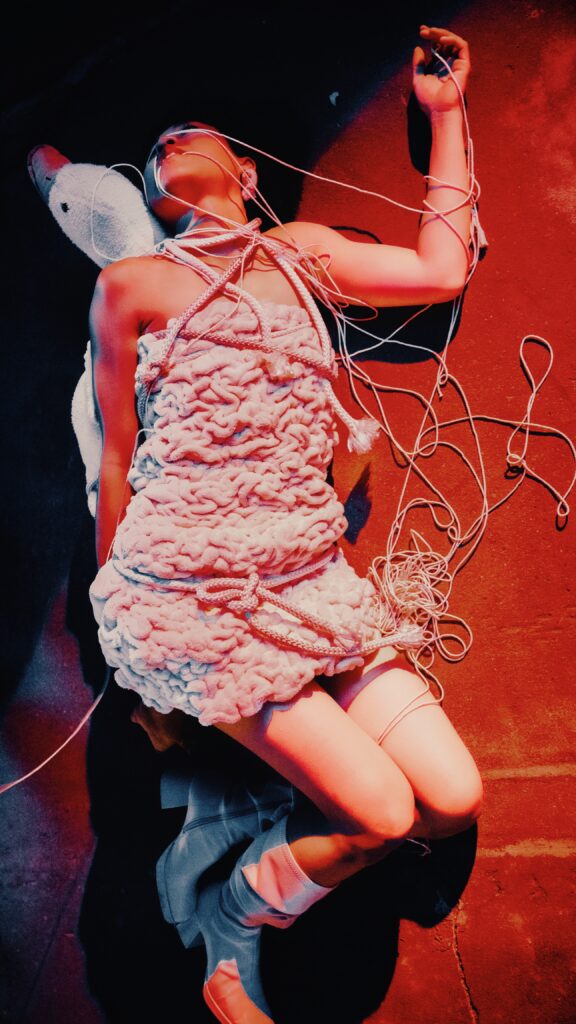
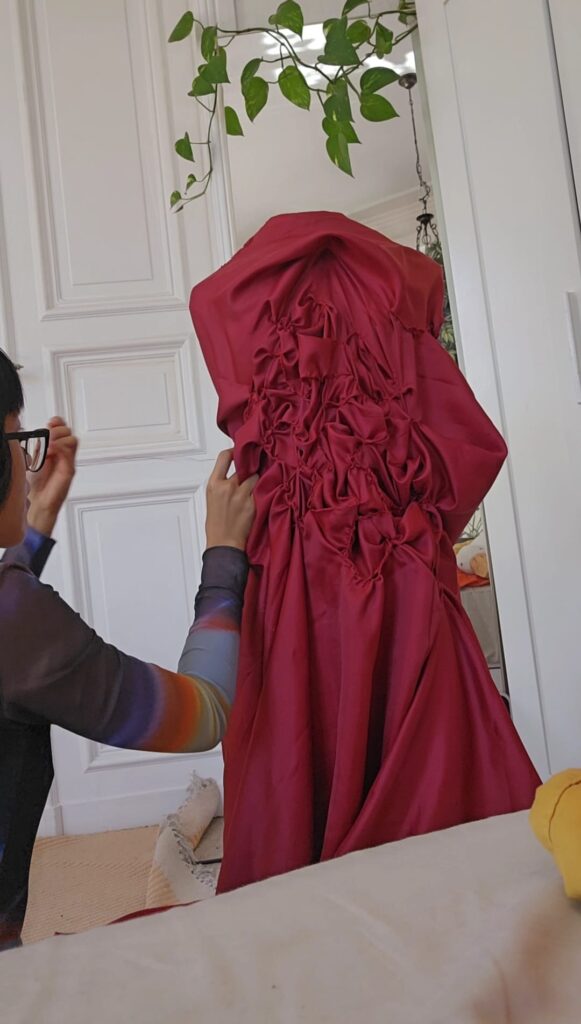
“This piece began as an experiment during the second month of teaching myself how to sew. I wanted to explore fabric manipulation through smocking, a technique that gathers fabric into folds and textures through repeated stitching. My first attempt was on a red dress made for a shibari session, and soon after I turned to my old bathrobe as material for further exploration. Working without a pattern or plan, I allowed the fabric to guide me. Over twenty hours, simple white stitches pulled the bathrobe into dense, puckered folds that resembled organic forms, almost like the surface of a brain. Unlike traditional smocking, which follows a decorative grid, this process was improvised and irregular, producing an unpredictable sculptural effect. For me, this process embodies the balance of control and surprise. Each stitch, a small experiment, each fold a decision made partly by me and partly by the material itself. The final garment is both familiar and estranged, a bathrobe reimagined as performance wear while still carrying the memory of its original form.”
Documented at Mahalla Open, Berlin Art Week, 10 September 2025
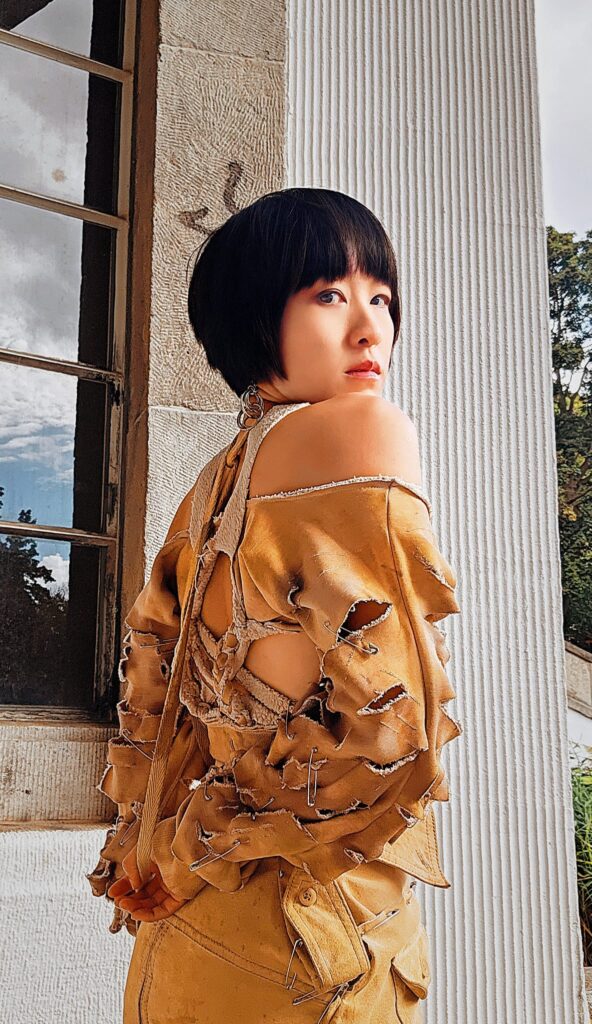
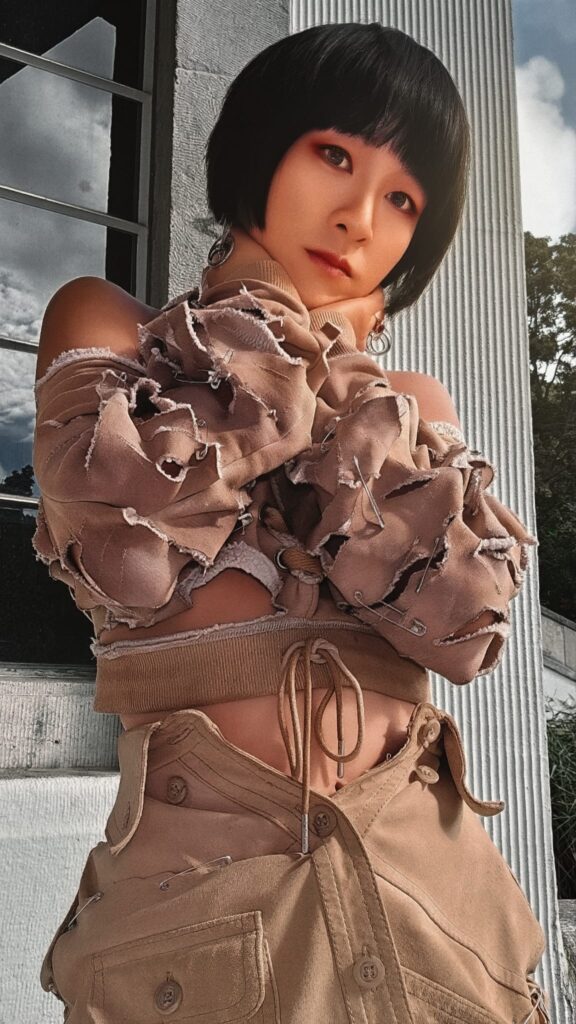
“I found a pair of Uniqlo winter trousers discarded on the street in Berlin and reimagined them as material for a post-apocalyptic style top. The decision to transform street waste into wearable art reflects my ongoing interest in post-consumption fashion and the poetic potential of discarded materials. The process was entirely improvisational, with no pattern or predetermined design. I began cutting directly into the trousers and allowed the fabric to dictate the outcome. The front features irregular cutouts that expose and conceal the body, while the back incorporates a shibari-inspired lacing system. The piece was constructed using whatever tools were immediately at hand, including unconventional methods of fabric manipulation to create texture and tension.
Upside-Down Dress Transformation (August 2025)
“This piece was created on my fifteenth day of teaching myself sewing and upcycling. I found an abandoned dress left in a box on a Berlin street corner and reimagined it by turning the garment completely upside down. The sleeves became pant legs, and the zipper, originally placed at the chest, shifted downward to serve a new function in the transformed piece. This process reflects my approach of working directly with discarded clothing, allowing the material to dictate new possibilities. By flipping and reassigning functions, what was once a discarded mistake becomes a playful, wearable experiment that questions how garments can be reconstructed and reused.”

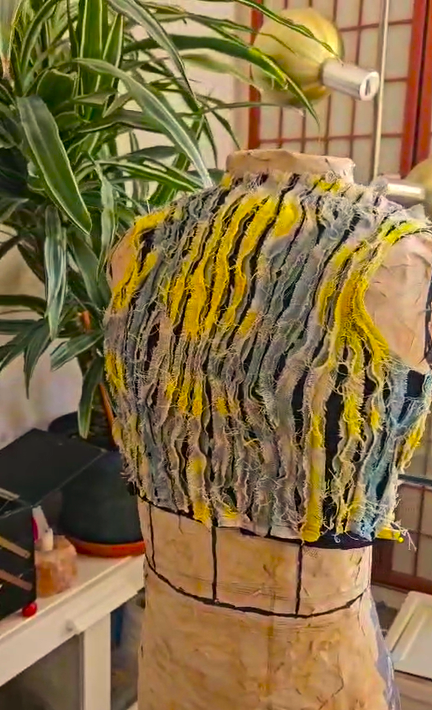
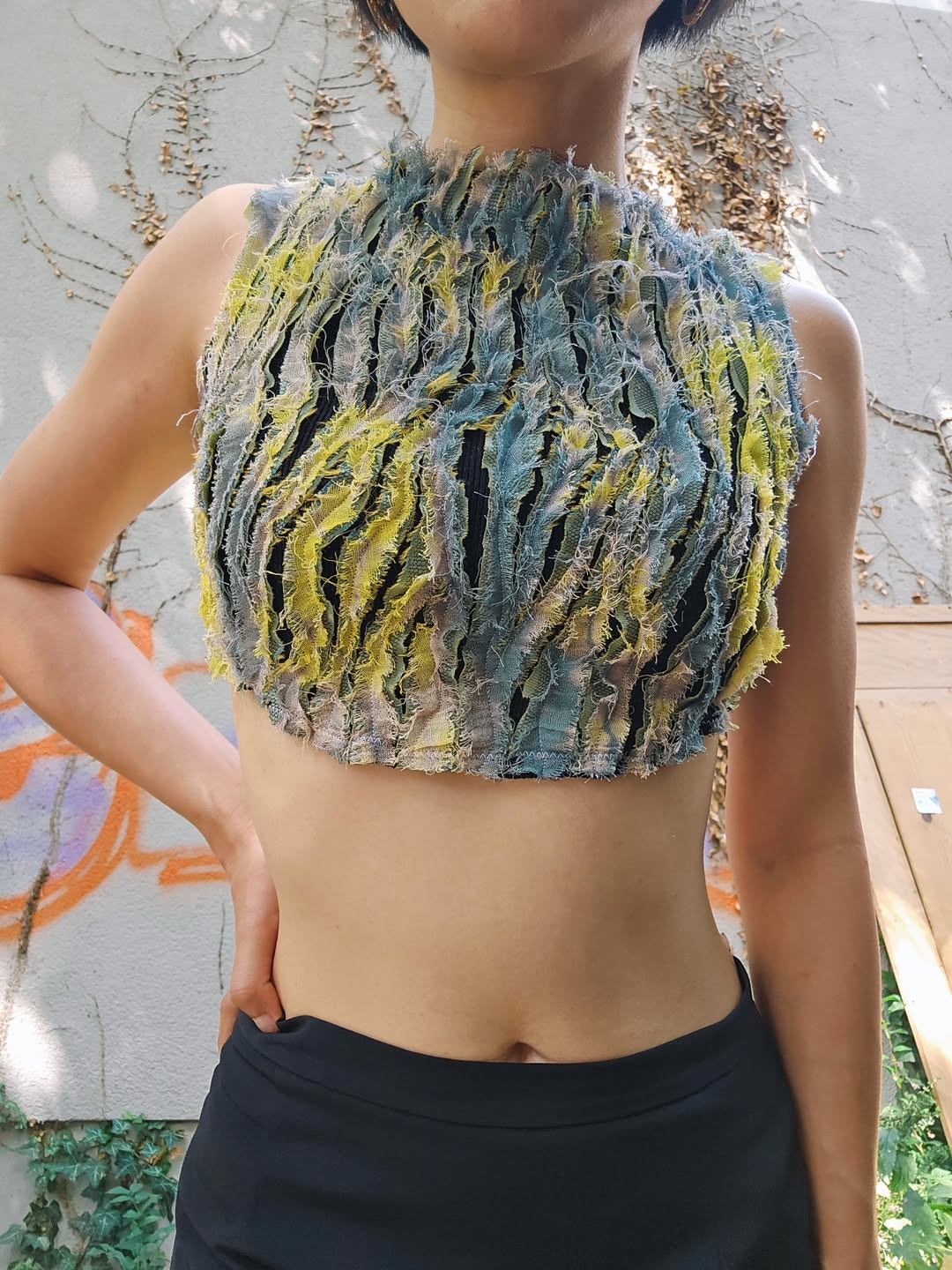
Slashing Technique Top (August 2025)
“On my thirteenth day of learning sewing and upcycling, I created this top using the traditional slashing technique, but with unconventional fabric choices. I combined a patterned scarf with mesh and two additional fabrics in a similar colour scheme, creating layered contrasts in tone and texture. The mesh was chosen deliberately to evoke the look and feel of fish skin. Its surface not only adds a scaly, organic appearance but also produces sound when touched or scratched, giving the garment an unexpected auditory dimension. The key breakthrough came from incorporating a stretchy black dress as the base fabric. When slashed, its elasticity revealed black areas beneath the folds, adding depth and movement to the surface. Traditionally, the slashing technique is used only on non-stretch fabrics, but by introducing stretch, the piece shifts and transforms as it is worn, making the texture appear alive. This experiment demonstrated how a historical technique can be reimagined through unusual material choices, turning discarded textiles into a garment that engages not just the eye but also touch, sound, and motion.
Red Improvised Dress (September 2025)
“This piece was created in two hours for a shibari session, with the intention that it would be ripped and deconstructed. I began without a pattern, working only with instinct and urgency. At first, I stitched by hand, using improvised smocking and gathering, and let the availability of thread decide my rhythm. When the thread ran short, I stopped; when more was available, I continued. Impatience eventually shifted the process to the sewing machine, where I sewed one-handed while filming, randomly folding and feeding fabric through. At some point I abandoned stitching altogether and began ripping the fabric directly, letting destruction become part of creation. Inspired by Tatsumi Hijikata’s 1968 costume for Revolt of the Body, the dress was never meant to stay intact. During the session it was torn apart, the fabric fragments unravelling through ropes and tension. At the end, I tied myself with the ripped pieces, binding body and fabric together in an improvised act of continuation. The garment’s value lay not in durability but in impermanence, in its transformation, its undoing, and its release.”

Nakira’s wearable work of art deserves recognition for essentially demonstrating a blend of avant-garde designs, creativity, innovation, and unconventional upcycling processes that create aesthetically appealing garments.
ALL IMAGES SUPPLIED BY NAKIRA STUDIO
COVER AND MAIN PHOTO IMAGE PHOTOGRAPHED BY: Martin Oskar @m3q.photo