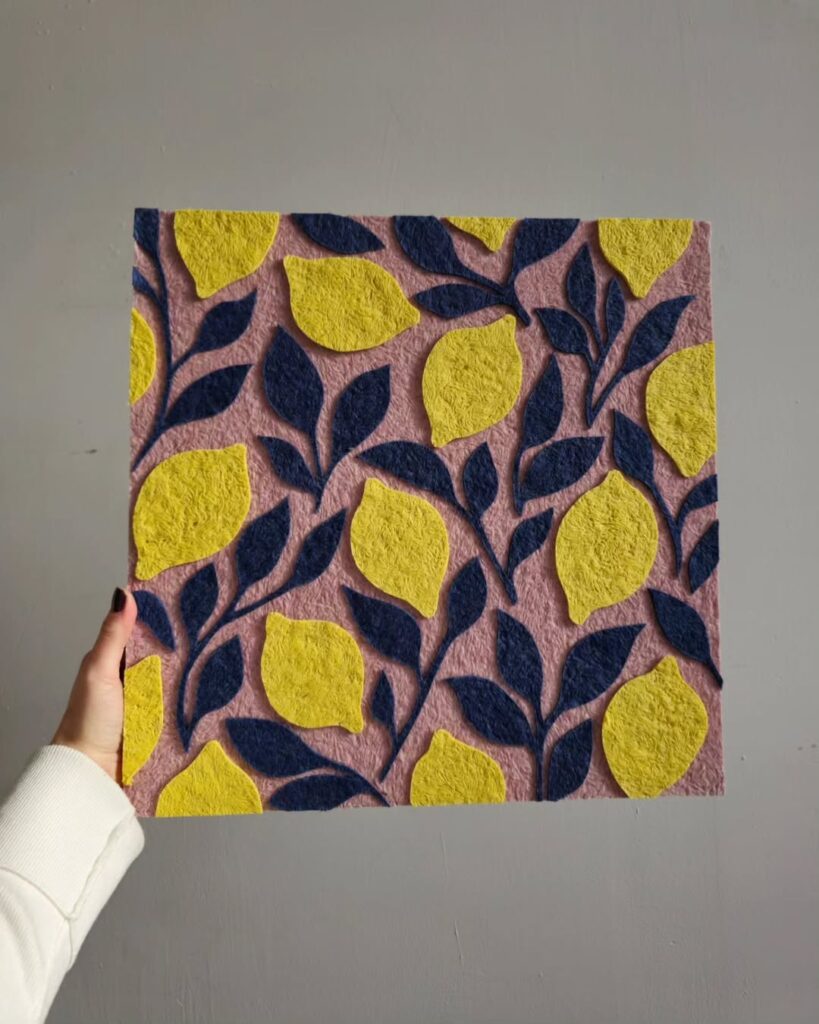
In a world overflowing with textile waste, Sandra Junele is weaving a greener future – one yarn scrap at a time. She creates large wall panel installations and custom-moulded shapes made from shredded recycled yarn waste mixed with handmade plant-based glue.
The Dundee-based, Scotland artist transforms discarded materials into stunning wall art, championing sustainability and supporting eco-conscious creativity. Her brand, Junele is known for its minimalist design, tactile quality and focus on interior applications.

“My journey began in Latvia, where I watched my grandfather transform discarded wood into beautiful furniture. Those moments taught me that waste is not the end of a story, but the beginning of a new one. That lesson has shaped everything I do — from my studies in interior and textile design, to the sustainable practice I’ve built today,” says Sandra.
Made from repurposed materials and biodegradable components, Junele artworks not only enhance the aesthetic appeal of a space but also align with eco-friendly values. They bring a sense of environmental responsibility and sustainability to interior design.

“I started collecting this waste and conducted hundreds of experiments to find creative ways to repurpose it. One of my early experiments involved mixing PVA glue with shredded textile waste. This led me to search for natural organic glue replacements that are natural and dissolve upon contact with water, thereby minimising waste after the product’s use.Her pieces are not only beautiful but also endlessly reusable—submerge them in water, and the material can be reshaped again. My artworks can be reused when no longer needed. By placing them in water, the natural glue dissolves, leaving me with the fibres that can be repurposed for new projects. This approach not only reduces waste, but also supports a circular economy, ensuring that the materials continue to have a life beyond their initial use,” she says.

SOURCING MATERIALS
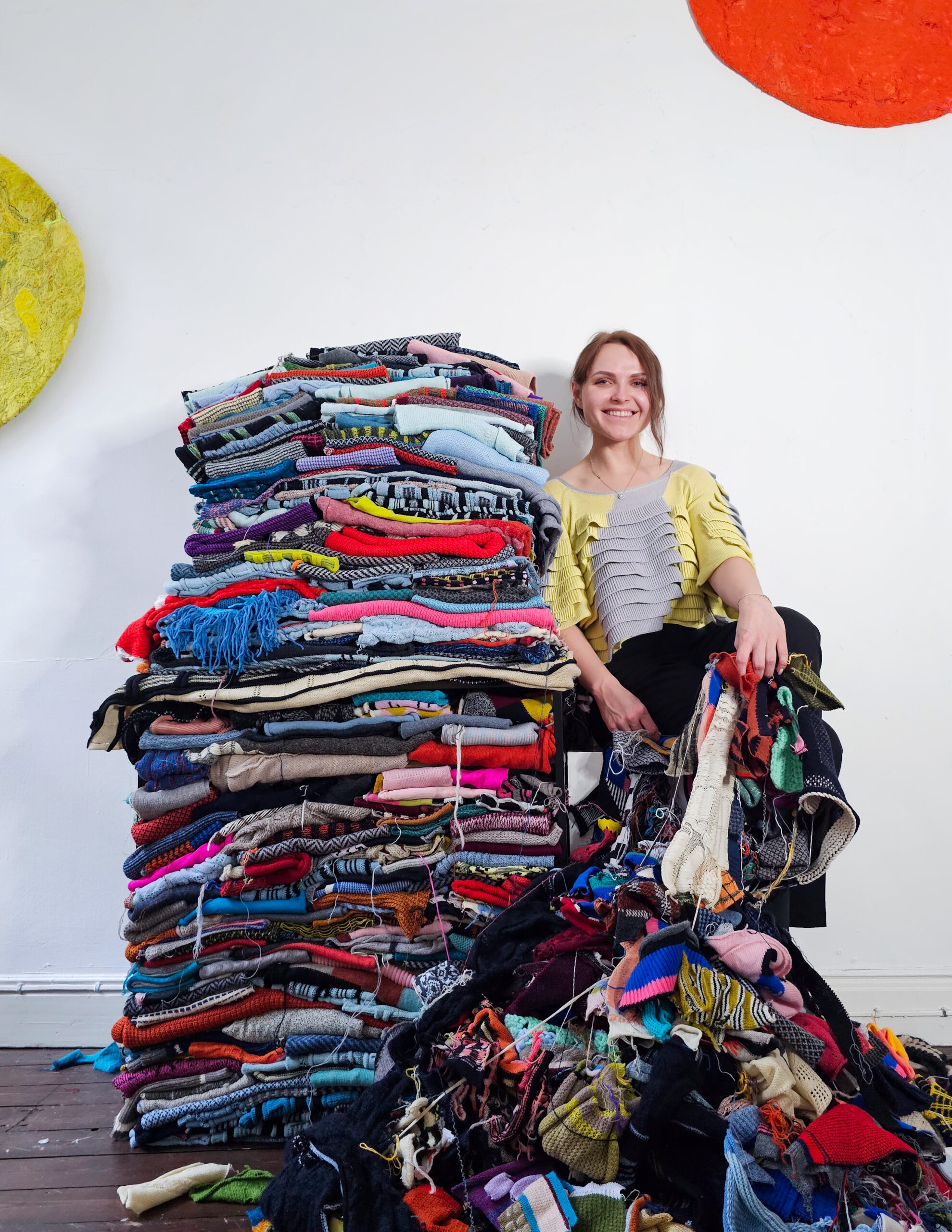
Sandra has an established material sourcing plan. She says, “I have recycling bins placed at manufacturers and universities where people can dispose of their textile waste. Once these bins are full, I collect the waste. Designers also play a crucial role by donating their unwanted materials. One memorable donation came from a knit designer who had been collecting samples of her work for 15 years. This mix of sources ensures a diverse range of materials, each with its own story, contributing to the unique character of my artworks.”

 Collaboration with @rebeccasearlstevens
DESIGN PROCESS
By hand, she carefully separates textile waste, shred fibres, and binds them with her own plant-based glue — creating a unique material that is both tactile and sustainable. Remarkably, it can dissolve in water and be reused again, offering endless possibilities.
“The design process for my textile artworks begins with collecting waste materials from local manufacturers, designers, and universities. This waste comes in various forms, such as loose threads, samples, clothes, and yarn cones. The first step is to separate the waste by colour. Once sorted, I shred the waste, using a shredding machine for shorter fibres and by hand with scissors for longer fibres. With the fibres prepared, I then cook my own plant-based glue, making a fresh batch for each project. The shredded fibres are mixed with this glue and either rolled out into sheets or applied to moulds. As the sheets dry, they become hard, similar to cardboard. At this stage, they can be cut, sewn, embroidered, screen-printed, or layered according to the design. Finally, each sheet is mounted on a wooden frame, ready to be displayed as a unique piece of sustainable art,” she says.

One of Sandra’s big dreams is to open her own shop-gallery, a space where every interior element is crafted from sustainable materials and decor made from textile waste. She envisions it as a place that that could showcase her work and serve as a hub for eco-conscious designs and like-minded creatives.

She plans to collaborate with more designers and artists, both locally and internationally, to bring fresh perspectives and innovative ideas into her work. Her work extends beyond her products. Through educational workshops and outreach programmes, she empowers others to rethink waste, embrace sustainable practices, and contribute to a circular economy. By raising awareness about environmental challenges, she is creating a ripple effect of positive change in her community.