As part of Seamless’ program to build a coordinated national system for clothing collection, sorting, reuse and recycling, the Seamless Circular Clothing Textiles Fund is supporting seven real world projects that are finding new ways to keep clothing out of landfill. One of these initiatives is the National Circular Textiles Pilot, led by Australia Post.
The organisation sat down with Marty Rowell, Head of Circularity and Decarbonisation, to learn how, together with their partners, Australia Post is making it easy for consumers to return used clothing in purpose-designed satchels for recycling and recovery.
The National Circular Textiles Pilot is a real-world trial they’re leading in collaboration with R.M.Williams, REMONDIS Australia, BlockTexx and iQRenew to test a simple way for Australians to return clothes that are no longer needed. Using a purpose-designed satchel, R.M.Williams customers can send back shirts and T-shirts for recovery through a traceable, circular system.
The pilot will help to demonstrate how a national clothing recovery system could work at scale. Each company brings their own expertise essential for closing the loop, with Australia Post acting as the facilitator and enabler.
Each partner plays a critical role in bringing the circular service together:This pilot is both a learning opportunity and a practical example of how Australia Post could help deliver circular solutions at scale – and enable a more circular future for clothing in Australia.
The pilot uses a purpose-designed circular satchel that works seamlessly with Australia Post’s existing network, making it easy for customers to return clothing they no longer need. Made from 100% recycled content collected from Australian kerbside bins, the satchel shows how everyday “waste” can become a valuable resource.
The satchel is made entirely from Australian household soft plastics (LDPE) – processed, manufactured, collected and recovered for re-manufacture, all onshore.
Another important innovation in this trial is data traceability. For the first time, Australia Post is capturing detailed data as garments move through their circular journey downstream from the consumer.
This means every item can be tracked to its next use, providing transparency and confidence in the system. It also enables merchants to offer verified incentives that support circular behaviour. This data traceability is a key foundation for scaling a trustworthy, transparent circular economy.
Seamless’ role is to provide the national infrastructure combined with the data capability to make the service simple, accessible and reliable.
R.M.Williams plays a pivotal role in consumer engagement as a trusted connector for customers seeking sustainable solutions. The brand is expanding its service offering by providing circular satchels through its website and actively encouraging customers to participate in the trial.
REMONDIS sorts the returned garments and ensures each item is directed to its best possible next use, whether reuse, re-manufacturing or recycling, while collecting the data needed to verify the circular pathway.
BlockTexx transforms unwearable garments into recycled polyester and cellulose, creating new materials for manufacturing and agricultural applications.
iQRenew supports the creation of the circular satchels using Australian-made recycled resin pellets and recycles the used satchels back into pellets for re-manufacture.
Creating a truly circular economy at scale depends on strong collaboration across the entire ecosystem, from product design through to material recovery, because no single organisation can achieve it alone.
This pilot brings together committed partners to test, learn and refine circular processes in the real world. These findings will help shape a scalable circular clothing sector for Australia, with the potential to expand into other sectors over time.
The pilot will test the technical, operational, and customer experience aspects of a circular model, providing data-driven insights. Seamless will track participation and the volume of clothing returned, and will provide insights into what it would take to scale the service nationally. These learnings will contribute to the design and evidence base for a national coordinated circular clothing system for Australia.
This pilot is one step in a much larger ambition; to facilitate and enable circular services and programs that are simple, accessible and part of everyday life.
There’s genuine excitement across the value chain, with partners increasingly seeing how this concept could grow into a scalable service that transforms how clothing moves through the economy.
In a year defined by growing scrutiny of climate commitments and the urgency to decarbonise, transparency has emerged as one of fashion’s most powerful accelerators for change. Recently, H&M Group, a Strategic Partner of Global Fashion Agenda, was ranked first among 200 global fashion brands in Fashion Revolution’s What Fuels Fashion? 2025 report, which assesses the public disclosure of climate and energy-related actions across the industry.
Scoring 71% across five categories — accountability, decarbonisation, energy procurement, financing decarbonisation, and transparency and advocacy — the company’s performance reflects a broader momentum toward openness in how fashion communicates progress.
“This ranking shows we are moving in the right direction, but it also reminds us that action must go further and faster. No brand can tackle this challenge alone. By working together and sharing more openly, we can lift the entire industry and drive meaningful change,” comments Leyla Ertur Genç, Chief Sustainability Officer, H&M Group.As the report demonstrates, transparency has become more than a compliance measure. It is a foundation for trust and accountability, and a reflection of the courage it takes for companies to share their progress and challenges openly.
Yet, as sustainability reporting becomes more regulated, many brands are disclosing less voluntarily. True transparency now lies in showing proof of progress and how words translate into measurable change.H&M Group’s latest Sustainability Progress Report 2024 outlines substantial verified progress across climate, circularity, and human rights.
The company achieved a 41% reduction in absolute scope 1 and 2 emissions and a 24% reduction in scope 3 emissions (excluding use-phase emissions) compared to its 2019 baseline, with 96% renewable electricity in operations and ongoing efforts to phase out coal in its supply chain by 2026. It also reported a 9.5% absolute reduction in freshwater consumption in its key garment supplier tiers (tiers 1 and 2) from a 2022 baseline, and 89% of materials are now sourced as recycled or sustainably produced.
These actions illustrate a move beyond disclosure toward proof of progress. This shift is also reflected in how rankings themselves are evolving. Where once they primarily rewarded disclosure, the industry’s most credible benchmarks now measure how brands are implementing change.
Textile Exchange Material Change Index (MCI), for example, tracks progress in the use of preferred materials, circularity, and responsible sourcing across 16 material categories. In its latest edition, H&M Group achieved a leading performance band, signalling measurable integration of circular and low-impact materials across its portfolio.
As the metrics mature, so too does the conversation. Transparency is no longer about how much information is shared, but about the integrity of that information and the ability to demonstrate progress over time. It asks whether the data shows tangible results, such as fewer emissions, safer workplaces, and fairer partnerships, and whether progress can be verified and sustained.
This mindset aligns with the Fashion CEO Agenda 2025, Global Fashion Agenda’s leadership framework calling on companies to embed accountability within all levels of decision-making. The Agenda highlights Resource Stewardship and Respectful and Secure Work Environments as two essential priorities where transparency drives meaningful change.
Resource Stewardship urges companies to align operations with planetary boundaries through cleaner energy and responsible material use, while Respectful and Secure Work Environments emphasise that progress on decarbonisation must advance alongside fair and safe working conditions.Courage can push transparency beyond necessary reporting toward genuine collaboration and measurable impact. When companies disclose their challenges as openly as their successes, they enable others to learn, adapt, and act faster.
For fashion to thrive in a decade defined by regulation, resource constraints, and rising expectations, transparency must continue to bridge ambition and delivery.
The industry’s next phase will be defined not by who shares the most, but by who demonstrates the most progress. The future of fashion will belong to those willing to prove it.
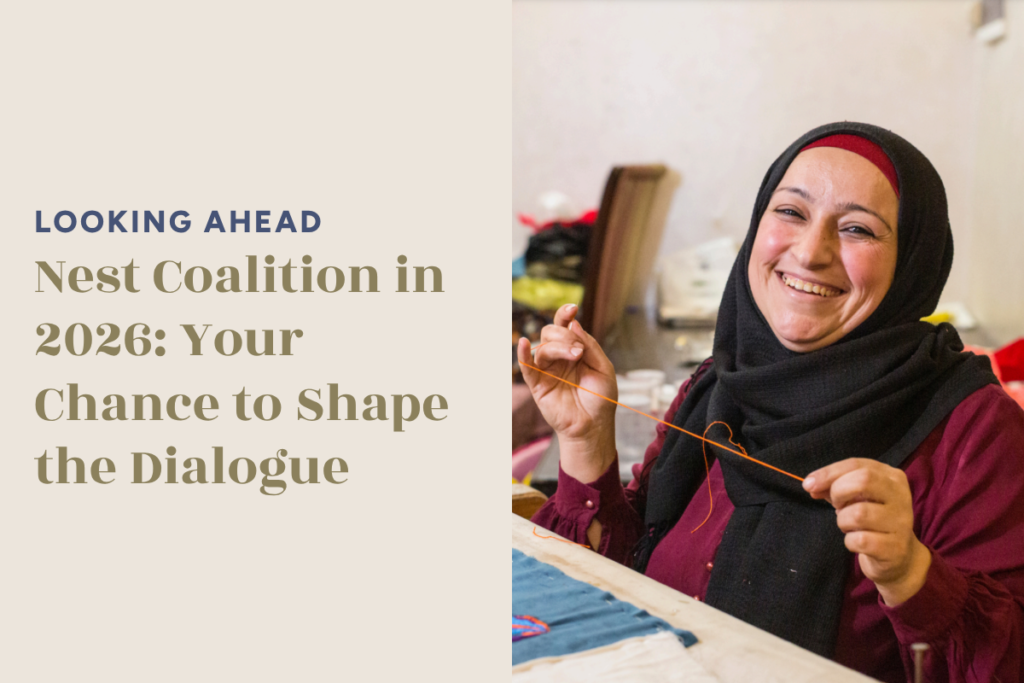
The Nest Coalition will be introducing Coalition Conversations in 2026. These conversations would consist of ongoing series featuring makers and artisans from across the United States and around the world.
The conversations would also be highlighting industry best practices and success stories from committed partners allowing shared learnings across their sector in a safe and collaborative setting. These sessions are designed to inspire design teams with beautiful heritage craft, expand brands’ understanding of artisan realities, challenges, and opportunities. They are designed to build trust and transparency within the supply chain, to demystify what true collaboration looks like, culturally, creatively, and commercially.
More than anything, these conversations would offer a rare opportunity for team members across companies to engage directly in the heart of the Nest’s shared impact, allowing for rich employee engagement in new and creative ways.
The Nest is invites interested companies to join the Coalition Conversation, to co-host and get involved in shaping a session around a corporate priority, impact success story, or theme that aligns with their brand’s values and aspirations. This is an opportunity for organisations to showcase their leadership in labour standards, culturally intelligent design, or other corporate priorities.
It is also an opportunity for organisations to champion artisans whose work inspires them or to spotlight a region or craft within their sourcing footprint. This would help guide the industry forward through meaningful, transparent conversation including bringing organisation’s broader corporate team into a rich engagement opportunity.
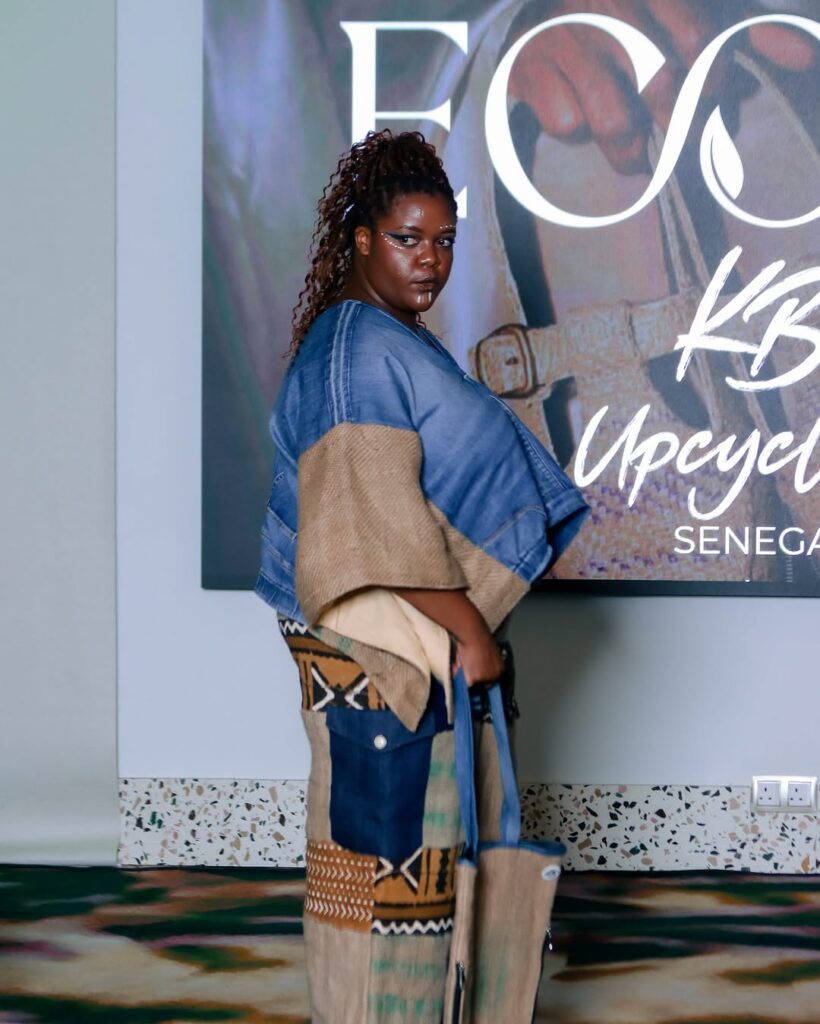
Africa’s pioneering zero-waste fashion movement, Eco Fashion Week Africa (EFWA), took place on 01 November 2025, showcasing brands who embrace the “No New Clothes Challenge”.
On its 3rd season, EFWA is a platform that celebrates creativity, culture, and sustainability. The fashion week was a redefinition of creativity and responsibility in fashion.
The week included events focusing on circular fashion, encouraging the use of recycled and upcycled materials, and often featured designers who showcased garments which incorporated environmentally friendly elements. The goal was to move away from “waste couture” and accelerate the industry’s shift towards environmental responsibility.
This season’s runway was not about selling or promoting consumption; but a statement against it. Designers proved that innovation and ethics can coexist beautifully, reminding us that the most sustainable garment is the one that already exists.They embraced the challenge to style diverse models of all ages, sizes, disabilities, and backgrounds, to celebrate inclusivity as a vital part of sustainability.
EFWA not only leverages the power of fashion to clean up the environment and raise awareness about textile waste but, also plays a vital role in promoting and educating people on the Sustainable Development Goals (SDGs).
This week-long event features a variety of engaging activities, including environmental clean-ups, eco-educational workshops, forums, ‘No New Clothes’ fashion shows, and swaps. These activities are created in an effort to promote SDG 17 which brings together organizations, brands, policymakers, producers, and individuals of all ages who are passionate about the eco-culture.
Participating brands included Hero Clothe Line, Stand Out Africa, Ngamani, Jokenia, Green Amba, Eva Wambutu, Makasi, Q Atelier and KB Upcycling. Each label brought a unique interpretation of the challenge, making Season 3 a bold showcase of how fashion can lead with consciousness, community, and culture.
Lagos Fashion Week 2025, themed “IN FULL BLOOM,” celebrated its 15th anniversary with a focus on sustainability and the future of African fashion on 29 October – 02 November 2025.
The event featured spectacular runway shows and exhibitions that we’re breathtaking, creative, sustainable and innovative. The event held panel discussions that highlighted designers committed to circular design, sustainable practices, and craftsmanship.
Initiatives such as Green Access, played a key role in challenging designers to address textile waste. The event not only showcased creativity but also strengthened the continent’s fashion ecosystem through education, community building, and economic opportunity.
This year’s theme was a reflection on the past 15 years and forecasting on the future growth of African fashion. Central to the theme was the promotion of circular fashion, responsible sourcing, and ethical production throughout the supply chain. Designers demonstrated their commitment to sustainable practices and exhibited ethically designed garments that wowed the audience.
One phenomenal designer that captured our attention was Hertunba, founded and designed by Florentina Agu, presented a regal collection designed for women with strength and grace. Each piece carried a refined elegance that spoke through its structure and silhouette. The fabrics featured rich textures and intricate detailing, showcasing depth and careful attention to design.
Florentina Agu
ABOUT FLORENTINA AGU
She tells stories through fabric, weaving tales of empowerment, resilience, and style with every stitch of her creations. From the age of 13, smitten by the allure of designer clothing, she began honing her craft through dressmaking classes in school. In 2020, Hertunba, her sustainable luxury couture brand was born.
ABOUT HERTUNBA
Hertunba, derived from the word “Her” and the Yoruba title “Otunba,” Hertunba is more than a fashion brand, but a narrative of beauty and strength woven in fabric. Every thread and stitch holds an essence of confidence, sensuality, and charisma that defines the Hertunba woman. She embraces sophistication, elegance, and an undeniably feminine style in every strut. Hertunba is not just tailored for the body but for the spirit, and a celebration of the uniqueness of every woman.
“In the heart of Hertunba lies a commitment to protect our Earth. Every year, a staggering 13 million tons of textiles go to waste, and we believe change begins with us. Hertunba makes a difference by pledging to be environmentally friendly. We reduce landfill waste, ensuring 90% of our excesses find new life as handcrafted interior decor, such as rugs and throw pillows, or are pieced together into stunning wearable art. Hertunba keeps its promise to the Earth, one elegant and sustainable design at a time,” says Florentina.
“At the core of our business lies a commitment to empowering artisans, weavers, threaders, and tailors who meticulously handcraft each Hertunba creation. Through tailored training, local women learn to sew, weave, and thread, opening doors to low-barrier career opportunities. Our artisans are compensated per piece. Our dedication extends further, as 10% of our net profits fuels our adult education program for women in lower income brackets. With Hertunba, each purchase spurs women on a path of self-sufficiency,” she says.