It’s not about having less. It’s about needing less.
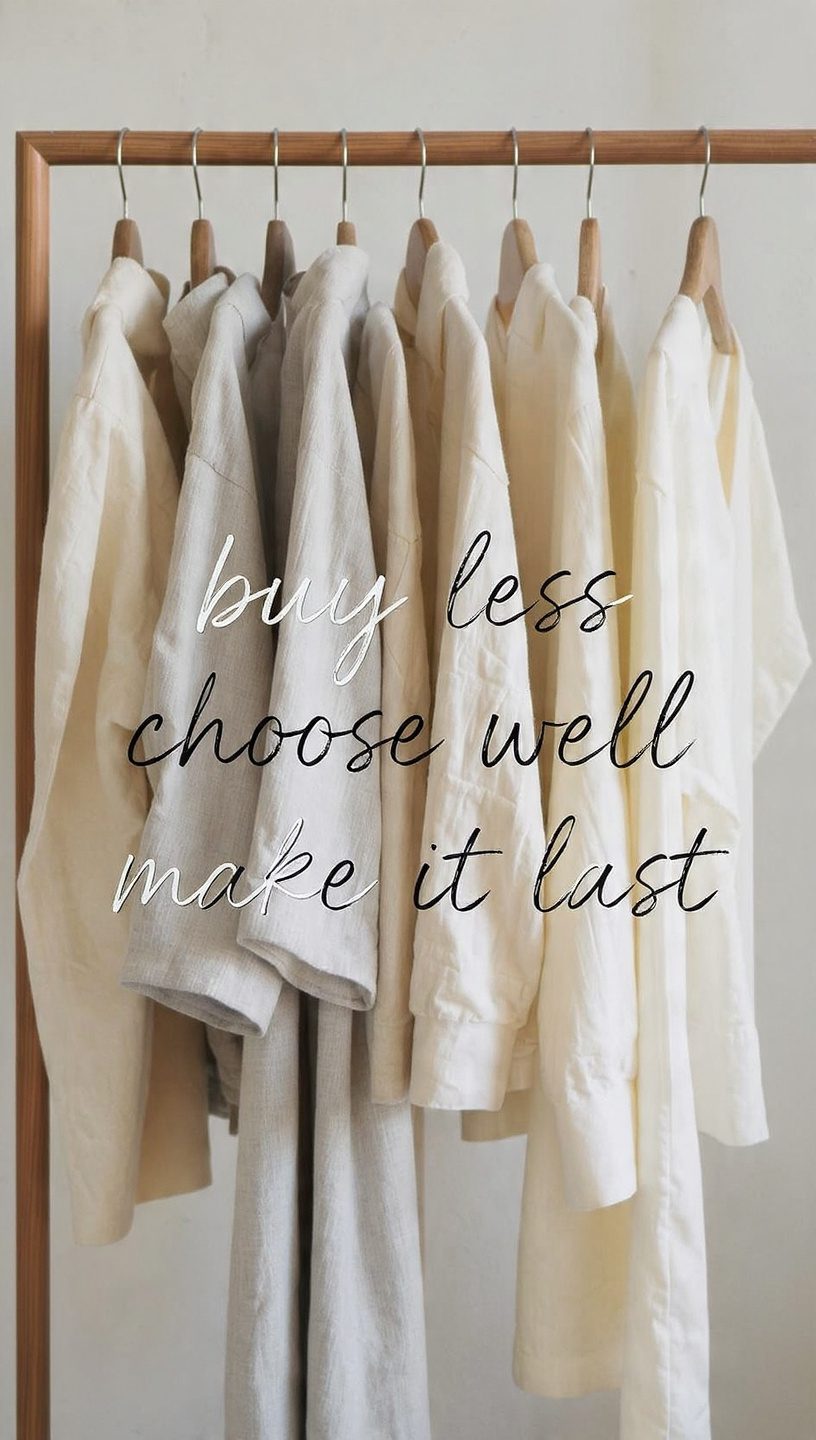
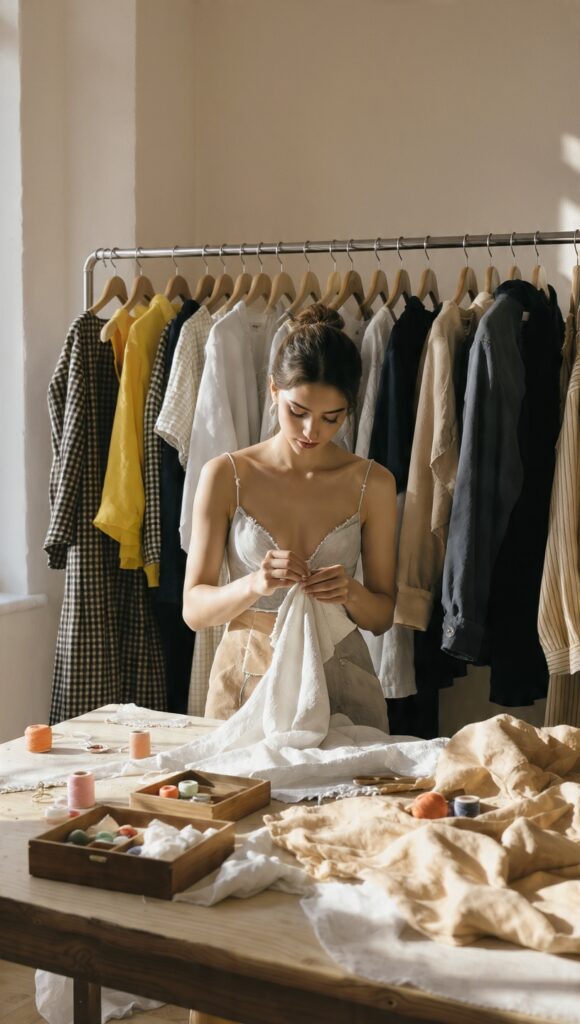
The rack stands in the corner by the window, where the morning light hits it first. Eight shirts hang there, and that’s all there is. Cream, stone, sand. Linen that wrinkles because it’s alive, and cotton that gets softer the more you live in it.
There’s no “new arrivals” section, no plastic wrap, no loud branding asking you to pay attention. The first time you see it, you might wonder if that’s really enough. But the second time, and the third, you start to feel what it’s trying to say: this isn’t absence. This is intention.
The wardrobe we were sold
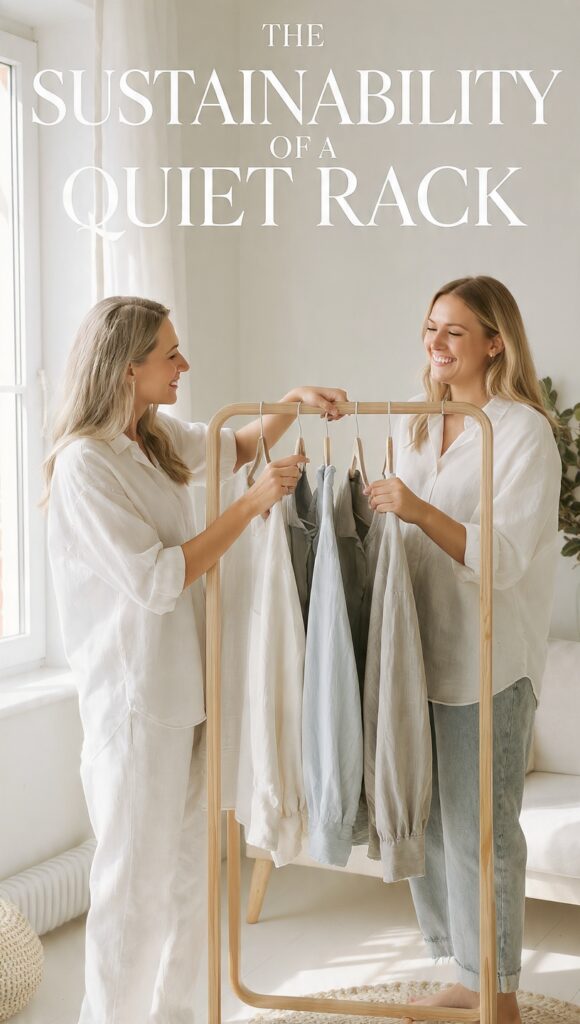
For a long time we were told that a full closet meant a full life, that if we just bought the right thing we would finally feel put together, and that the cure for a bad week, a bad mood, or a bad Monday was a new box at the door.
So we bought. We chased drops. We filled rooms with clothes and still stood in front of them feeling like we had nothing to wear.
What we weren’t told was the cost that came before the price tag, the one that doesn’t show up on a receipt. We weren’t told about the cotton fields that drank rivers dry, or the factories that ran through the night to make garments for a season that would be over before the fabric even had time to soften.
We weren’t told about the dyes that ran into water we would never see, or the warehouses full of clothes made just in case someone, somewhere, might want them. Most of it was never worn. And the little that was, was worn twice and then forgotten.
A quiet rack is what happens when you stop agreeing to that deal.
Mornings After
When you own less, your mornings change in ways you don’t expect. You open the rack and there are no wrong answers, only eight shirts that all make sense, that all fit the life you’re actually living.
There’s the linen one for the hot days when you need to breathe, and the cotton one for the long days when you need to feel held. You stop shopping to feel something and you start dressing to live, and somewhere along the way you realise that the shirt you reach for most is the one that works on Monday and on Saturday.
You wear it until the collar remembers the shape of your neck, until the fabric is soft in all the places your body touches it. And when the sun fades it, you don’t throw it away, you put it in tea.
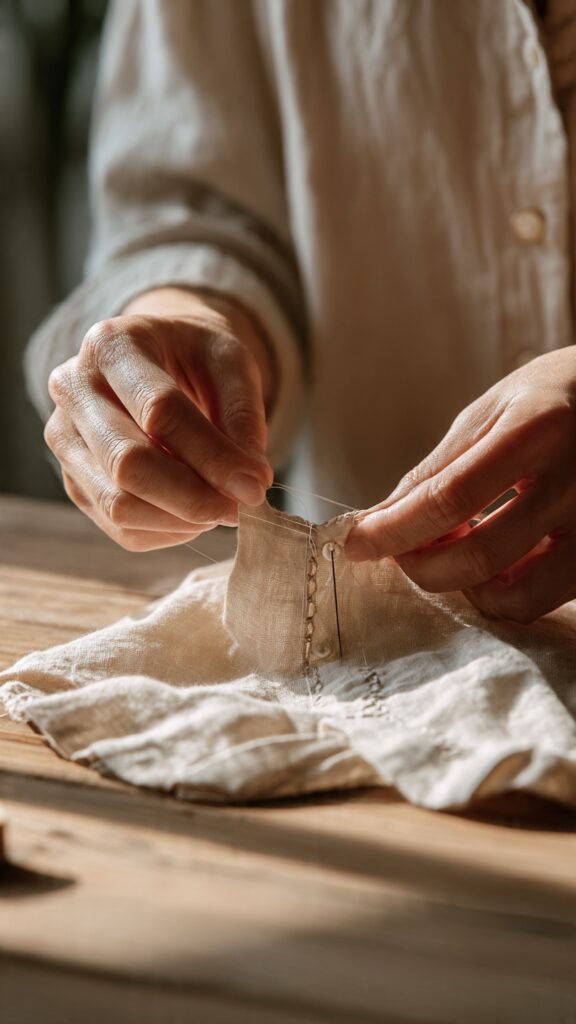
When a seam gives, you don’t toss it, you mend it. And when you’re done, you don’t bin it, you pass it on. That’s sustainability too, not just for the planet, but for your head, your time, your peace.
The hands behind It
This rack wasn’t filled by an algorithm or a trend forecast. It was filled by people who made choices on purpose. By the grower who waited for rain instead of forcing the land, by the dyer who used onion skins and tea and turmeric because color shouldn’t have to poison the water to be beautiful. By the tailor who answered your message about the sleeve and remembered your name the next time you wrote.
When you know who made your clothes, you treat them differently, because it’s hard to throw away something that has a human attached to it. So you choose once, and you choose well, and you keep choosing it for years instead of replacing it in three months. One good shirt worn fifty times does more good than five cheap shirts worn twice, and the math is simple: less water taken, less waste made, less stress carried.
The New Luxury
Luxury used to be about what was newest. Now luxury is about what lasted. It’s the hours the sun spent drying your shirt on a line instead of a machine tumbling it. It’s the months your body spent wearing it in until it felt like a second skin. It’s the years it didn’t spend in a landfill because you decided to keep it.
A quiet rack isn’t minimalism for the look of it. It’s minimalism as respect — for the material, for the hands that made it, for the life you’re trying to live. These shirts weren’t made to impress anyone. They were made to be lived in, to be mended, to be dyed again, to be passed on. And that is how you end a cycle without ever having to make a speech about it.
Enough
At the end of the day, the rack doesn’t ask anything from you. It just hangs there, eight shirts in quiet colours, and somehow that is enough. Enough to get dressed without thinking too hard. Enough to feel like yourself. Enough to know that what you own didn’t cost more than it was worth, to you or to the world.
Buy less. Choose well. Make it last.
Not because someone told you that you should.
Because a quiet rack is the only thing that ever really fit.