Sustainability stopped being about what a sweater is made of, and started being about how long it lasts. The greenest garment is no longer the one with an organic label. It’s the one you don’t have to replace.
Across mills in Portugal, Italy, and Vietnam, wool is now being treated with chitosan — a natural compound pulled from seafood waste — and essential oils from thyme bonded directly to the fiber. You can’t see it. You can’t smell it. But moths land, take one taste, and leave. Your skin never knows.
“We stopped treating the problem and started treating the fiber,” says Maria Silva, Head of Finishing, Malhas do Porto, Portugal
At Malhas do Porto outside Porto, the finishing bath looks like tea. No hazmat suits. No warning signs. Just wool going in and coming out with built-in defense.
“For 40 years we told customers to spray, freeze, and pray. Now we give the sweater its own immune system at the factory. The protection doesn’t wash out because it’s part of the yarn. Customers stopped calling us in about holes,” says Silva.
That’s the shift. From aftercare to built-in care. From disposable to durable.
THE PROBLEM WE NORMALIZED For 100 years, the answer to moths was escalation.
First we tried cedar. Then naphthalene balls. Then we sealed sweaters in plastic like crime scenes. Then came the sprays with permethrin — the same chemical used in lice shampoo and mosquito nets.
The global mothproofing chemical market hit $1.2B in 2023, and most of it is still those same neurotoxins. The EU is now reviewing permethrin under REACH because of skin irritation and aquatic toxicity concerns.
We accepted it because the alternative was holes. But we were treating the symptom, not the fiber. And every damaged sweater that got tossed added to the problem.
THE ACCIDENTAL SOLUTION The shift didn’t start in fashion. It started in food waste.
The UN FAO estimates 6-8 million tons of shrimp shells are thrown away every year, mostly in Vietnam, India, and Ecuador. For decades that went to landfill and released methane. Then material scientists noticed something: the chitosan in those shells binds to protein. Like wool.
German research institute Fraunhofer IGB began testing chitosan finishes in 2019. By 2022 they proved it made wool taste bitter to webbing clothes moths Tineola bisselliella without any smell to humans.
At the same time, cosmetic chemists were stabilizing thyme and eucalyptus oils to last 50+ washes. Mix the two and you get a finish that moths avoid, bacteria can’t grow on, and humans can’t feel.
Suddenly, waste became an ingredient. Circularity stopped being a buzzword.
WHY 2026 IS THE TIPPING POINT FOR SUSTAINABLE KNITWEAR Three things converged:
Regulation: The EU’s Green Claims Directive went live in 2024. Brands can no longer say “sustainable” without proving durability and lower impact. Vague claims get fined.
Waste: Food companies are now paying mills to take shrimp waste. It’s cheaper than landfill fees. Fashion gets a byproduct, seafood gets less waste.
Consumer math: A 2024 LCA study from the University of Leeds found that for wool, 70% of lifetime emissions come from replacing the garment, not making it. If a sweater lasts 5 years instead of 2, you cut its footprint by more than half.
Sustainability used to mean organic cotton. Now it means not buying another one next year.
3 BRANDS DOING THIS NOW
It’s not just mills experimenting anymore. Brands are already shipping it.
Nudie Jeans in Sweden launched merino knits in 2025 finished with chitosan pulled from Nordic shrimp waste and bonded with thyme oil. They list it as “natural moth protection” on the product page, no sprays required.
Asket is doing it at their mill in Porto, Portugal. Their “Lifetime Sweater” line uses the same bio-based finish and comes with a 2-year warranty against holes. The pitch is simple: buy less, wear longer.
And in the UK, Toogood has been testing small-batch cashmere since 2024 using the Fraunhofer IGB process with insect-derived chitosan. They scaled it in 2025 and are now rolling it out across their core knitwear.
All three are skipping chemical sprays entirely and treating the fiber at the factory instead.
THE LANDFILL MATH NOBODY TALKS ABOUT The average person in Europe and North America buys 1.7 new sweaters per year. Most get tossed after 2 winters because of pilling, stretching, or holes.
Do the math:
Old way: 2 years × 1.7 sweaters = 3.4 sweaters to landfill in 4 years
2026 way: 5 years × 1.7 sweaters = 1.7 sweaters to landfill in 10 years
That’s 50% less textile waste. And it matters. The Ellen MacArthur Foundation estimates 92 million tons of textile waste are made yearly. Wool in landfill releases methane as it breaks down. Extending garment life is now the #1 lever for fashion’s climate goals.
“Sustainable” isn’t a vibe anymore. It’s a number. And durability is the biggest number.
The greenest sweater isn’t the one made from organic wool. It’s the one you’re still reaching for 5 winters from now. So next time you shop knitwear, change the question. We should not just ask what it is made of but ask how it is protected. If the answer is “by nature,” we’re not just buying warmth, we are buying time and buying less waste.
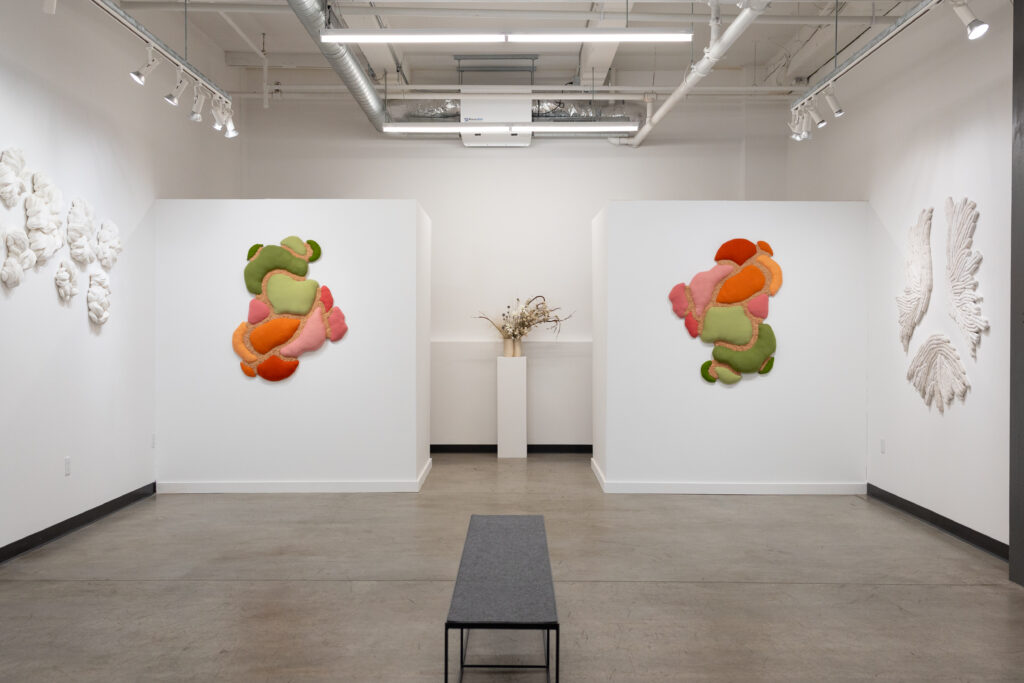
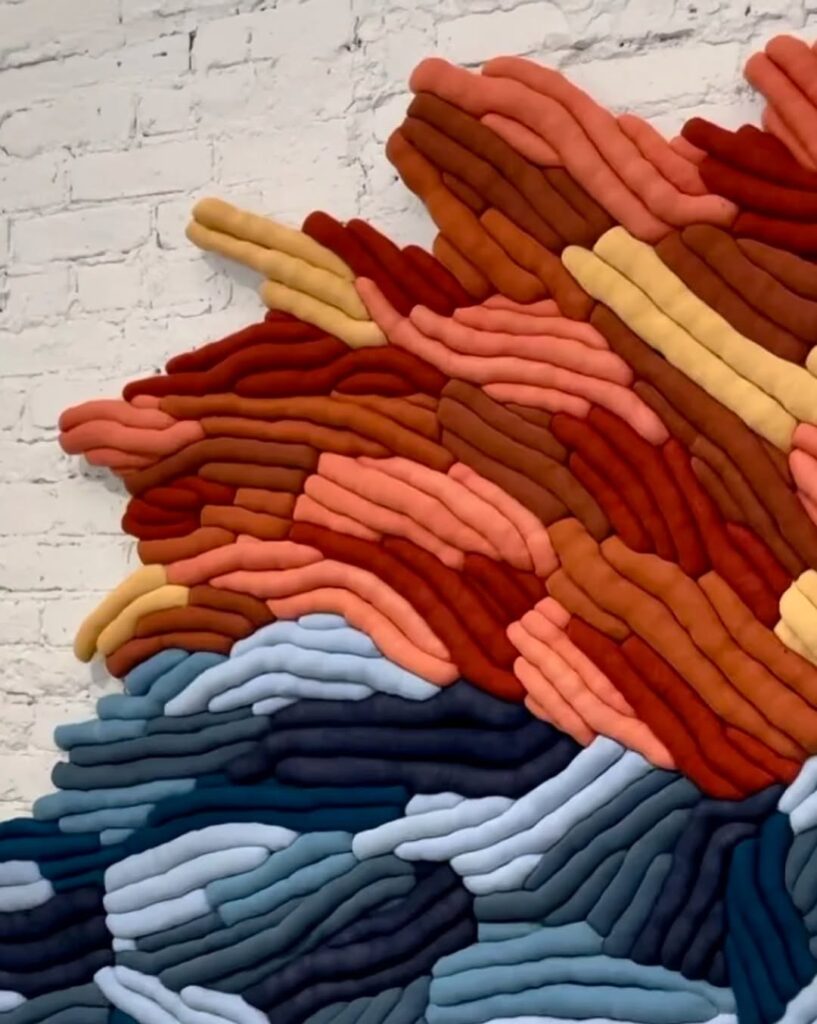
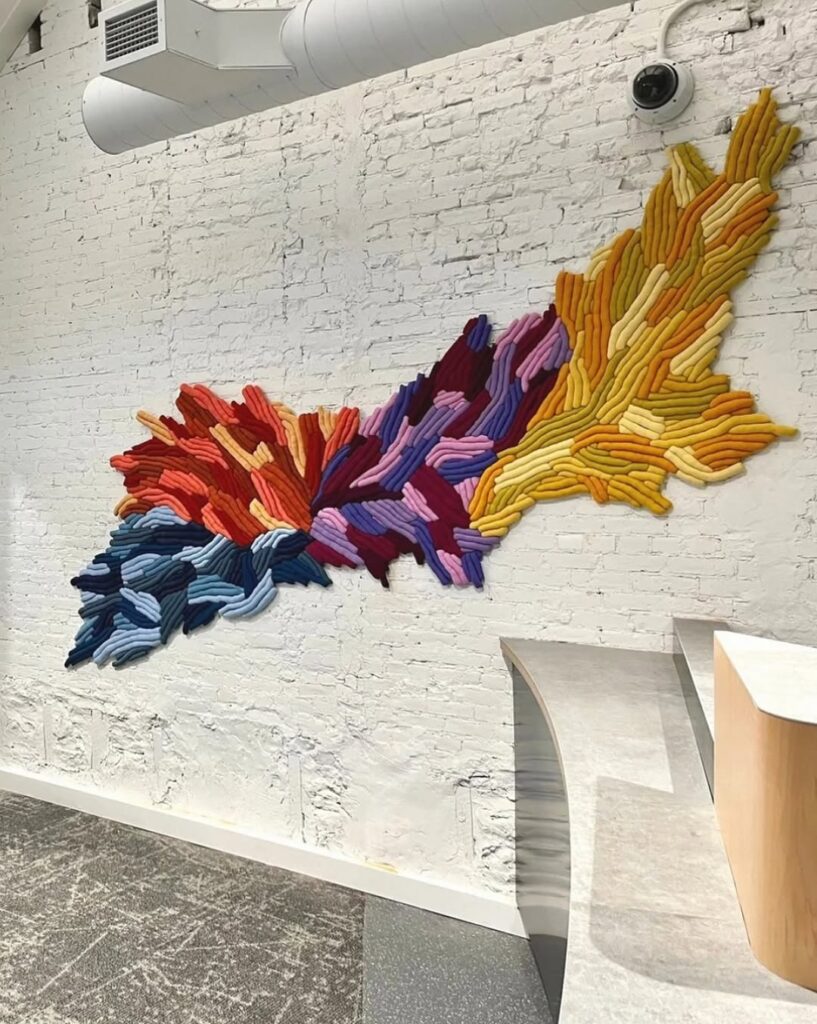
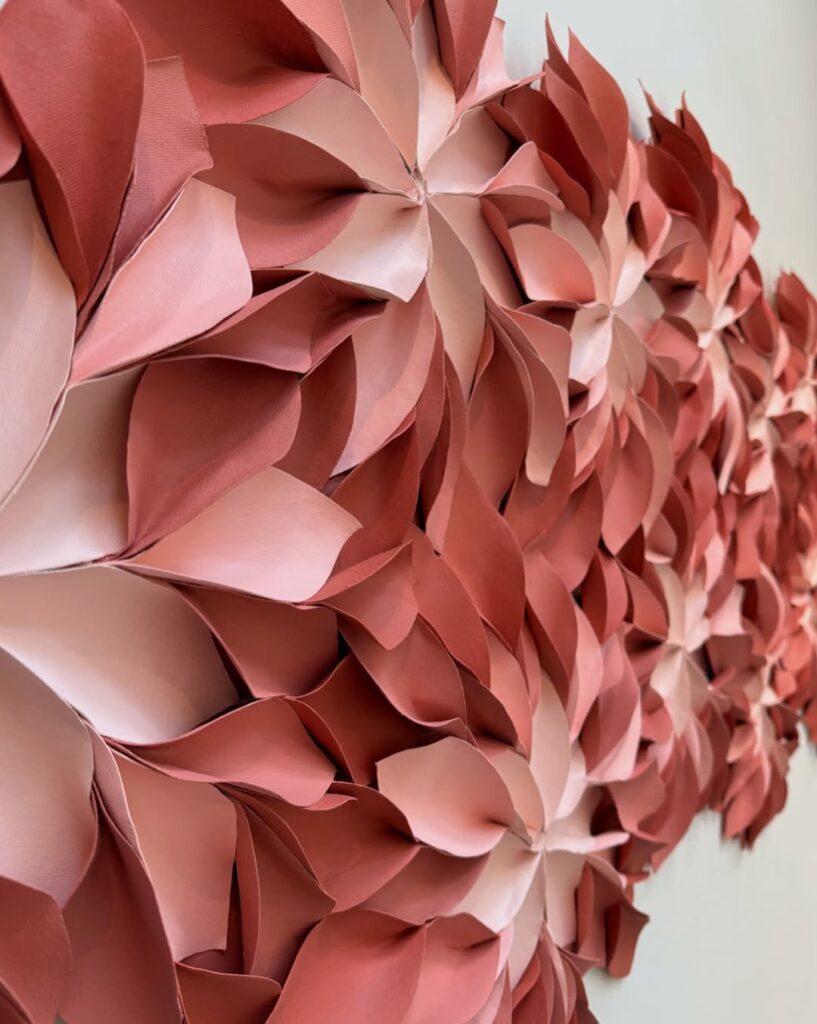
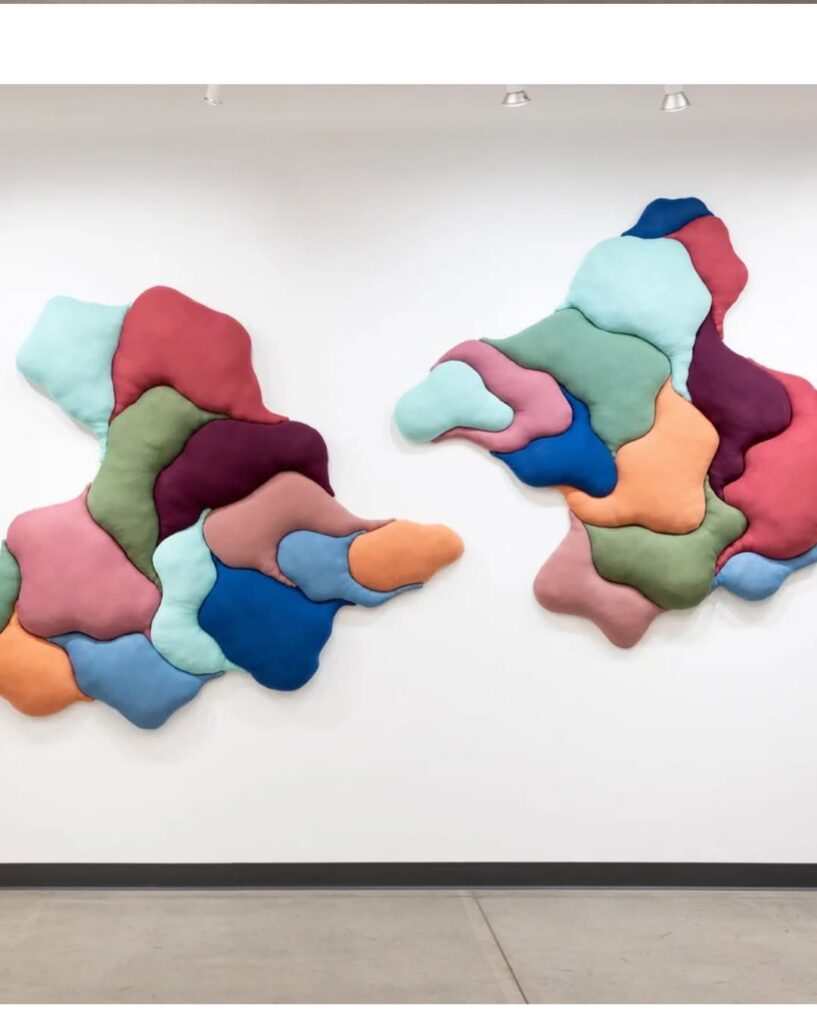
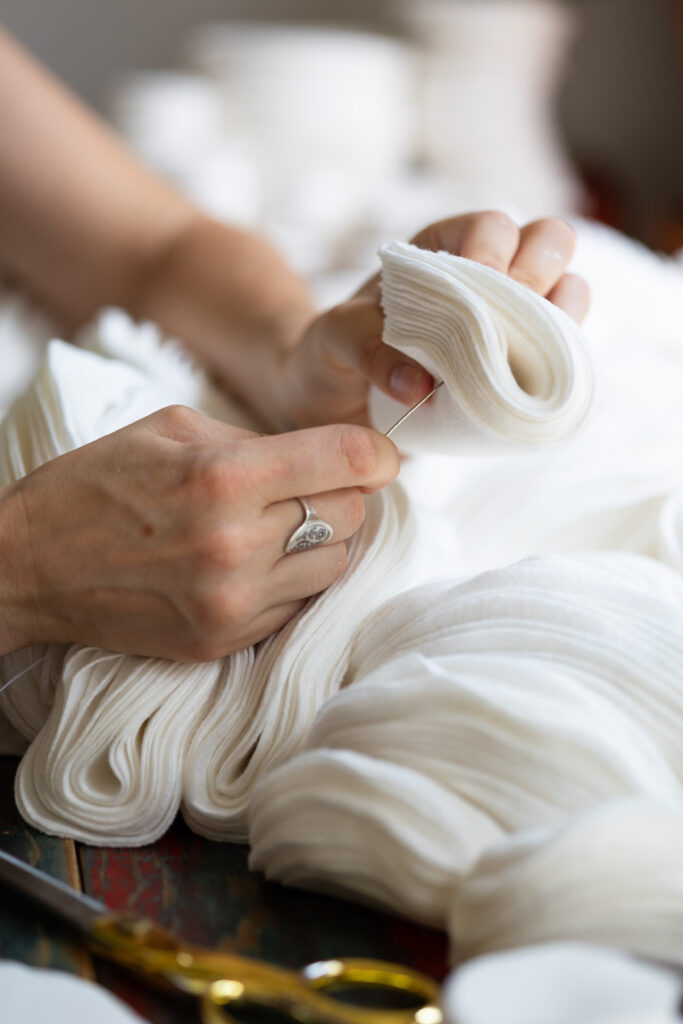
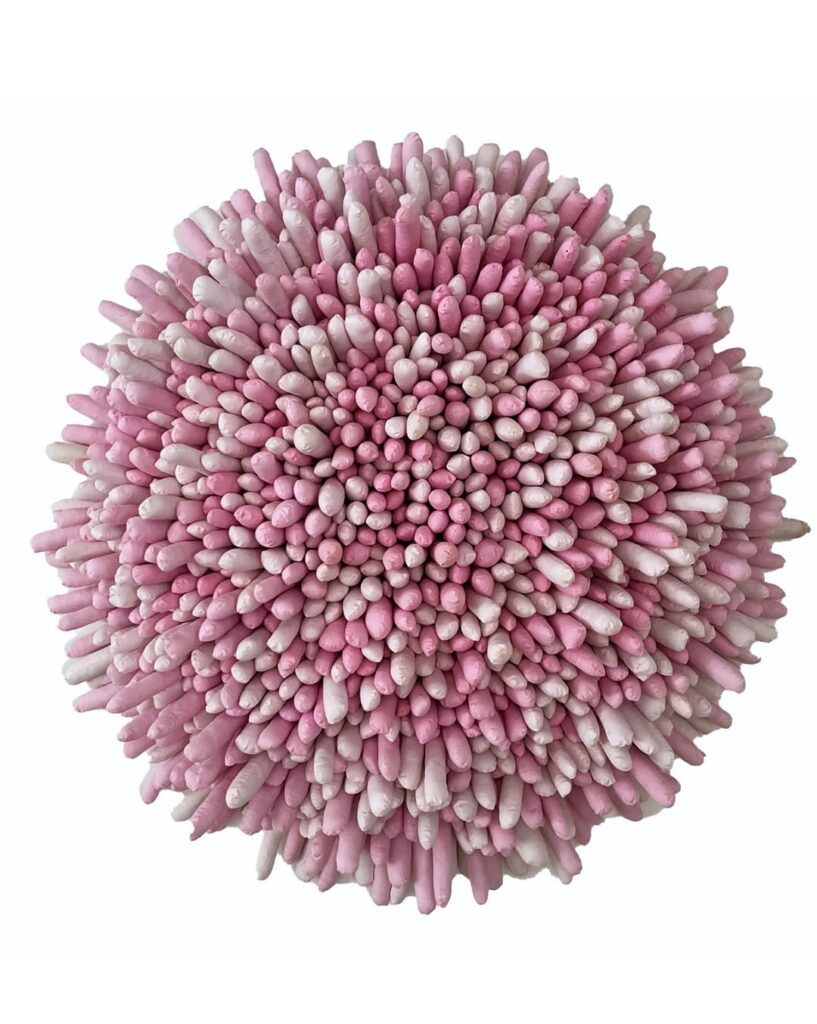
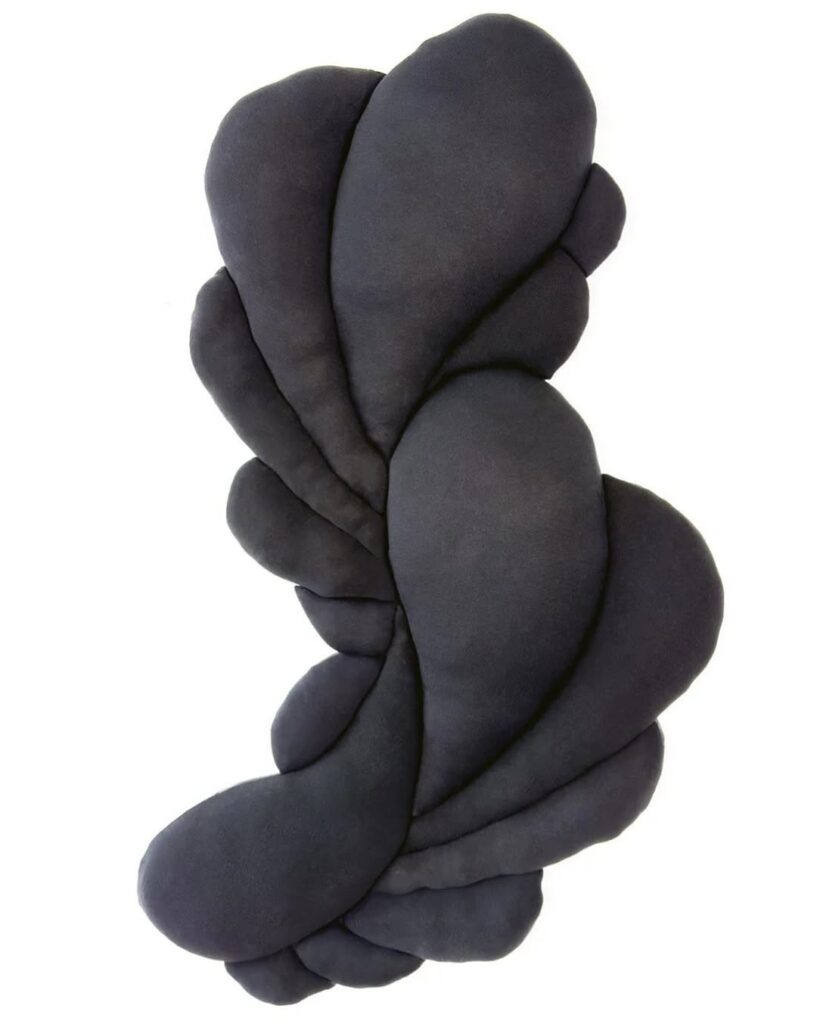
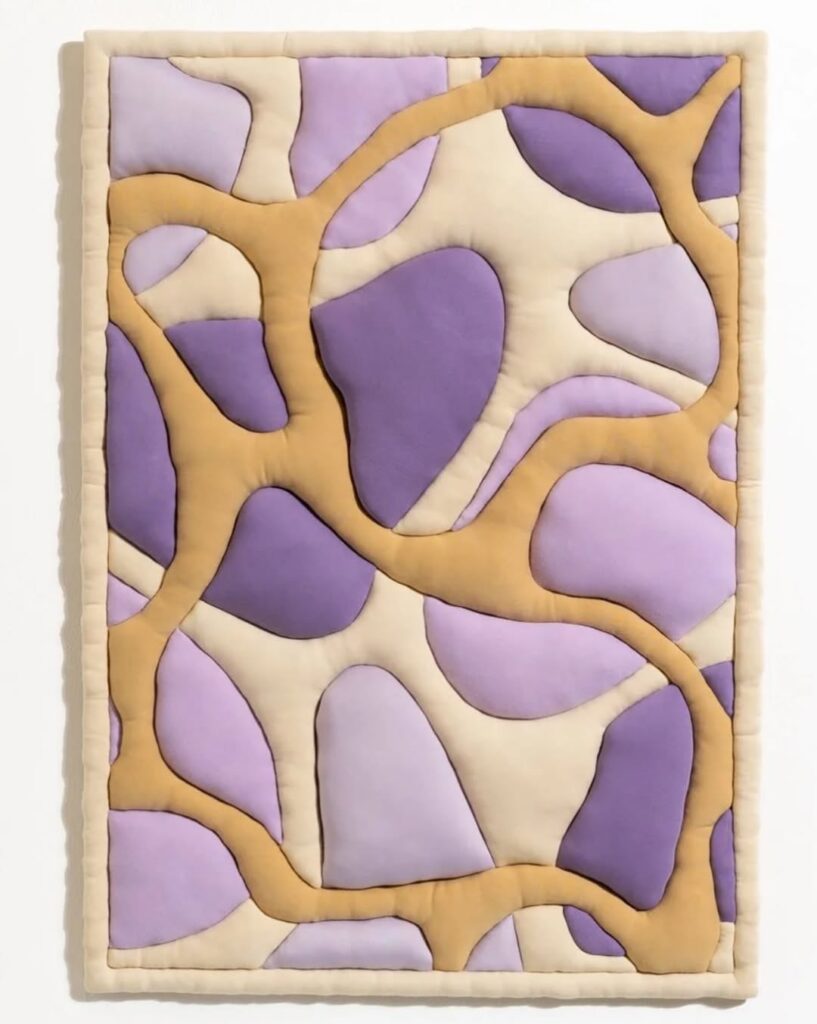
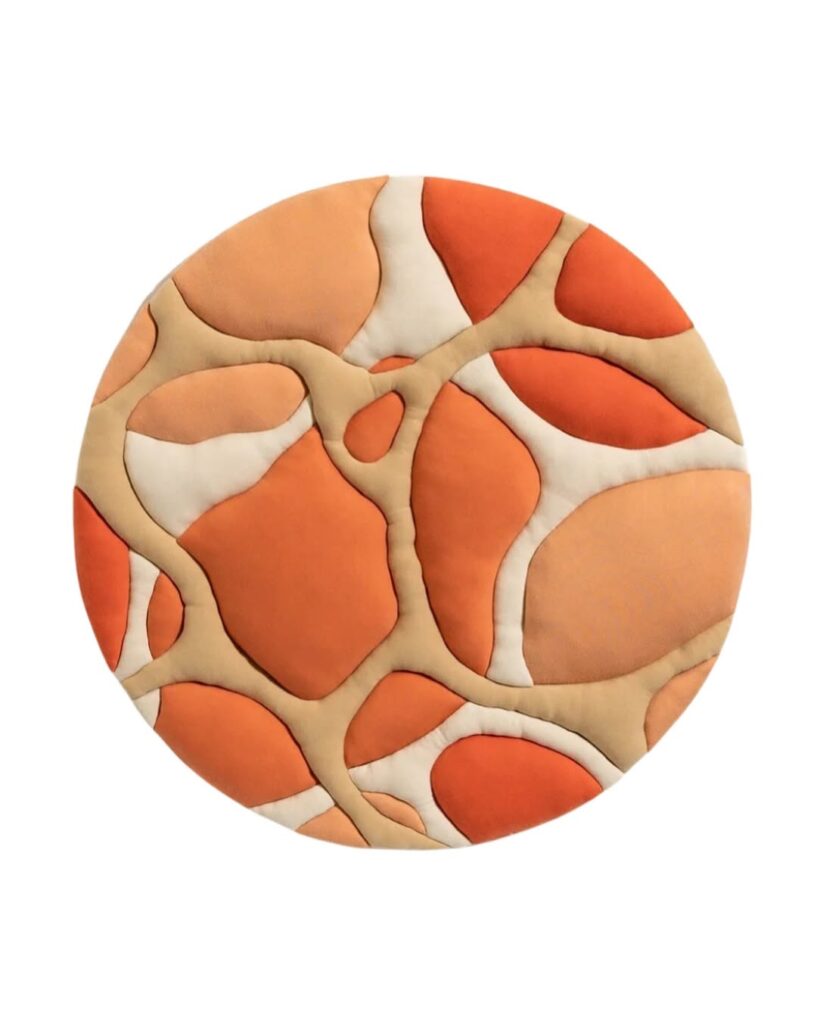
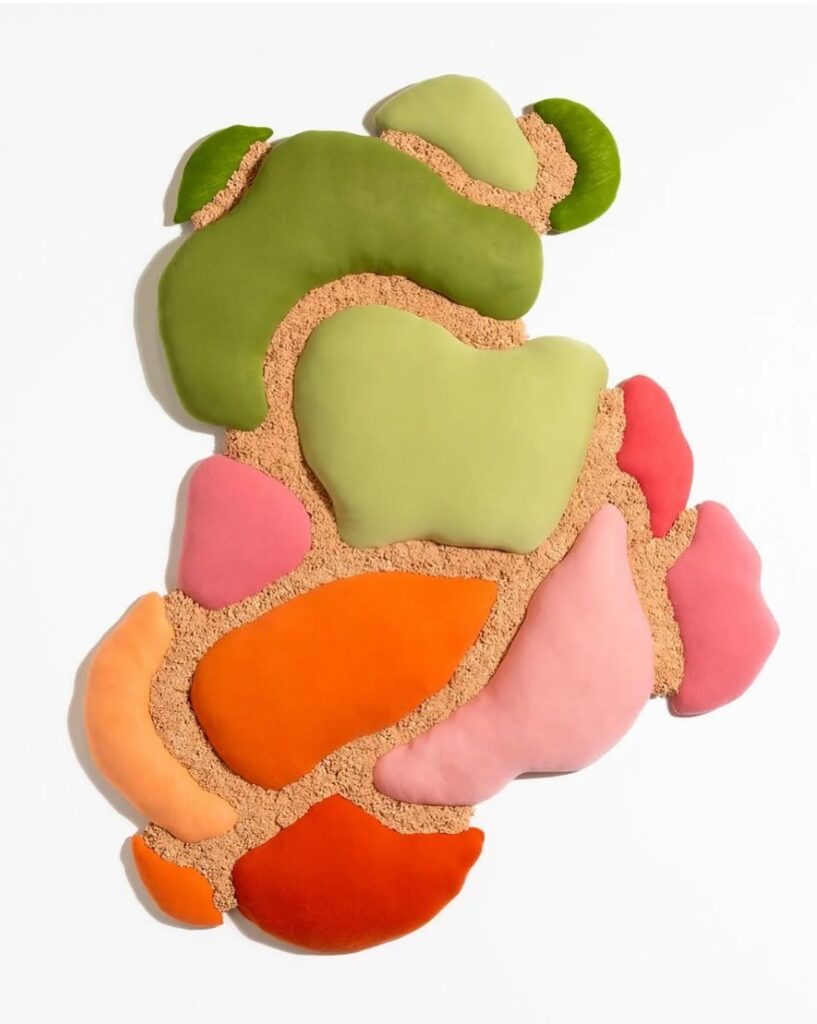
Sienna Martz, a fiber artist based in Vermont, USA, is redefining the boundaries of art, fashion, and sustainability with her innovative work. As an internationally recognised sculptor and fiber artist, Martz weaves together sustainability, creativity, and social commentary, creating a unique narrative that challenges our relationship with the environment.
With every thread and fiber, Martz crafts a story of environmental consciousness, critiquing modern consumerism while promoting eco-friendly practices. Her use of plant-based, recycled, and upcycled materials breathes new life into discarded textiles, transforming them into breathtaking sculptures that challenge the norms of consumerism and excess.
Photo Credit: Soapbox Arts
“I’m drawn to the idea that art can be a catalyst for change,” Martz says in a recent interview. “By exploring the intersection of sustainability and creativity, I hope to inspire others to think critically about their impact on the planet.”
Martz’s process is a labour of love, where traditional textile techniques meet contemporary vision. She coaxes beauty from second-hand clothing and organic fibers like kapok, bamboo, and cotton, creating intricate sculptures that showcase the potential of sustainable art.
Her work has garnered international acclaim, featuring in prominent publications and exhibitions worldwide. As a vegan artist, Martz embodies the principles of sustainability, prioritising eco-friendly materials and processes that minimise harm to the planet.
“Sustainability is not just a trend or a buzzword,” Martz emphasises. “It’s a way of life that requires intention, dedication, and a willingness to challenge the status quo.”
Martz’s artistic journey offers valuable insights into the power of sustainable creativity. Her work showcases the incredible potential of plant-based, recycled, and upcycled materials, challenging us to reimagine the possibilities of creative expression. By embracing these materials, Martz not only reduces waste but also creates unique and thought-provoking sculptures that inspire a deeper connection with nature.
Photo Credit: Soapbox Arts
Her slow and labour-intensive process is a testament to the power of responsible creativity. By prioritising eco-friendly materials and processes, Martz minimises harm to the planet and sets a new standard for artistic expression. Her commitment to sustainability extends beyond her art, as she leads a vegan lifestyle and inspires others to do the same.
Ultimately, Martz’s art inspires us to reevaluate our connection with nature and the impact of our choices. Her work reminds us that even small actions can make a significant difference and that sustainability is a journey we can all embark on, one thread at a time.
“My work is a reflection of my commitment to sustainability and creativity. I believe that art has the power to inspire change, and I hope to inspire others to think critically about their impact on the planet.”
A Closer Look at Martz’s Creative Process
Martz’s studio is a treasure trove of textures, colours, and stories. She shares her workspace with an array of materials, from discarded fabrics to natural fibers, each one waiting to be transformed into something new. Her process is meditative, allowing her to connect with the materials and the environment.
“I love the tactile nature of working with fibers,” Martz says. “It’s a way of connecting with the earth and the people who created the materials.”
Exhibition Highlights
Martz’s work has been featured in numerous exhibitions and publications, including:
“Sustainable Fashion” at the Museum of Arts and Design, New York
“Eco-Art” at the Victoria and Albert Museum, London
“Fiber Art” at the American Craft Council, Minneapolis
The Impact of Martz’s Work
Martz’s art has resonated with audiences worldwide, inspiring a new generation of artists, designers, and environmentalists. Her commitment to sustainability has also led to collaborations with eco-conscious brands and organisations, further amplifying her message.
“Seeing people connect with my work and start thinking about their own impact on the planet is the greatest reward,” Martz says. “It’s a reminder that art can be a powerful catalyst for change.”
Martz’s eco-artistry is a beacon of hope for a more sustainable future, weaving together creativity, social commentary, and environmental consciousness. Her transformative work challenges us to rethink our relationship with the planet, inspiring a deeper connection with nature and a more mindful approach to consumption. As Martz’s artistry shows us, sustainability is not just a trend, but a way of life that requires intention, dedication, and a willingness to challenge the status quo. Through her innovative use of plant-based, recycled, and upcycled materials, Martz proves that art can be a powerful catalyst for change, one thread at a time.
Soapbox ArtsSoapbox ArtsPhoto Credit: Soapbox Arts
Upcoming Exhibitions:
“Material Transformation” at Mixed Media Space in North Adams, Massachusetts
“Organic Matter” at the Strand Center for the Arts in Plattsburgh, New York
She merges scientific inquiry with traditional textile design, crafting innovative materials like bio-plastics. Grounded in biology and inspired by her heritage, her creations redefine clothing as vessels for storytelling, emotional resonance, and sustainability – garments that whisper their message and dissolve harmlessly into the environment.
Brenda Palomino is a bio-textile designer and founder of ‘Middle Child’ who creates sustainable, innovative materials by merging biology, materials science, and textile design, often using living organisms, microorganisms, or natural structural principles.
Palomino is Peruvian-born but currently based in the Pacific Northwest (PNW), a geographic region in western North America.
Her process is a fascinating blend of traditional and modern techniques. She starts by collecting and processing organic materials like seaweed, coffee grounds, and orange peels, breaking them down into biopolymers through fermentation or chemical treatment. These biopolymers are then mixed with natural additives to boost strength and texture, before being cast or molded into textile forms – think fabric or leather-like materials.
The final touch involves treating and finishing the materials to enhance durability and aesthetics. It’s a truly innovative approach that combines Peruvian heritage with cutting-edge science.
Brenda Palomino
Q & A
Why did you choose to work with this type of materials?
I work with seaweed and natural textiles to create materials that exist at the intersection of fashion, sculpture, and research. I grew up in Talara, where the coast basically eats everything. Between the salt, the sun, and the wind, nothing stays untouched, so I never really bought into the myth of “forever.”
My background is this weird collision between Biology and Fashion Design, and that duality drives my choices. When I look at synthetic textiles, I just see “forced immortality”: stuff that lasts but never resolves. I chose organic waste because it lets me design the exit as much as the entrance. Honestly, it’s also about rejecting scarcity.
Kelp and sea moss are everywhere; they’re cheap, they grow fast, and they don’t need fresh water or land. I’m not interested in a supply chain that bleeds the planet. I’d rather use what’s already here to engineer a timeline where fading is actually a function. I want the material to have the dignity of returning to the soil.
What’s your design inspiration?
My inspiration moves between natural patterns, architecture, and history. Nature gives me logic: repetition, erosion, membranes, and the way water layers over sand. Architecture inspired some of my silhouettes: a structure that can feel protective, sharp, or sensual depending on proportion.
History is my research tool. Looking back helps me understand what we inherit and repeat, allowing me to answer the present with intention. And Talara is always there in the background: ocean next to industry, beauty next to extraction. I love the idea of contrast as a permanent state.
What are the challenges of developing the bio-textile materials?
The main challenge is making a living material wearable without forcing it to behave like plastic. Biomaterials are sensitive to variables that industrial fashion tries to erase: humidity, temperature, drying speed, thickness, binder ratios, and pigment load. A small shift can change everything. I treat my studio like a lab: it is a constant trial and error. I’m documenting binder ratios and tear strength, but mostly I’m waiting for the material to tell me what it wants to do.
The hard part is balancing the science with the chaos. You have to accept that you’re collaborating with nature, not just commanding a surface. It’s a slow, sometimes frustrating negotiation, but that slowness is part of the integrity. You’re not manufacturing fabric; you’re engineering a material system.
Who are you designing for?
I design for people excited to feel and see something new, viewing clothing as a form of art and intellectual communication. They aren’t just looking for something ‘pretty’; they want a garment that carries weight and meaning.
I want the garment to create a sensory reaction: something unfamiliar, alive, slightly unsettling in the best way. I’m especially drawn to transparencies for anyone, regardless of gender, because sensuality isn’t a category; it’s already present in our bodies. I’m interested in highlighting that through light, movement, and surface.
The person I design for is comfortable with transparency and imperfection. They are comfortable with revealing without explaining. They’re willing to wear a piece of art that is slowly, beautifully dying. The person I design for values craft, experimentation, and clothing that carries meaning, not just trend.
As the fashion world shifts towards sustainability, Palomino’s pioneering work serves as a beacon, illuminating a path towards a more eco-friendly future. By merging ancient traditions with cutting-edge science, she’s crafting materials that not only reduce waste and pollution but also challenge our relationship with clothing itself.
Her creations invite us to rethink the lifecycle of fashion, from production to disposal, and envision a world where garments gently disappear, leaving behind only memories. In a industry often criticized for its environmental footprint, Palomino’s work is a powerful reminder that fashion can be both beautiful and sustainable, paving the way for a greener tomorrow.
NOTES:
Biopolymers are sustainable, biodegradable, and biocompatible polymers produced by living organisms (natural) or derived from renewable biological resources (bio-based).
Seaweed is a common name for large, multicellular marine algae, not true plants, that thrive in oceans and other water bodies, serving vital ecosystem roles and used globally as food (sushi, soups), fertilizer, cosmetics, and medicine, noted for being rich in iodine and other minerals, and coming in red, brown (kelp), and green varieties.
Seaweed is highly sustainable, acting as a regenerative, “zero-input” crop that requires no land, freshwater, pesticides, or fertilizers to grow. It functions as a powerful, fast-growing carbon sink—sequestering carbon 50 times faster than terrestrial plants—while reducing ocean acidification and providing habitat for marine life.
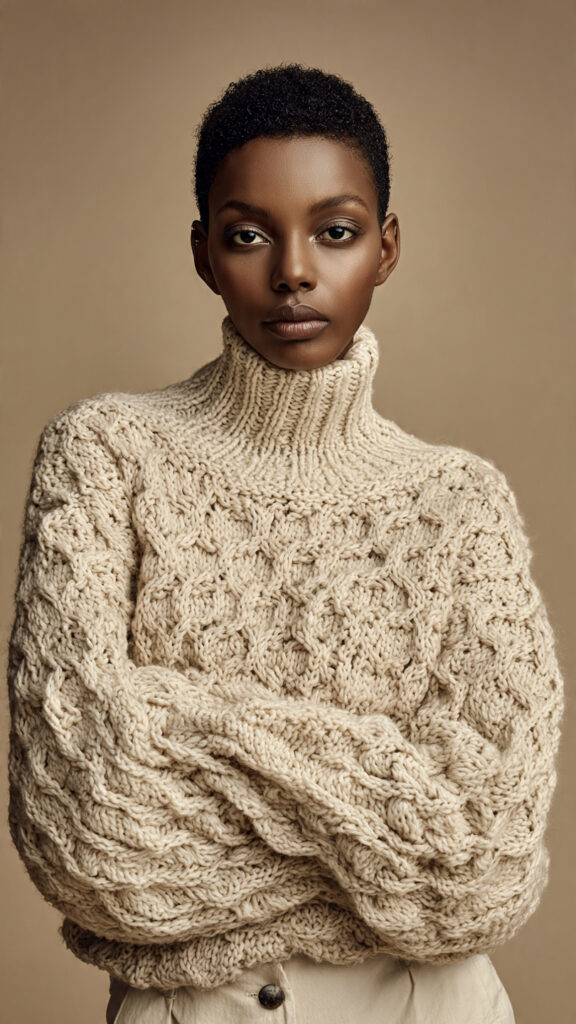
This body of work is a textural exploration of traditional hand-knitting and a celebration of traditional handcraft, translating complex textile work into contemporary sustainable fashion with sculptural qualities.
‘Looped In’ showcases voluminous, structured pieces built from complex Aran cables and loops, creating a dynamic visual rhythm and celebrating the inherent meaning in meticulous construction. Angelina Brodsky Elfasi created this range as her graduate collection for Bezalel Academy of Arts and Design in Israel.
“Looped In was created in response to living within an unpredictable reality, where a sense of control and stability is not always present. Within this context, I looked for a place of refuge a practice that allows me to slow down, focus, and create order. Knitting became that space for me; a steady rhythm, clear decisions, and a process I could fully shape. From this experience, the collection emerged as a way to translate uncertainty into tangible, enclosing forms that offer calm and a sense of protection,’ says Brodsky Elfasi.
Aran knitting is a traditional Irish style from the Aran Islands, famous for its heavily textured patterns, especially cable stitches, honeycomb, and Trinity stitch, often in solid colours like cream or white.
Brodsky Elfasi says over time, knitting became a language through which she could speak without words. She says she was drawn to the Aran technique because it allows storytelling through structure and that each cable carries meaning, enabling the garment to communicate through form rather than speech.
Angelina Brodsky Elfasi
“In a world where threats may appear at any moment and from any direction, a sense of anxiety and loss of control arises. Knitting became a practice that brought me inner calm. It is based on repetitive motion requiring focus, rhythm, and introspection. The collection creates a textile language built from knots and transitions. Aran knitting, with its intricate and twisting cables, weaves a story without words. The colour palette shifts gradually like emotions that rise and change throughout the process. Through this repetitive act, where I am in control, I create order from inner chaos. The garments are closed, enveloping structures, soft, resilient sanctuaries in an unpredictable reality,” she says.
She says creating this collection was a slow, process-driven approach using natural, durable, and biodegradable materials designed to last over time rather than be replaced quickly.
What started as Atieno Yarns, a Kenyan contemporary fashion brand specialising in crochet pieces, has developed into Vusha Studios, a phenomenal and conscious brand and a production facility where the handmade items are created, showcasing a collaboration focused on local Kenyan artisans. Vusha Studios serves as the physical location where Atieno Yarns’ unique crochet pieces are brought to life.
Vusha Studios is a luxury crochet studio recently established to create handmade crochet items like clothing and accessories, using 100% cotton yarn. The studio focuses on celebrating artistry, culture, and individuality through its designs. The brand creates bold, feminine pieces made to last, blending ethnic charm with modern flair.
Founder, Bettydora Odhiambo says, “As Atieno Yarns grew, I realised that not only was I building a crochet label, but that I was shaping a luxury African fashion house. So, the idea to create Vusha came from the need to evolve creatively and strategically. It represents a new chapter focused on African-inspired design, global export, stronger artistic direction, and a more holistic approach to craftsmanship. Atieno Yarns still informs the soul of the work, but Vusha gives the brand the space to scale, innovate, and collaborate with artisans on a larger, more global stage,” says Odhiambo.
Sustainability is the backbone of Vusha Studios. They use natural and biodegradable cotton yarn sourced from Uganda. The yarn is soft, vibrant, eco-friendly, and reduces environmental impact throughout the production cycle.
Crocheting with 100% cotton yarn is sustainable because it is a natural, renewable fiber that is biodegradable, decomposing relatively quickly, unlike synthetics that create microplastics.
“Crocheting has been part of my life since I was 10 years old. I learned crocheting from my mother and other women around me. So, the brand was born from both nostalgia and purpose. It was a desire to preserve Kenyan craftsmanship while creating sustainable, high-quality pieces. It also became a platform for empowering women artisans by offering fair work and a space to grow their skills,” she says.
“My design process always begins with storytelling. I draw inspiration from Kenyan traditional crochet patterns, and the everyday lives of African women. I sketch concepts, translate them into crochet patterns, create the first samples myself, then train my artisans to produce consistent, high-quality craftsmanship. I blend slow fashion principles with modern silhouettes, creating pieces that feel both nostalgic and timeless,” she says.
“I gravitate towards warm, earthy, sun-inspired tones, colours that speak to Kenyan cultural aesthetics, and the vibrancy of everyday life here. I choose colours that feel grounded but elevated, ensuring each piece is timeless enough for global markets while staying deeply rooted in African identity,” she says.
Vusha Studio’s latest collection features two signature pieces;the clutch bag called ‘The cherry on top’; a statement piece designed for versatile styling from evening wear to elevated day outfits.
According to Odhiambo, the Nene Tote is currently the most-loved piece. “It is spacious, bold, and handcrafted from pure cotton with soft canvas lining and leather touches. It is designed for women who carry more and do it in style, perfect for travel, work, for moms or everyday lifestyle needs,” she says.
She says both pieces balance traditional craftsmanship with luxury finishings, making them timeless staples.
Vusha Studios handcrafts for conscious consumers looking for African-inspired luxury, collectors, and fashion-forward individuals who value craftsmanship, authenticity, and ethically produced work.
Chidinma Jachi Solomon is a Nigeria-based multidisciplinary artist who plays a role in tackling waste management problems by creating powerful, large-scale artworks from discarded materials.
A primary theme in her work is transforming “what the world throws away” into something beautiful and meaningful. She aims to show that nothing is truly useless, turning waste into wealth and advocating for a cleaner, sustainable environment.
Through her art business, Jachi Gallerie, Chidinma transforms waste and recycled materials into unique, textured, and vibrant art pieces, aiming to inspire sustainability and challenge perceptions. Her works showcases intricate, multi-layered artworks made from deconstructed photos, fabrics, and other found objects. Her work is known for its vibrant colours, powerful storytelling, and strong focus on sustainability and African identity.
Chidinma specialises in fabric collage, assembling remnants of African print (Ankara) materials into layered compositions that form detailed portraits. The colourful nature of the Ankara fabrics makes her artworks unique and visually dynamic. She also incorporates other recycled materials like plastic waste, paper, and paint to add depth and complexity to her pieces. Her art often reflects African pride and identity, with pieces telling stories of strength, sacrifice, and love.
Chidinma is helping to address the dual problems of environmental waste, specifically textile waste and the need to provide a global platform for African creativity and cultural storytelling.
Her objective is to change the narrative around “trash,” demonstrating that these materials still hold value and possibility. Her work is a reminder that nothing is truly useless, neither materials nor stories.
Chidinma Jachi Solomon
Creatively, the use of discarded materials gives her pieces character, including unique textures, patterns, and imperfections that cannot be replicated with new materials. It adds depth and a unique story to her artwork. Her pieces are rich in symbolism and meaning, connecting viewers to the human stories behind the materials.
Chidinma sees her process as a form of “resurrection,” turning overlooked and forgotten materials into unforgettable art, symbolising resilience and new beginnings.
“I don’t just work with fabric, I work with what the world throws away. Every piece I create reminds me that nothing is truly useless. My artistic mission is rooted in the belief that creativity can challenge how Africa thinks about climate pollution. Through my signature fabric collage technique, I merge fine art, fashion, and sustainability, turning textile waste into vibrant, emotionally charged portraits and cultural stories. Each piece is a statement on renewal, resilience, and the beauty found within what the world throws away,” says Chidinma.
Through her brand, Chidinma provides a space for African artists to tell powerful stories of emotion, identity, culture, sustainability, and resilience. She is committed to “putting Africa on the global map” by connecting local creativity to a wider international audience.
By using art as activism, she inspires a cleaner and more sustainable environment, encouraging others to reimagine, reuse, and revive materials rather than dispose of them. In essence, Chidinma proves that creativity and sustainability can coexist beautifully to create a positive social and environmental impact.
She hopes to one day expand her brand into a global and full sustainable art house, complete with a professional studio, a team of young creatives, and merchandise lines made from upcycled textiles.