Fuguku is an Indonesian sustainable fashion brand founded in 2023 by Savirra Lavinia. Fuguku contributes to sustainable fashion through its use of recycled materials, the preservation of traditional artisanal techniques, and a commitment to social empowerment.
Their design approach supports the concept of circular fashion and minimizes waste. The brand blends the traditional Indonesian Jumputan technique with the Japanese Bai Shibori method to create unique, spiky textures and patterns.
By adapting these traditional methods, they honour cultural heritage while innovating for a modern, eco-conscious market. This innovation minimizes waste and embodies the brand’s commitment to sustainability.
Through these integrated practices, Fuguku demonstrates that fashion can be both stylish and a statement of environmental and social values. Fuguku’s products, including their signature “Fugu” bags, their debut product line, are crafted from 100% recycled polyester derived from reclaimed PET bottles and plastics found in oceans and landfills.
The Fugu bag designs are inspired by the pufferfish, symbolising adaptability and self-expression, and blend traditional craft techniques with innovative design.
Indonesia’s Jumputan is a type of tie-dye textile created by tying and dipping fabric in dye and Bai Shibori is a type of Japanese shibori; a manual resist dyeing technique, that creates patterns resembling the shape of a bai shellfish.
Fuguku is committed to ethical labour practices by empowering local women artisans, many of whom are homemakers, to work from home. This provides them with work opportunities while balancing family responsibilities, building stronger communities and ensuring fair wages.
Denim is frequently part of the fast fashion cycle, which encourages overconsumption and rapid disposal of garments. Globally, about 92 million tonnes of textile waste end up in landfills or are incinerated each year.
Therefore, upcycling denim fabrics is a great way to reduce textile waste. It offers significant environmental, economic, and creative benefits and is a rapidly growing trend in the fashion industry, driven by consumer demand for sustainable and unique products.
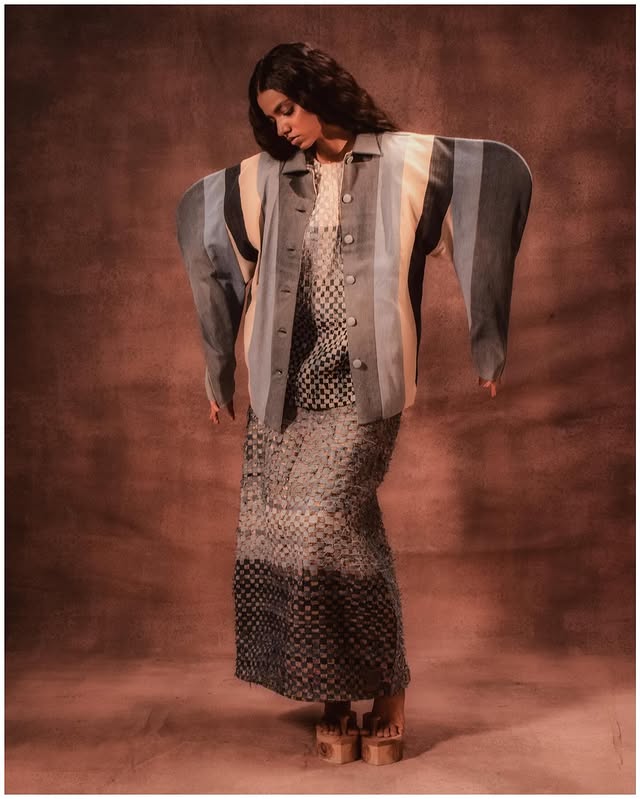
Anam Husain, an apparel designer based in Delhi – India, is passionate about upcycling denim fabrics; turning them into wearable art. She established her namesake brand “Anam Husain” an upcycling design studio which creates pieces that are distinctly designed to be artistic statements that express her unique vision and craftsmanship.
Her zealousness for transforming recycled denim fabrics into sculptural garments for conscious consumers is evident in her latest collection “CUT-PUTLY”. The concept is a discarded post consumer denim- faded, frayed, and in shades of indigo reborn as sculptural textile art. It is inspired by the curves of traditional puppets and clay pots of Rajasthan. It is experimental pattern-making meets structural boning to create dramatic, three-dimensional forms.
“Denim is considered one of the most polluting and easily discarded fabric. So we recycle post consumer waste and save it from entering the landfills. I deeply value intricately laboured and ethically-produced craftsmanship with a conscious focus on sustainability. My inspirations arise from deep-rooted memories, nostalgic life moments and collectibles of the by-gone era. Nature inspires me even more. My creative universe is earthy, metallic and raw. Each natural scent ignites my creative spark,” says Husain.
As a maximalist designer, Husain embraces an “aesthetics of excess,” characterized by a “more is less” philosophy of layering patterns, textures, to create stylish garments. Her design style is exuberant and expressive; designed with intentionality rather than being merely cluttered.
“I love maximalism and for me more is always less. The challenge of harmonising the clash of different materials and colours excites me,” she says.
Other than working with denim fabrics, Husain says she finds pleasure in working with a variety of materials. “I find poetry in what is decayed and weathered like leaves leaving their natural tint on fabrics. These prints are a play with traditional Indian motifs, takes weeks to be made, creates layers of many colours and can never be reproduced in the same way. To my surprise, the printers would throw away these fabrics as waste. In Patina, I have repurposed these fabrics with handloom Bhagalpuri linen,” she says.
Husain’s says, her strong, innate passion and sense of purpose for design makes her believe that this is truly her calling.
Anam Husain
“Design to me is as emotional as it is tactile. I cannot simply draw on paper and call it a design. I see the fabric, feel and hear it before conveying my story through it. My collections Petrichor, Talisman and now Patina are an integral part of my life journey and stand for what I find beauty in; revaluing and appreciating the discarded materials; innovating Indian crafts and being kinder to the environment. I don’t categorise my creativity into limited boxes of perceived beauty. I aspire to create art pieces that a wearer values and treats the same way, thus lengthening its shelf life,” she says.
Husain’s artisanal, unique, and customised clothing emphasise traditional craftsmanship and sustainable practices. They are distinct, detailed and meticulously created pieces that incorporate traditional techniques and unique artistic elements.