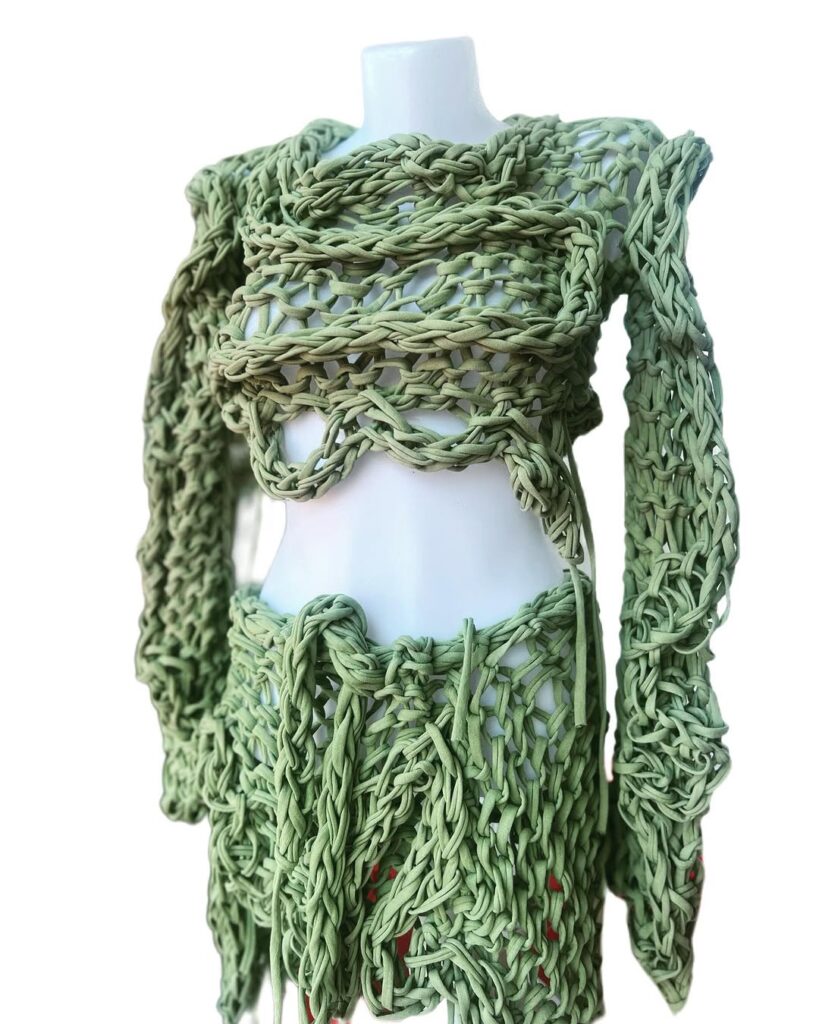
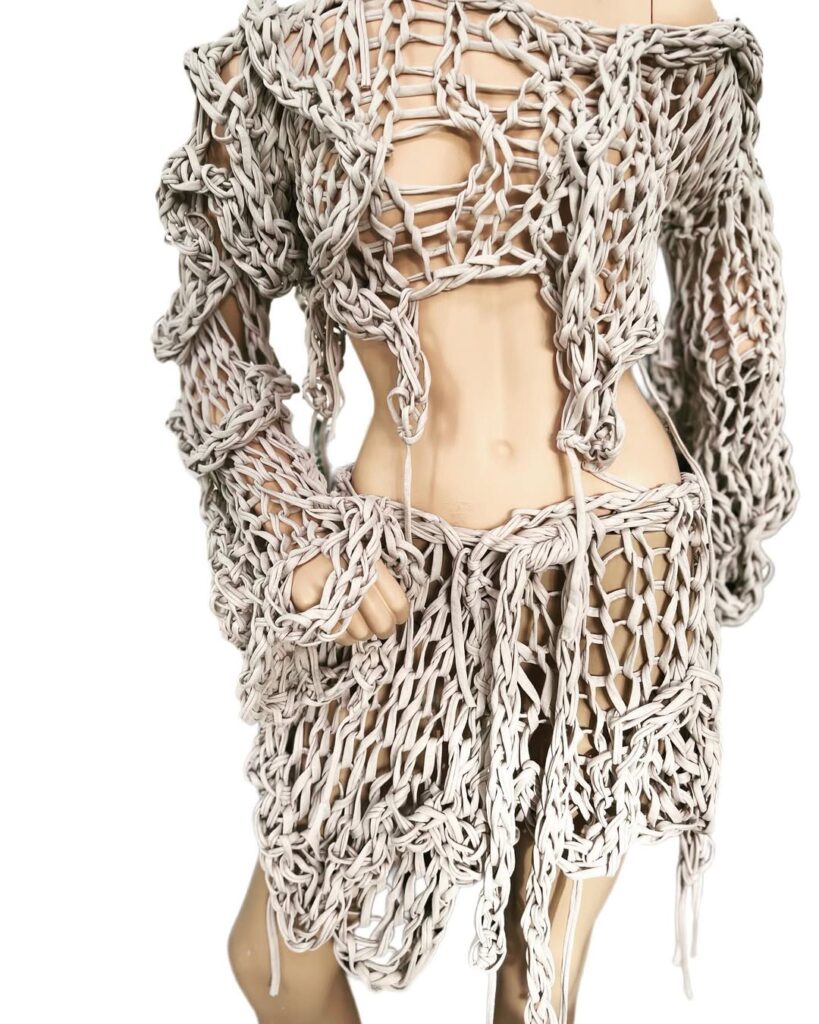
She merges scientific inquiry with traditional textile design, crafting innovative materials like bio-plastics. Grounded in biology and inspired by her heritage, her creations redefine clothing as vessels for storytelling, emotional resonance, and sustainability – garments that whisper their message and dissolve harmlessly into the environment.
Brenda Palomino is a bio-textile designer and founder of ‘Middle Child’ who creates sustainable, innovative materials by merging biology, materials science, and textile design, often using living organisms, microorganisms, or natural structural principles.
Palomino is Peruvian-born but currently based in the Pacific Northwest (PNW), a geographic region in western North America.
Her process is a fascinating blend of traditional and modern techniques. She starts by collecting and processing organic materials like seaweed, coffee grounds, and orange peels, breaking them down into biopolymers through fermentation or chemical treatment. These biopolymers are then mixed with natural additives to boost strength and texture, before being cast or molded into textile forms – think fabric or leather-like materials.
The final touch involves treating and finishing the materials to enhance durability and aesthetics. It’s a truly innovative approach that combines Peruvian heritage with cutting-edge science.
Brenda Palomino
Q & A
Why did you choose to work with this type of materials?
I work with seaweed and natural textiles to create materials that exist at the intersection of fashion, sculpture, and research. I grew up in Talara, where the coast basically eats everything. Between the salt, the sun, and the wind, nothing stays untouched, so I never really bought into the myth of “forever.”
My background is this weird collision between Biology and Fashion Design, and that duality drives my choices. When I look at synthetic textiles, I just see “forced immortality”: stuff that lasts but never resolves. I chose organic waste because it lets me design the exit as much as the entrance. Honestly, it’s also about rejecting scarcity.
Kelp and sea moss are everywhere; they’re cheap, they grow fast, and they don’t need fresh water or land. I’m not interested in a supply chain that bleeds the planet. I’d rather use what’s already here to engineer a timeline where fading is actually a function. I want the material to have the dignity of returning to the soil.
What’s your design inspiration?
My inspiration moves between natural patterns, architecture, and history. Nature gives me logic: repetition, erosion, membranes, and the way water layers over sand. Architecture inspired some of my silhouettes: a structure that can feel protective, sharp, or sensual depending on proportion.
History is my research tool. Looking back helps me understand what we inherit and repeat, allowing me to answer the present with intention. And Talara is always there in the background: ocean next to industry, beauty next to extraction. I love the idea of contrast as a permanent state.
What are the challenges of developing the bio-textile materials?
The main challenge is making a living material wearable without forcing it to behave like plastic. Biomaterials are sensitive to variables that industrial fashion tries to erase: humidity, temperature, drying speed, thickness, binder ratios, and pigment load. A small shift can change everything. I treat my studio like a lab: it is a constant trial and error. I’m documenting binder ratios and tear strength, but mostly I’m waiting for the material to tell me what it wants to do.
The hard part is balancing the science with the chaos. You have to accept that you’re collaborating with nature, not just commanding a surface. It’s a slow, sometimes frustrating negotiation, but that slowness is part of the integrity. You’re not manufacturing fabric; you’re engineering a material system.
Who are you designing for?
I design for people excited to feel and see something new, viewing clothing as a form of art and intellectual communication. They aren’t just looking for something ‘pretty’; they want a garment that carries weight and meaning.
I want the garment to create a sensory reaction: something unfamiliar, alive, slightly unsettling in the best way. I’m especially drawn to transparencies for anyone, regardless of gender, because sensuality isn’t a category; it’s already present in our bodies. I’m interested in highlighting that through light, movement, and surface.
The person I design for is comfortable with transparency and imperfection. They are comfortable with revealing without explaining. They’re willing to wear a piece of art that is slowly, beautifully dying. The person I design for values craft, experimentation, and clothing that carries meaning, not just trend.
As the fashion world shifts towards sustainability, Palomino’s pioneering work serves as a beacon, illuminating a path towards a more eco-friendly future. By merging ancient traditions with cutting-edge science, she’s crafting materials that not only reduce waste and pollution but also challenge our relationship with clothing itself.
Her creations invite us to rethink the lifecycle of fashion, from production to disposal, and envision a world where garments gently disappear, leaving behind only memories. In a industry often criticized for its environmental footprint, Palomino’s work is a powerful reminder that fashion can be both beautiful and sustainable, paving the way for a greener tomorrow.
NOTES:
Biopolymers are sustainable, biodegradable, and biocompatible polymers produced by living organisms (natural) or derived from renewable biological resources (bio-based).
Seaweed is a common name for large, multicellular marine algae, not true plants, that thrive in oceans and other water bodies, serving vital ecosystem roles and used globally as food (sushi, soups), fertilizer, cosmetics, and medicine, noted for being rich in iodine and other minerals, and coming in red, brown (kelp), and green varieties.
Seaweed is highly sustainable, acting as a regenerative, “zero-input” crop that requires no land, freshwater, pesticides, or fertilizers to grow. It functions as a powerful, fast-growing carbon sink—sequestering carbon 50 times faster than terrestrial plants—while reducing ocean acidification and providing habitat for marine life.
Using leaves to create garments is a highly sustainable and innovative practice in the fashion industry, primarily because it utilizes agricultural waste products, reduces reliance on synthetic materials, and often employs environmentally friendly processing methods.
Designers are increasingly using leaves and leaf fibers to create garments because of urgent, industry-wide shift toward sustainability, waste reduction, and innovation. Leaf-based fabrics and techniques provide eco-friendly, biodegradable alternatives to synthetic materials, aligning with the growing consumer demand for ethical, environmentally responsible fashion.
Amanda Meyer
Amanda Meyer is one of the creators known for designing garments made from natural materials, including preserved leaves. She collects fallen leaves, preserves and converts them into durable and biodegradable textile.
She created a “leaf dress” that involved using 100 meters of thread and 40 hours of hand-sewing to assemble, utilizing preserved leaves to create eco-friendly, sustainable fashion. This is a sustainable way of creating garments and a significant step toward a circular, eco-friendly fashion economy.
Based in Madrid – Spain, her work falls under nature art, fiber art, and sustainable design, often focusing on wearable, natural forms. She is deeply committed to the environment and using only recycled and natural resources.
Artists like Amanda contribute to circular fashion by reimagining the lifecycle of materials, fostering a mindset of appreciation for the existing, and creating work that challenges the linear “take-make-waste” model.
preserving leaves
Through her art, which frequently involves mixed media, including epoxy and paint on various surfaces, Amanda exemplifies the creative, non-traditional approaches that support the “four R’s” (Reduce, Reuse, Recycle, Repurpose) of sustainable fashion.
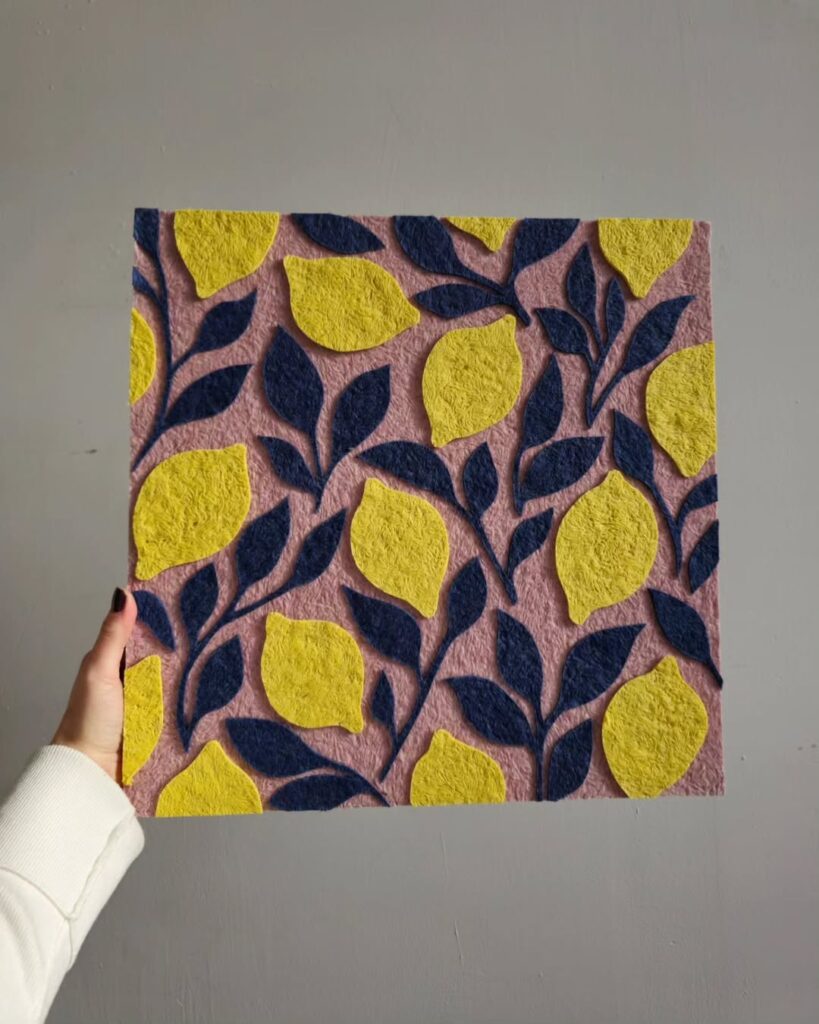
In a world overflowing with textile waste, Sandra Junele is weaving a greener future – one yarn scrap at a time. She creates large wall panel installations and custom-moulded shapes made from shredded recycled yarn waste mixed with handmade plant-based glue.
The Dundee-based, Scotland artist transforms discarded materials into stunning wall art, championing sustainability and supporting eco-conscious creativity. Her brand, Junele is known for its minimalist design, tactile quality and focus on interior applications.
“My journey began in Latvia, where I watched my grandfather transform discarded wood into beautiful furniture. Those moments taught me that waste is not the end of a story, but the beginning of a new one. That lesson has shaped everything I do — from my studies in interior and textile design, to the sustainable practice I’ve built today,” says Sandra.
Made from repurposed materials and biodegradable components, Junele artworks not only enhance the aesthetic appeal of a space but also align with eco-friendly values. They bring a sense of environmental responsibility and sustainability to interior design.
Sandra Junele
“I started collecting this waste and conducted hundreds of experiments to find creative ways to repurpose it. One of my early experiments involved mixing PVA glue with shredded textile waste. This led me to search for natural organic glue replacements that are natural and dissolve upon contact with water, thereby minimising waste after the product’s use.Her pieces are not only beautiful but also endlessly reusable—submerge them in water, and the material can be reshaped again. My artworks can be reused when no longer needed. By placing them in water, the natural glue dissolves, leaving me with the fibres that can be repurposed for new projects. This approach not only reduces waste, but also supports a circular economy, ensuring that the materials continue to have a life beyond their initial use,” she says.
SOURCING MATERIALS
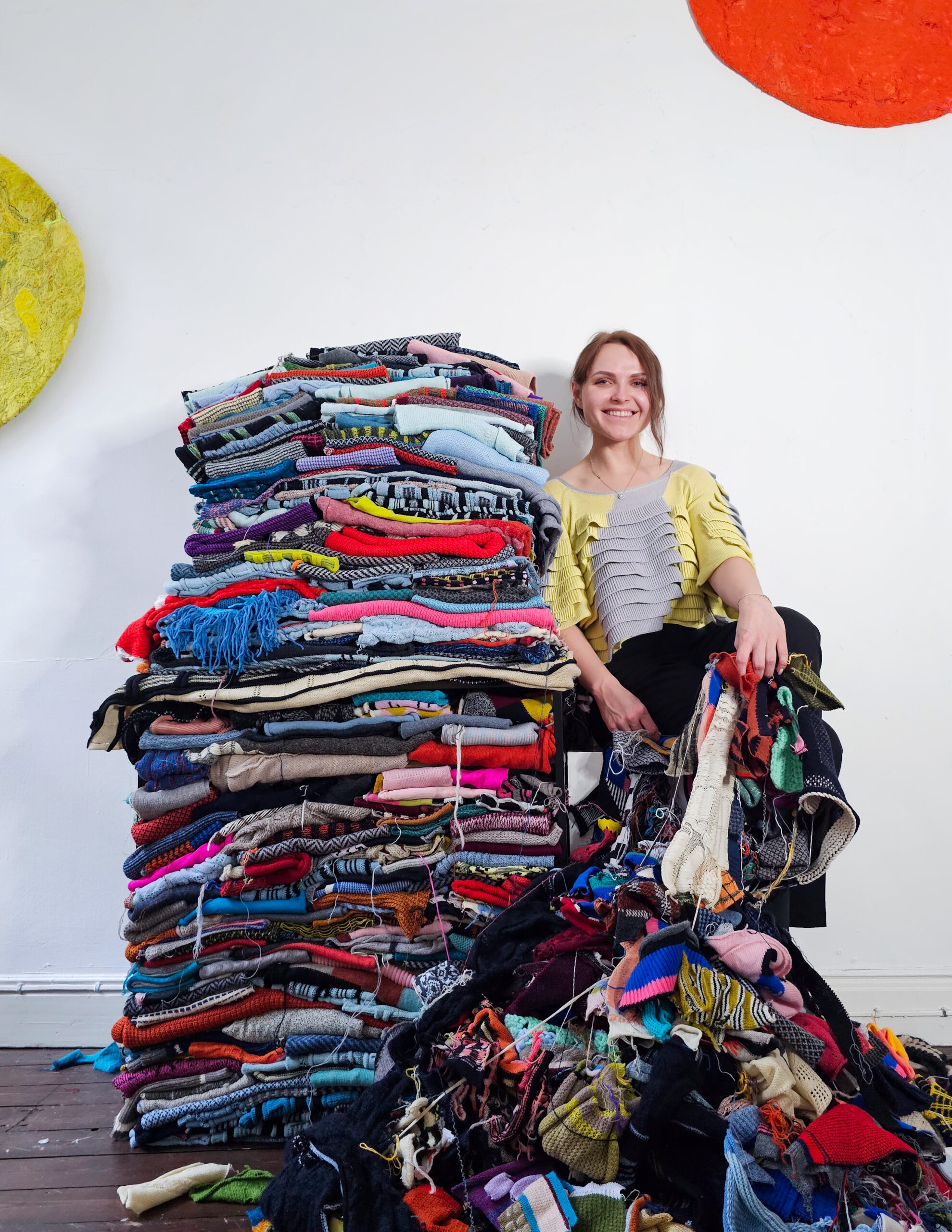
Sandra has an established material sourcing plan. She says, “I have recycling bins placed at manufacturers and universities where people can dispose of their textile waste. Once these bins are full, I collect the waste. Designers also play a crucial role by donating their unwanted materials. One memorable donation came from a knit designer who had been collecting samples of her work for 15 years. This mix of sources ensures a diverse range of materials, each with its own story, contributing to the unique character of my artworks.”
Collaboration with @rebeccasearlstevens
DESIGN PROCESS
By hand, she carefully separates textile waste, shred fibres, and binds them with her own plant-based glue — creating a unique material that is both tactile and sustainable. Remarkably, it can dissolve in water and be reused again, offering endless possibilities.
“The design process for my textile artworks begins with collecting waste materials from local manufacturers, designers, and universities. This waste comes in various forms, such as loose threads, samples, clothes, and yarn cones. The first step is to separate the waste by colour. Once sorted, I shred the waste, using a shredding machine for shorter fibres and by hand with scissors for longer fibres. With the fibres prepared, I then cook my own plant-based glue, making a fresh batch for each project. The shredded fibres are mixed with this glue and either rolled out into sheets or applied to moulds. As the sheets dry, they become hard, similar to cardboard. At this stage, they can be cut, sewn, embroidered, screen-printed, or layered according to the design. Finally, each sheet is mounted on a wooden frame, ready to be displayed as a unique piece of sustainable art,” she says.
One of Sandra’s big dreams is to open her own shop-gallery, a space where every interior element is crafted from sustainable materials and decor made from textile waste. She envisions it as a place that that could showcase her work and serve as a hub for eco-conscious designs and like-minded creatives.
Collaboration with @bekkiflaherty
She plans to collaborate with more designers and artists, both locally and internationally, to bring fresh perspectives and innovative ideas into her work. Her work extends beyond her products. Through educational workshops and outreach programmes, she empowers others to rethink waste, embrace sustainable practices, and contribute to a circular economy. By raising awareness about environmental challenges, she is creating a ripple effect of positive change in her community.
This body of work is a textural exploration of traditional hand-knitting and a celebration of traditional handcraft, translating complex textile work into contemporary sustainable fashion with sculptural qualities.
‘Looped In’ showcases voluminous, structured pieces built from complex Aran cables and loops, creating a dynamic visual rhythm and celebrating the inherent meaning in meticulous construction. Angelina Brodsky Elfasi created this range as her graduate collection for Bezalel Academy of Arts and Design in Israel.
“Looped In was created in response to living within an unpredictable reality, where a sense of control and stability is not always present. Within this context, I looked for a place of refuge a practice that allows me to slow down, focus, and create order. Knitting became that space for me; a steady rhythm, clear decisions, and a process I could fully shape. From this experience, the collection emerged as a way to translate uncertainty into tangible, enclosing forms that offer calm and a sense of protection,’ says Brodsky Elfasi.
Aran knitting is a traditional Irish style from the Aran Islands, famous for its heavily textured patterns, especially cable stitches, honeycomb, and Trinity stitch, often in solid colours like cream or white.
Brodsky Elfasi says over time, knitting became a language through which she could speak without words. She says she was drawn to the Aran technique because it allows storytelling through structure and that each cable carries meaning, enabling the garment to communicate through form rather than speech.
Angelina Brodsky Elfasi
“In a world where threats may appear at any moment and from any direction, a sense of anxiety and loss of control arises. Knitting became a practice that brought me inner calm. It is based on repetitive motion requiring focus, rhythm, and introspection. The collection creates a textile language built from knots and transitions. Aran knitting, with its intricate and twisting cables, weaves a story without words. The colour palette shifts gradually like emotions that rise and change throughout the process. Through this repetitive act, where I am in control, I create order from inner chaos. The garments are closed, enveloping structures, soft, resilient sanctuaries in an unpredictable reality,” she says.
She says creating this collection was a slow, process-driven approach using natural, durable, and biodegradable materials designed to last over time rather than be replaced quickly.
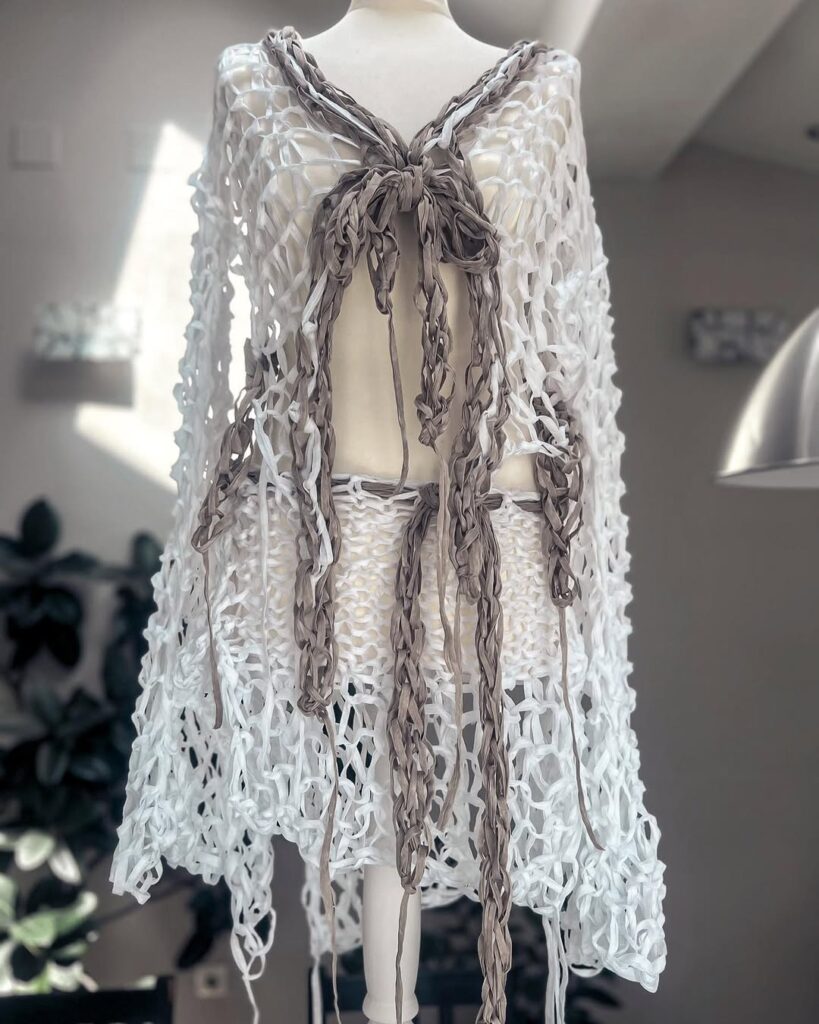
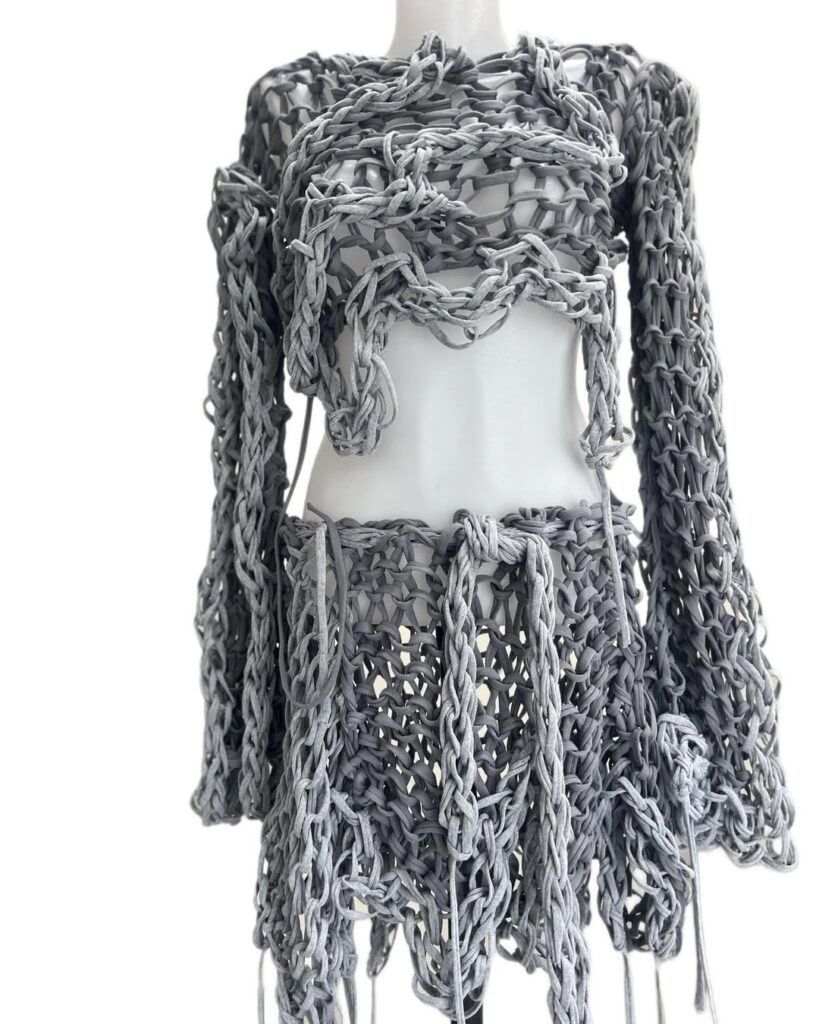
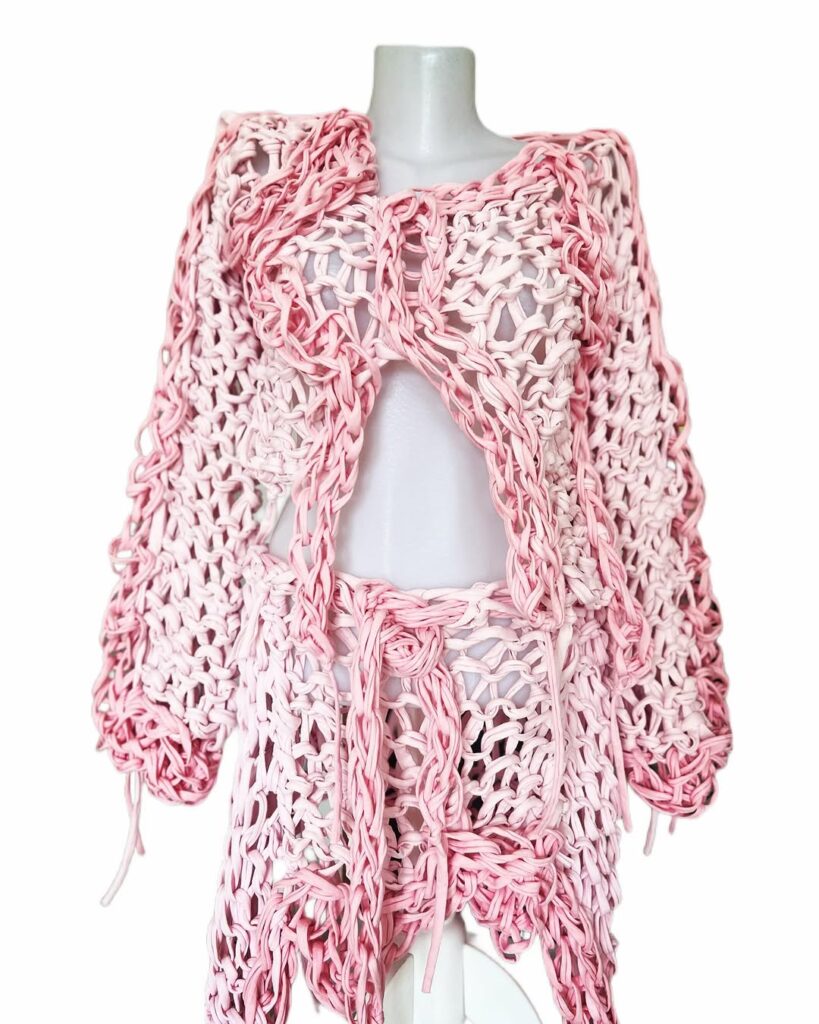
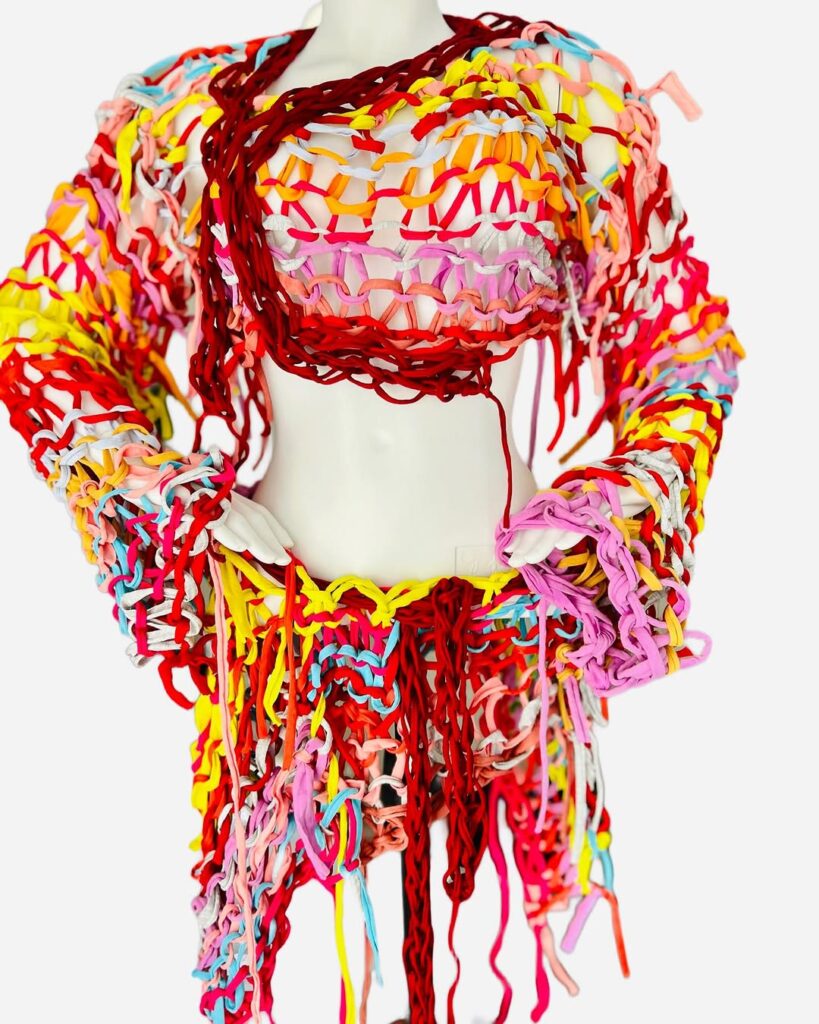
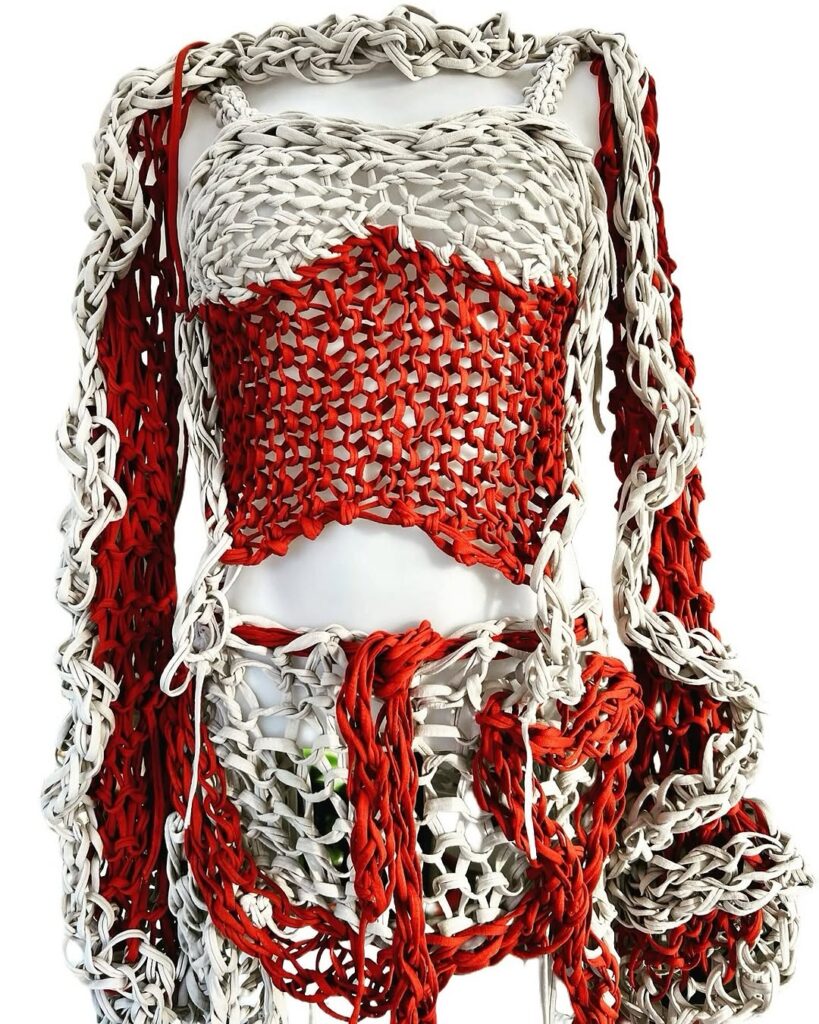
Finger knitting is the overall trend of knitting that is growing in popularity across different age groups, driven by factors like sustainability, mindfulness, and a connection to traditional crafts.
To become a skilled finger-knitter, you need consistent tension, a good sense of hand-eye coordination, and the ability to manage stitches on your fingers. Practicing with different yarn thicknesses and learning to hold stitches securely when taking a break are also important skills for creating a polished finished product.
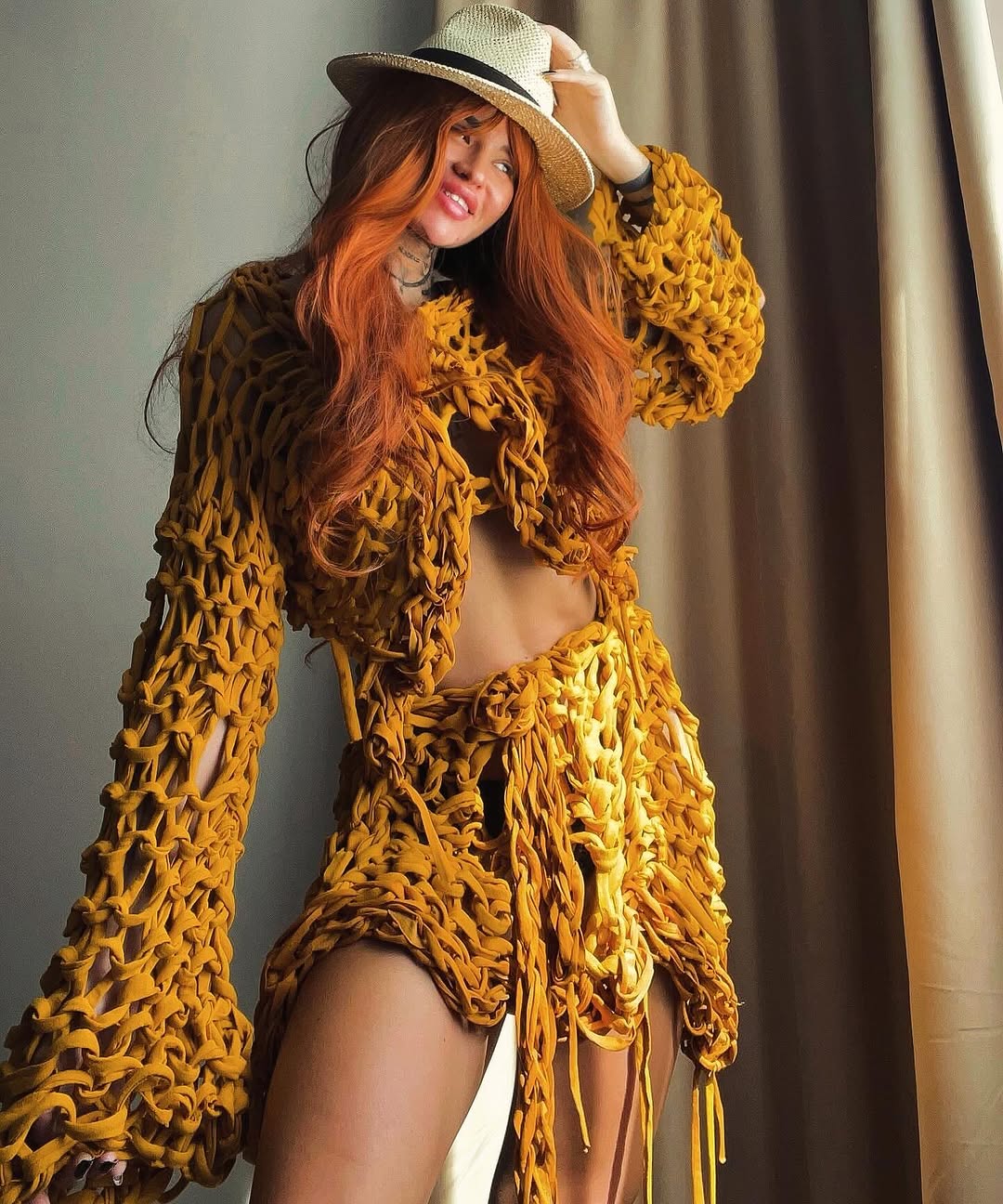
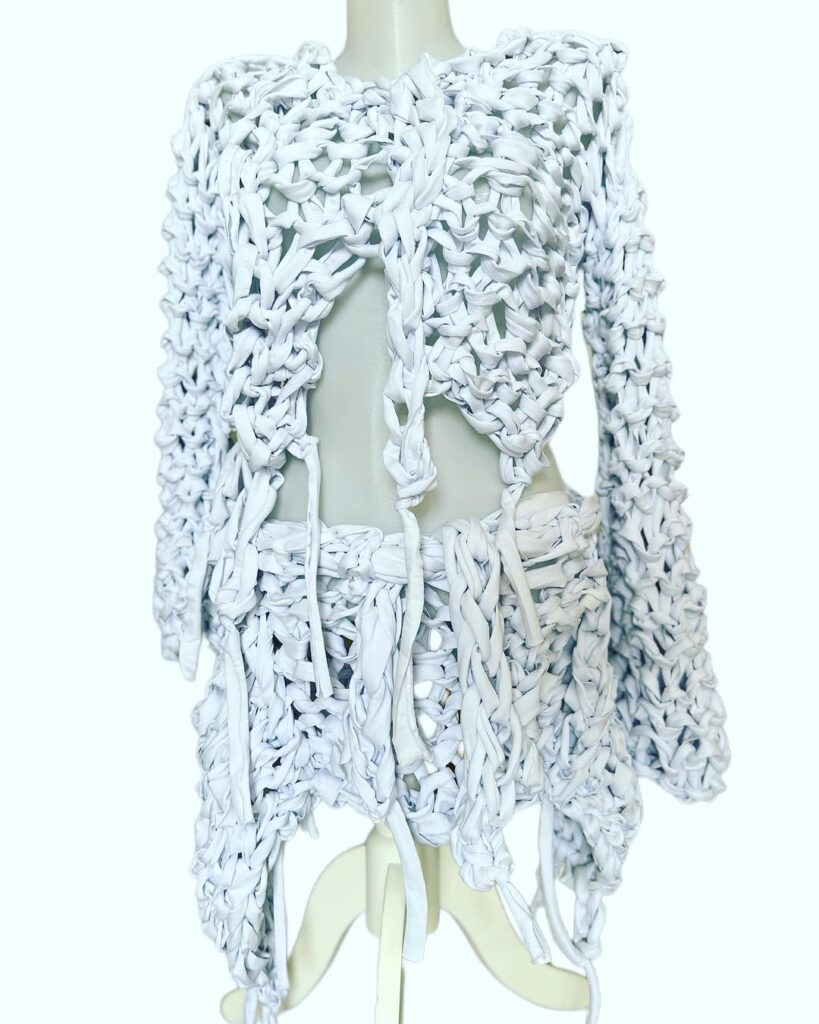
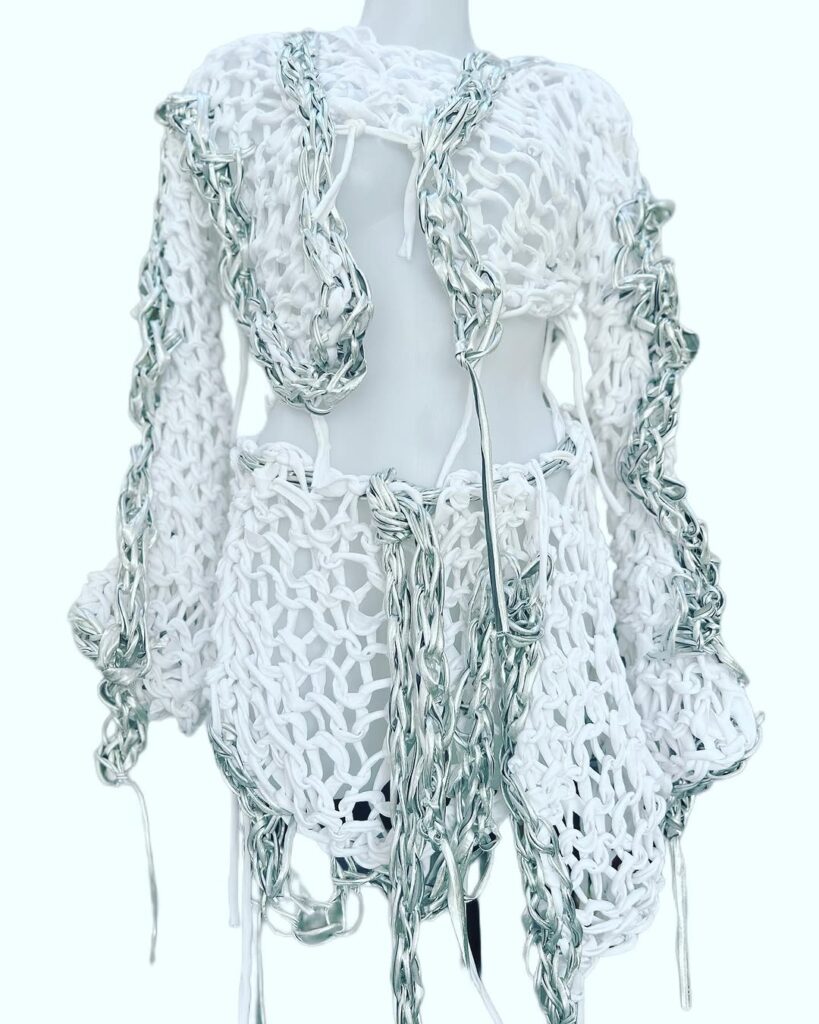
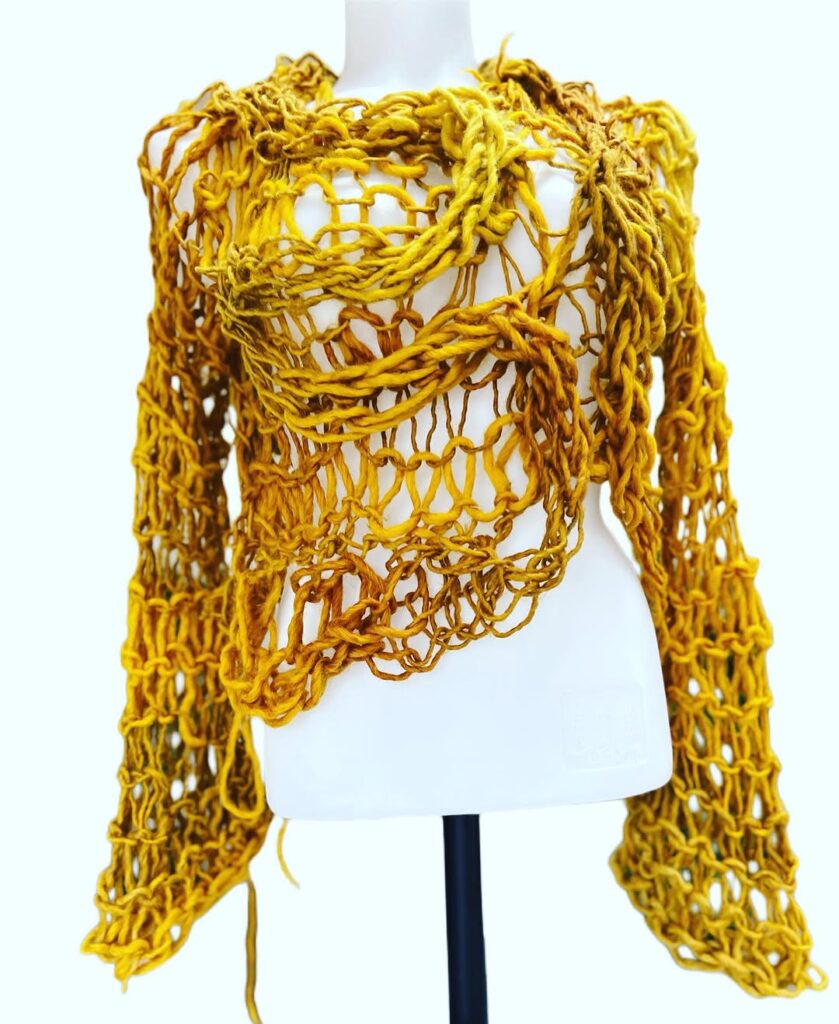
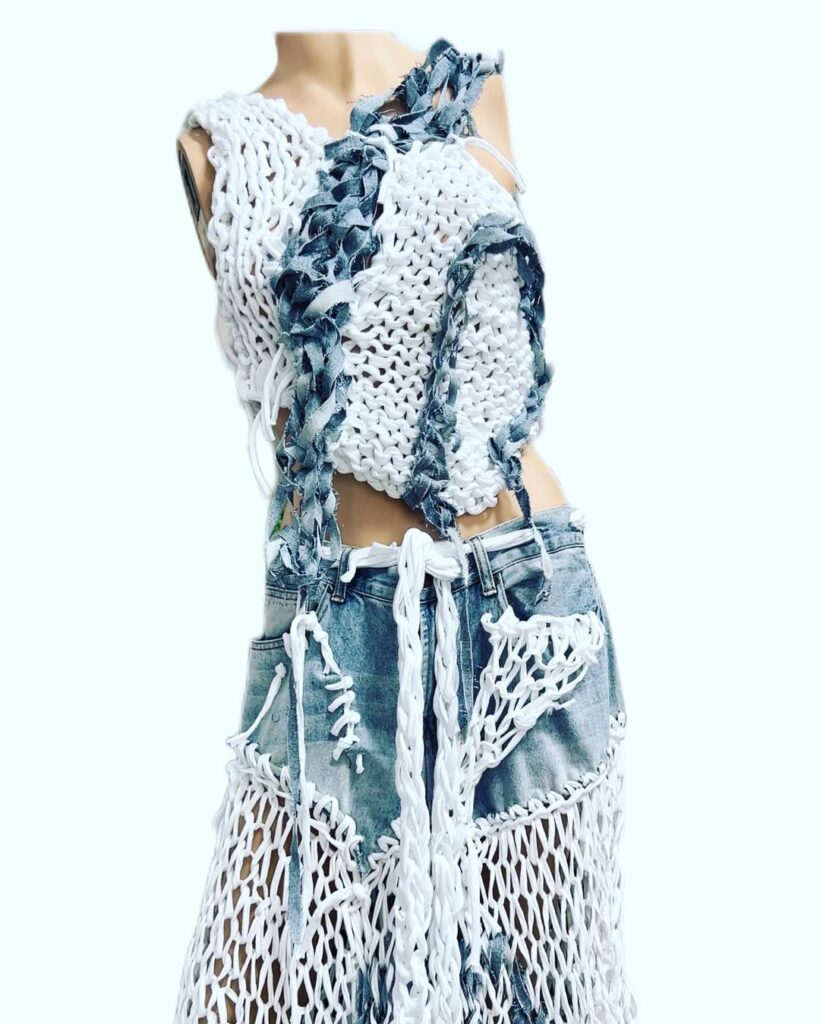
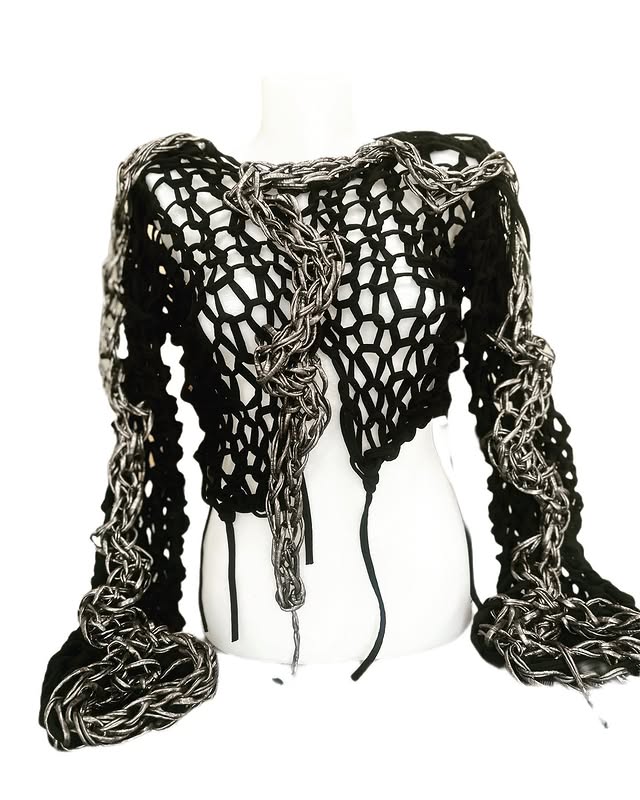
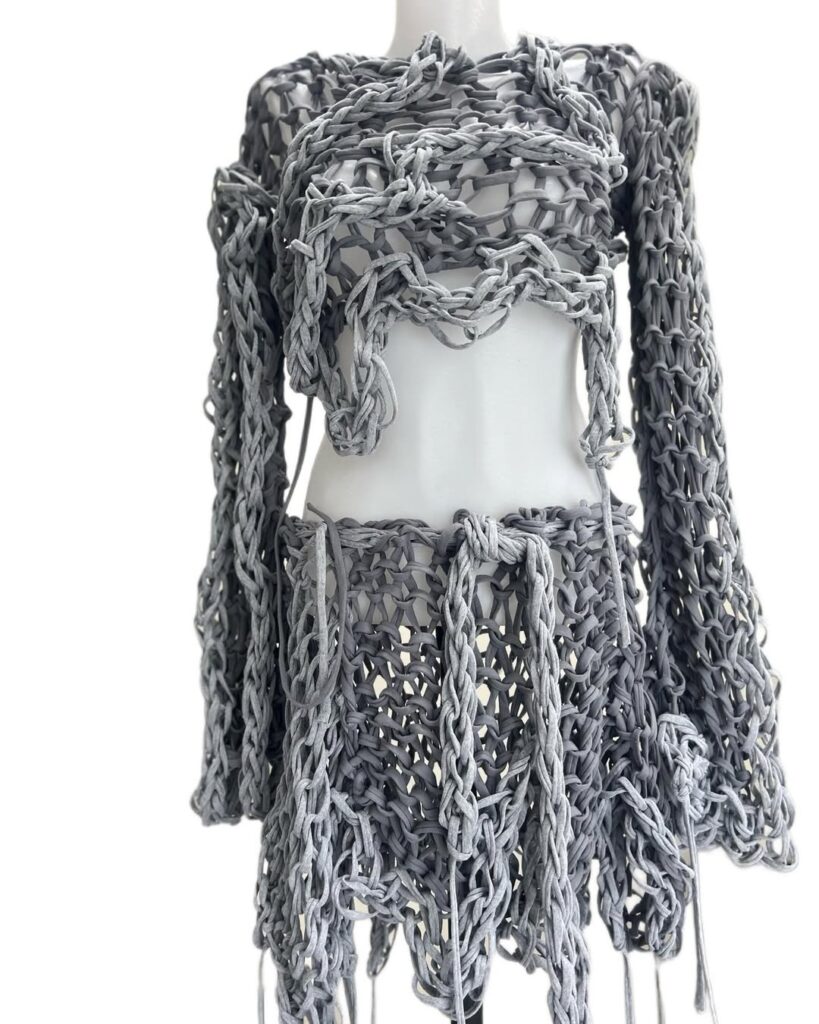
Ioana Turcu, founder and designer of Toia Tricot has mastered this skill and craft. The designer has a flair for experimenting with knit patterns and crafts unique textures by blending various materials together. She creates custom, handmade pieces without traditional patterns or machines, emphasising a unique and intentional process.
The slow fashion brand, based in Bucharest – Romania, draws inspiration from concepts of freedom, emotion, and sculpture. At the heart of Toia Tricot’s work, lies the ingenious use of recycled yarns, born through a transformative process that reclaims and cleanses discarded items like PET bottles. This approach, fueled by a passion for eco-friendliness, makes a significant environmental impact, one stitch at a time.
“My commitment to sustainability goes beyond rhetoric; it is ingrained in my artistic process. While some may see limitations in higher costs and limited suppliers, I see an opportunity to create small-batch masterpieces that embody my eco-friendly approach. My choice of high-quality recycled yarns not only elevates my work but also sends a powerful message that fashion can be both artistic and ethical,” says Turcu.





 Collaboration with @rebeccasearlstevens